







The Joint Maritime Information Center raised the threat level in the Strait of Hormuz to “Severe” as the U.S.-Iran memorandum of understanding deteriorates.
The most recent moving of the needle from the JMIC came from the Iranian strikes that precipitated the U.S. response — three commercial shipping vessels were hit by Iranian drones on Tuesday. The JMIC warned that “deliberate hostile action” against commercial shipping through the strait was now considered likely, in addition to lingering problems over drifting mines and GPS interference.
Before the war, about 20% of global oil demand transited through the strait. Since then, that number has varied but at one point dropped by about 97%. In response, the price of oil has been in flux.
</p>
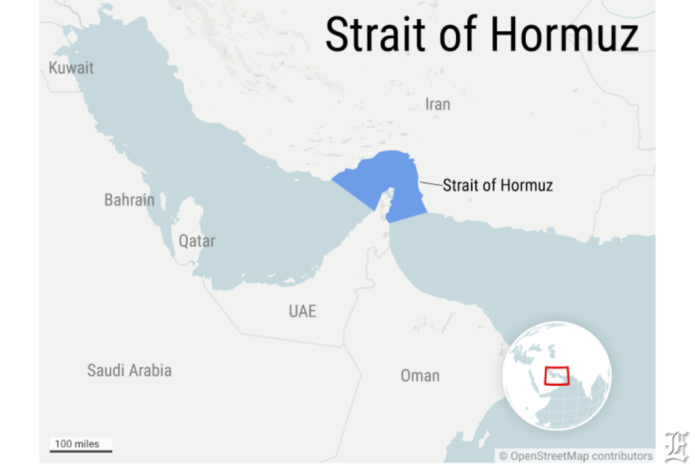
<p> ” data-large-file=”https://conservativemodern.com/wp-content/uploads/2026/07/shipping-through-strait-of-hormuz-declared-dangerous-with-iran-ceasefire-in-jeopardy.webp” src=”https://conservativemodern.com/wp-content/uploads/2026/07/shipping-through-strait-of-hormuz-declared-dangerous-with-iran-ceasefire-in-jeopardy.webp” alt=”A map showing the location of the Strait of Hormuz.” class=”wp-image-4529054″ srcset=”https://conservativemodern.com/wp-content/uploads/2026/07/shipping-through-strait-of-hormuz-declared-dangerous-with-iran-ceasefire-in-jeopardy-1.webp 1024w, https://conservativemodern.com/wp-content/uploads/2026/07/shipping-through-strait-of-hormuz-declared-dangerous-with-iran-ceasefire-in-jeopardy-1.webp?resize=300,200 300w, https://conservativemodern.com/wp-content/uploads/2026/07/shipping-through-strait-of-hormuz-declared-dangerous-with-iran-ceasefire-in-jeopardy-1.webp?resize=768,513 768w, https://conservativemodern.com/wp-content/uploads/2026/07/shipping-through-strait-of-hormuz-declared-dangerous-with-iran-ceasefire-in-jeopardy-1.webp?resize=150,100 150w, https://conservativemodern.com/wp-content/uploads/2026/07/shipping-through-strait-of-hormuz-declared-dangerous-with-iran-ceasefire-in-jeopardy-1.webp?resize=696,465 696w” sizes=”(max-width: 1024px) 100vw, 1024px”><figcaption class=) The Strait of Hormuz is the only waterway connecting the Persian Gulf with the wider ocean, and has become a critical chokepoint in the war with Iran. (Grace Hagerman/Washington Examiner)
The Strait of Hormuz is the only waterway connecting the Persian Gulf with the wider ocean, and has become a critical chokepoint in the war with Iran. (Grace Hagerman/Washington Examiner)“Severe” is the second-highest rating given in the five-rung rating system used by the JMIC, the highest being “Critical.” “Critical” was used shortly after the war began on March 1 and remained in place through the height of the fighting.
The threat level in the Strait of Hormuz was downgraded to “Substantial” from “Severe” by the JMIC on June 17 when the MOU was signed, saying the Islamic Revolutionary Guard Corps was acting calmer. The upgrade in the rating is certain to be reflected by fewer vessels willing to traverse the waterway.
According to strait.live, an independent tracker of the Strait of Hormuz, the waterway is effectively closed as of July 8, with eight of the world’s largest container carriers suspending Hormuz transits. War-risk insurance is running at eight times its normal rate, and covers only 2-4% of hull value.
Maritime information trackers haven’t yet reacted to President Donald Trump’s comments that the ceasefire is “over,” but if his rhetoric is followed by U.S. action, shipping is almost certain to come to a complete halt again, with the threat level going back up to “Critical.”
OIL PRICES SPIKE AFTER TRUMP DECLARED CEASEFIRE WITH IRAN ‘OVER’
The most recent authoritative transit numbers, coming from the International Monetary Fund’s PortWatch, counted 34 transits on July 5, from a pre-closure baseline of 83 transits per day, meaning traffic had slowly increased to 41% of normal volume.
Maritime traffic monitors showed the Strait of Hormuz almost entirely bereft of transiting shipping vessels not under Iranian control as of Wednesday morning.


