



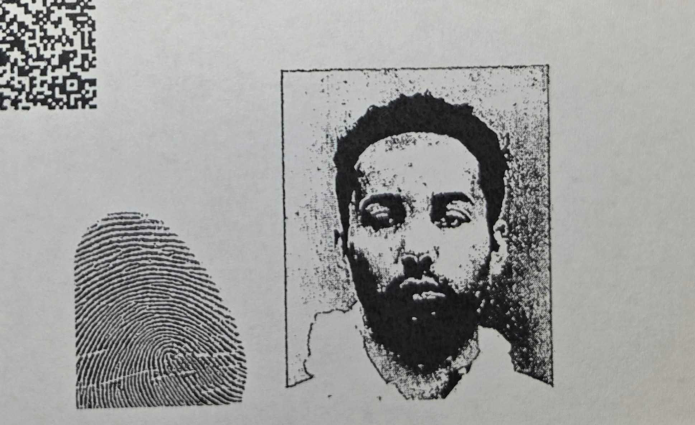
Virginia police who were responding to a tip opened the door to Abdulloi Toshpulodzoda’s home to find him shirtless and covered in blood.
When an officer asked what happened, Toshpulodzoda “turned around, placed his hands behind his back and said ‘I am guilty,’” according to a police report on the December 2019 incident in Vienna. Police then found his landlord’s body elsewhere in the house with mortal wounds. “We got into a fight and I stabbed him,” Toshpulodzoda said upon further questioning.
Toshpulodzoda was initially charged with murder. But a Fairfax County court declared him not guilty by reason of insanity in October 2022, and by July of this year, the admitted assailant was boarding a plane to Turkey in response to a federal deportation order. The 2022 ruling came after the defense motioned in 2020 to have Toshpuldzoda evaluated for mental health issues. The court ordered multiple assessments by doctors, leading to an insanity plea that was uncontested by Fairfax County Commonwealth’s Attorney Steve Descano’s office.
Toshpulodzoda is a snapshot of a situation that keeps repeating itself under Descano, a Washington Examiner review of cases found. After the undisputed killers plead insanity, doctors for the left-wing prosecutor and the defense often back their claims, judges approve the pleas, and the acquittees submit to annual reviews assessing whether the state should release them. Descano’s team has claimed prosecutions are pointless when the government’s own experts corroborate the insanity defense, while critics say his office is too quick to accept defendants’ narratives without a jury.
“Prosecutors do not ‘defer’ to medical experts,” Cully Stimson, senior legal fellow at the conservative Heritage Foundation, told the Washington Examiner. Stimson was formerly a prosecutor for San Diego, Maryland, and a federal prosecutor in Washington.
“They talk to a wide variety of witnesses, including family members, friends, close associates, and [others] who knew/know the accused before, during, and after the alleged offense,” Stimson said in an email. “They make independent judgments as to mental competency in the interests of justice. They don’t get in bed with the defense counsel and defense bar as Descano does.”
Descano, a former prosecutor for the Obama administration, took office in Fairfax in 2020 as part of a movement of leftist prosecutor candidates backed by megadonor George Soros. The commonwealth’s attorney faces mounting opposition over lenient policies, prompting the Justice Department and House Republicans to investigate whether he is biased in favor of illegal immigrant defendants.
Before trial, Fairfax County courts appoint medical experts for the prosecution and defense if either side requests a mental evaluation for a defendant. “The Court keeps a list of approved [not guilty by reason of insanity] evaluators who are certified by the Virginia Department of Behavioral Health,” a spokesperson for Descano’s office told the Washington Examiner.
“We select off of the court’s list, often based on availability,” the spokesperson added.
The defendants causing controversy for Descano are not disputing whether they took the victims’ lives — only whether mental issues made them unable to grasp what they did and render them unfit to stand trial. Descano’s team relies too heavily on doctors to answer those questions at the pretrial stage, Stimson told the Washington Examiner.
“Just because the defense counsel asserts either of those claims, that does not automatically mean the prosecution must accept it,” Stimson said.
In other cases, Virginia prosecutors have previously brought their own expert witnesses to counter an insanity defense at trials or even disputed the claims without their own expert, according to reports and court records.
“When the judge decides that it is an issue of fact for the jury to decide, the trial will include a ‘battle of the experts’ where the government expert testifies that the accused is faking it and the defense expert testifies that the condition is real,” Stimson said. “Descano is in bed with the defense bar and thus has abandoned his role [as] a real prosecutor.”
During Descano’s tenure, the county’s justice system has rubber-stamped insanity plea agreements for a man who was charged with killing his mother and adult sister, another who allegedly stabbed his father to death, a man who allegedly fatally shot his 23-year-old son at a gun range, and a 19-year-old who was charged in the killing of his father, whose body was burned, court records show. Judges or other officials could decide to release any of them in the future.
To free or not to free?
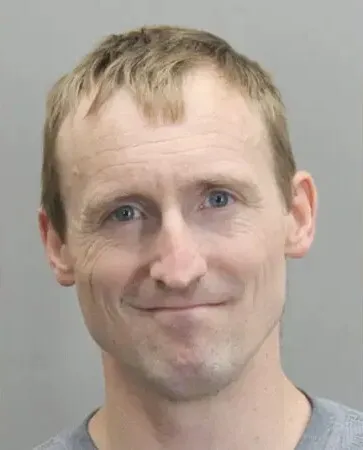
Another high-profile acquittee will have his first annual assessment in May. A county judge declared Joshua Danehower not guilty by reason of insanity in February after he confessed to entering charity CEO Gret Glyer’s home and fatally shooting him in 2022 over an obsession with Glyer’s wife. Descano’s side went along with his insanity defense after approving a mental health evaluation by psychologist Eric Drogin, court records show.
Drogin has a bigger public profile than doctors in other cases: The Harvard Medical School scholar has published lengthy guidance for defense lawyers dealing with clients’ mental competency concerns.
The psychologist faced criticism in a recent Kentucky case in which prosecutors disputed a man’s claims that he was insane when he beat his caretaker to death with a baseball bat in 2018.
Prosecutors said the man’s guilt was clear because of statements he made indicating he knew he was committing a crime. However, the defense claimed insanity in part based on Drogin’s three attempted Zoom video meetings with the defendant and a report that voiced agreement with another doctor’s report. Drogin defended his own credibility, saying he has performed more than 3,000 mental health evaluations during his career and helped both prosecutors and defense lawyers.
A lower court rejected the Kentucky man’s insanity defense, and the Supreme Court of Kentucky upheld the ruling in April, calling Drogin’s analysis weak. “Dr. Drogin’s opinion, it seems, was nothing more than an agreement with [the other doctor’s] conclusion with no supportive reasoning other than three brief, largely unproductive interviews Dr. Drogin had with [the defendant] via Zoom roughly three years after the offense occurred,” the court wrote.
Drogin did not respond to a request for comment from the Washington Examiner.
As in Toshpulodzoda’s case, Danehower made statements suggesting he understood his actions to be killing someone.
Danehower told psychologists that he believed Glyer had forced his wife to marry him and that Danehower would save her by killing him, NBC 4 Washington reported. Prosecutors also unveiled Danehower’s written plans for the attack that detailed how to break into Glyer’s house.
“I remember thinking, ‘I don’t want to do this; this is not what I want to do,’” Danehower reportedly told doctors. “What I thought was, ‘Well, this guy is pure evil, so I have to take him out,’ so I just shot him.”
“I think I fired like 10 times,” Danehower was quoted as saying. “I wanted to make sure he was dead.”
INSIDE THE LEFTIST NETWORK WORKING TO SABOTAGE TRUMP’S DC PROSECUTIONS
Some medical professionals have a reputation among attorneys as more defense-friendly, and prosecutors should know better than to pick them even before trial, Stimson told the Washington Examiner.
“Descano either doesn’t know this or (more likely), knows this and gleefully and purposefully uses the Dr. Drogin’s of the world,” Stimson said.


