





A recent Supreme Court ruling paving the way for Republican state legislators across the South to draw up to a dozen red-tinged congressional seats has put House Democrats on their heels. So, four already-targeted GOP-held House seats from Pennsylvania are even more crucial in their quest to erase Republicans’ narrow majority.
Pennsylvania’s bellwether status in the fight for House control leading up to the Nov. 3 midterm elections runs downstream from its longtime role as a presidential battleground. The Keystone State backed former President Joe Biden in 2020 before flipping to President Donald Trump in 2024, alongside Arizona, Georgia, Michigan, Nevada, and Wisconsin.
Voter registration is tight in the state of more than 13 million people, the nation’s fifth-most populous. There are about 3.8 million registered Democrats to 3.6 million Republicans, making the Keystone a microcosm of American politics in the era of President Donald Trump. Democrats dominate its two biggest cities, Philadelphia and Pittsburgh, while many exurban and rural areas back Trump religiously.
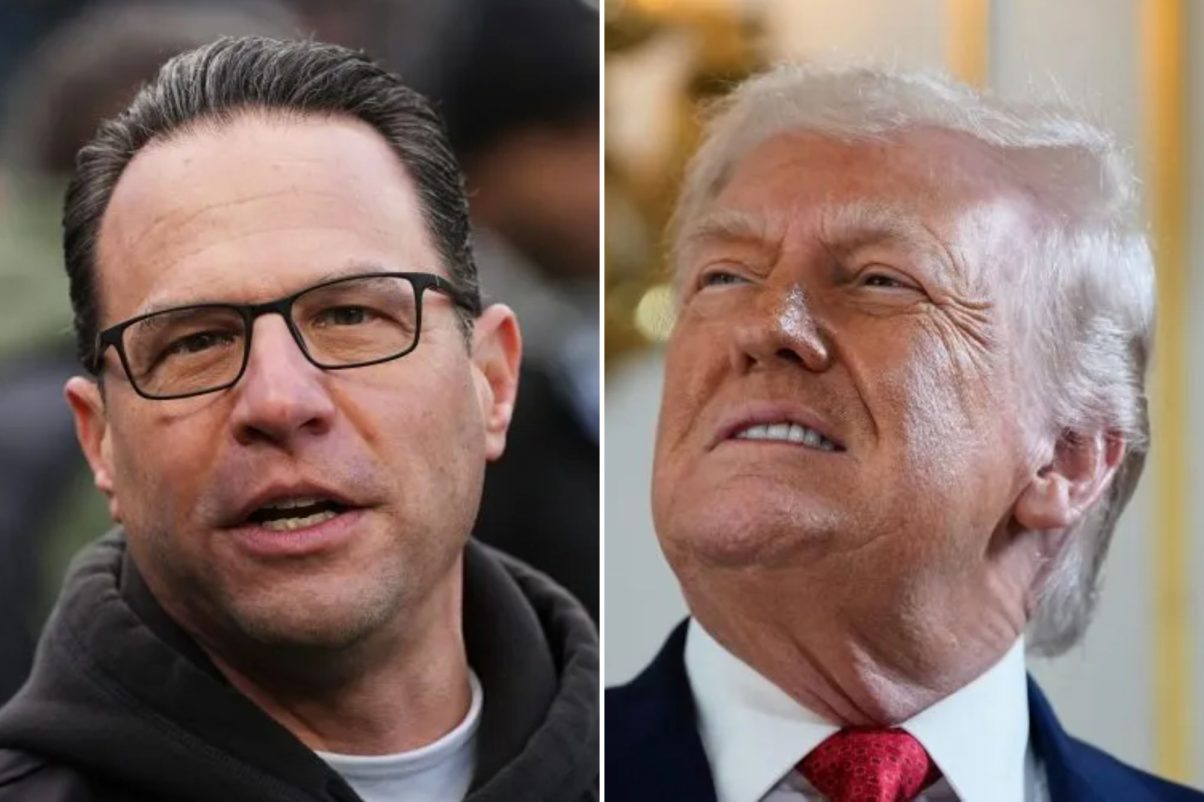
With more competitive House races than any other state, Pennsylvania’s May 19 primary will set the table politically for a knife-fight fall campaign that has several subdramas. It’s shaping up as a high-stakes test of Trump’s staying power as the halfway mark of his second White House term. Gov. Josh Shapiro’s (D-PA) political capital is also on the line, as he seeks a second gubernatorial term as ahead of a widely expected bid for the 2028 Democratic presidential nomination.
All but one of Pennsylvania’s 17 House members are seeking reelection, giving the state an outsized role in Democratic efforts to end a Republican majority, which, with several vacancies in the 435-member chamber, has at times narrowed to a single seat. Republicans currently hold a razor-thin 217–214 edge.
The close margin spurred a Trump White House push for a political insurance policy through redistricting. That effort won a huge victory in late April with a Supreme Court ruling striking down Louisiana’s congressional map under the Voting Rights Act, setting off a chain reaction in Southern legislatures where Republicans dominate. Within a day, Louisiana moved to delay its primaries and redraw House districts, with the intent of increasing a congressional delegation of four Republicans and two Democrats into a 5-1 advantage.
Tennessee soon called a special session, aiming to make its 8-1 edge a 9-0 shutout. Florida has enacted a new political map that could force out four House Democrats, making for a 24-4 Sunshine State GOP election romp. Several other Southern states are pushing for congressional map changes to wipe out remnant Democrats. Litigation by Democrats and allies may postpone some GOP redrawing ahead of the 2026 elections, but the combined effort could cost Democrats up to 12 House seats.
The rapid response underscores how a single ruling can reshape the electoral map, how swing states like Pennsylvania could decide control of the House, and how Democrats in Pennsylvania and elsewhere still have significant advantages in their battle for House control.
Republicans are defending their edge amid Trump’s sagging approval ratings, persistent economic pressures, and fallout from an unpopular war in Iran. Democrats, meanwhile, have been buoyed by strong special election showings in California, Florida, New Jersey, and Virginia, though internal divisions remain a challenge.
As polarization and redistricting shrink the map of true battlegrounds, the remaining competitive districts — especially in Pennsylvania — are drawing intense national focus.
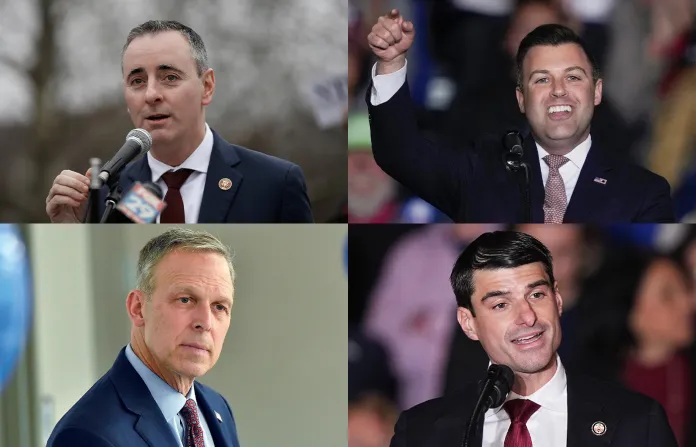
Four Republican-held congressional districts are at the center of the fight: the southeastern Pennsylvania 1st — Rep. Brian Fitzpatrick (R-PA); the Lehigh Valley-based 7th — Rep. Ryan Mackenzie (R-PA); the 8th, covering Scranton-Wilkes-Barre and northeastern Pennsylvania — Rep. Rob Bresnahan (R-PA); and the Harrisburg and York areas 10th across the commonwealth’s central realm — Rep. Scott Perry.
“Pennsylvania isn’t just a swing state anymore — it’s the swing state,” political analyst Mike Fahey said in an interview. “If Democrats are going to win the House, the road runs directly through those four districts. The margins are razor-thin… whoever controls the message in the final three weeks likely controls those seats.”
Henry Olsen of the Ethics and Public Policy Center said Democrats’ strategy may boil down to: “Do no harm.”
“Whether that means leaning centrist or positioning themselves carefully… it really comes down to being as inoffensive as possible,” Olsen said in an interview, noting three of the four races were decided by two points or less in 2024.
“Pennsylvania is emerging as the defining House battlefield of the 2026 cycle because it sits at the intersection of nearly every political force reshaping the electorate,” James Christopher, founder and managing editor of New York-based James Christopher Communications, LLC, said in an interview. “Disenchanted voters are facing the ‘perfect storm’… a growing disconnect between national branding and local needs.”
He added that the four districts are competitive for different reasons, but together show which party can build a durable coalition.
Closed primary
Pennsylvania is one of eight states with fully closed primaries, meaning unaffiliated voters cannot participate. Roughly 1.4 million independents will be sidelined until November. The goal for Democrats in two weeks, Olsen, is to nominate the strongest general-election challenger.
The Shapiro factor
Shapiro, one of the nation’s most popular governors, is well-positioned for reelection, likely facing Republican Treasurer Stacy Garrity in the fall. But the primary stakes for Shapiro are high, too, and extend beyond the governor’s race.
Amid 2028 speculation, Shapiro has ramped up campaigning, backing candidates in key House races and pushing for Democratic control of the state legislature. Democrats hold a narrow House edge, 102-99, with two vacancies. Republicans control the state Senate 27-23, but Democrats are optimistic about their chances of claiming a majority for the first time in 35 years, due to the rising unpopularity of Trump and Republicans nationally.
Strategist J.J. Abbott said a strong showing in a “big, important swing state” would be a “strong credential” for a potential Shapiro presidential run.
The midterm results will be an early test of Shapiro’s influence and help shape the party’s direction heading into November.
House Democrats’ suburban Philadelphia freedom?
For years, Democrats have circled Pennsylvania’s 1st Congressional District as a prime pickup opportunity, only to come up short each time.
Fitzpatrick, a former FBI agent first elected to the House in 2016, has turned what should be a swing seat into reliably safe ground. His centrist brand and strong local roots have played well across the suburban Philadelphia district, which includes all of Bucks County and a sliver of Montgomery County. In 2024, voters there backed Democratic nominee Kamala Harris over Trump, 49.7% to 49.4%, making it one of three districts that gave a majority of its vote to the then-vice president and still elected a Republican House member (compared to 13 House districts that backed a Democratic lawmaker and Trump).
This cycle, Democrats are making another push, with two candidates competing to challenge Fitzpatrick. Bucks County Commissioner Bob Harvie, backed by the local party establishment, is pitching himself as a tested, electable challenger. His primary opponent, Lucia Simonelli, is running as a grassroots alternative.
Harvie argues the political environment may finally be shifting. Speaking to the Philadelphia Inquirer, he pointed to economic strain as a potential breaking point for voters.
“The pain is more real for people now,” he said. “People should be asking themselves: After 10 years of Brian Fitzpatrick, are they better off than they were before?”
Democrats are betting that economic concerns, anti-Trump sentiment, and turnout could finally flip the seat. Both candidates have tied Fitzpatrick to Trump, though he has broken with the president and lacks his endorsement.
Lehigh Valley battleground
Freshman Rep. Mackenzie faces his first reelection bid after ousting an incumbent Democrat in 2024. In a district with constituents hit by high gas prices, inflation more broadly, and other economic headwinds. The area north of Philadelphia, stretching to the New Jersey state line, still has a substantial Republican base. Voters there backed Trump over Harris, 51.1% to 47.9%.
“The Lehigh Valley has become one of the most politically elastic regions in the country because voters there tend to respond less to ideology and more to perceived economic competence,” Christopher said. “It contains a blend of union households, rapidly diversifying suburbs, and working-class independents who are highly sensitive to inflation, healthcare costs, and wage stagnation. If Democrats frame the race around affordability and local economic stewardship, rather than a broad ideological conflict, they have a real opportunity there.”
Former firefighter and union leader Bob Brooks is one of four Democrats running to challenge Mackenzie in the fall. He received the coveted blessing from the Democratic Congressional Campaign Committee, a significant boost to his campaign.
The DCCC’s backing is the latest feather in the Brooks campaign’s cap. He’s also endorsed by Shapiro, former transportation secretary and former (and possibly future) presidential candidate Pete Buttigieg, and Sen. Elizabeth Warren (D-MA), among others.
Brooks has centered his campaign on his working-class background, arguing that Washington is dominated by elites and needs more representatives who understand everyday financial struggles. His message is rooted in pushing back against the influence of wealthy donors and large corporations. His pitch comes as Democrats work to regain ground with working-class voters, a group that has increasingly shifted toward Trump over the past decade.
Hoping to stop him in the eastern Pennsylvania district are Democratic rivals Ryan Crosswell, Lamont McClure, and Carol Obando-Derstine, each offering different contrasts on experience and approach.
Crosswell, a former federal prosecutor, pushed himself as someone who resigned rather than agree to drop the criminal case against former New York Mayor Eric Adams. Crosswell was a member of the Justice Department’s elite Public Integrity Section, which has been pretty much gutted under the Trump administration.
Taking stock of an active trader in Congress
Freshman Rep. Bresnahan faces scrutiny over stock trades that appeared to conflict with his 2024 campaign trail rhetoric in support of banning such financial transactions by members of Congress.
That was a core issue of Bresnahan’s campaign to represent the 8th Congressional District, when he beat a sitting Democrat, while voters in the 8th Congressional District favored Trump over Harris, 53.8% to 45.4%.
But Bresnahan, who at age 19 became the chief financial officer of his grandfather’s highway electrical business (and CEO after graduating from college), since joining the House had bought and sold roughly $7.2 million in shares, per disclosure reports. Some of those trades involved companies tied to Medicaid, occurring before a key vote on Trump’s signature Big Beautiful Bill Act.
Bresnahan has said he has no involvement in his stock trades and delegates them to advisors and otherwise denied wrongdoing, maintaining all House votes are taken with the best interests of his northeast Pennsylvania constituents in mind.
Democrat Paige Cognetti, mayor of Scranton, is the lone candidate challenging Bresnahan. A former independent, she has emphasized anti-corruption efforts and economic development.
Likely south-central Pennsylvania rematch
Rep. Scott Perry (R-CA), a retired Army National Guard brigadier general and staunch Trump ally, is running for reelection in a district that blends shifting suburbs with strong rural GOP turnout.
Perry was first elected to the House in 2012. He was previously chairman of the House Freedom Caucus, the most conservative House Republican group, for two years. Voters in the district favored Trump over Harris, 52% to 46.8%.
“Democrats have made inroads in the suburbs … while Republicans benefit from consistent rural turnout,” Christopher said. “The outcome will likely come down to whether swing voters are more motivated by economic concerns or a desire for stability.”
FETTERMAN PARTY-SWITCH SPECULATION ADDS UNCERTAINTY TO PENNSYLVANIA’S 2028 SENATE RACE
Democrats Janelle Stelson and Justin Douglas are competing to take him on, emphasizing cost-of-living issues, healthcare, and economic reform.
Local analysts say Stelson has an edge in the primary, as she was the 2024 Democratic nominee against Perry. A former local television anchor, Stelson lost narrowly to Perry, 50.5% to 49.3%.
Barnini Chakraborty (@Barnini) is a senior political reporter at the Washington Examiner.


