







President Donald Trump has called off U.S. envoys Steve Witkoff and Jared Kushner’s trip to Pakistan, where they were supposed to negotiate with the Iranians for a peace deal.
“I’ve told my people a little while ago they were getting ready to leave, and I said, ‘Nope, you’re not making an 18 hour flight to go there,” Trump said, according to Fox News. “We have all the cards. They can call us anytime they want, but you’re not going to be making any more 18 hour flights to sit around talking about nothing’.”
He confirmed the cancellation in a post on Truth Social, expanding on his logic.
TRUMP: US DOESN’T KNOW WHO ‘THE LEADER IS IN IRAN’
“Too much time wasted on traveling, too much work! Besides which, there is tremendous infighting and confusion within their ‘leadership.’ Nobody knows who is in charge, including them. Also, we have all the cards, they have none! If they want to talk, all they have to do is call!!!” Trump wrote.
Iran’s Foreign Minister Abbas Araghchi was in Islamabad ahead of Kushner and Witkoff’s arrival, but left Saturday, according to state media. He met with Prime Minister Muhammad Shehbaz Sharif, military head Field Marshal Asim Munir, and other officials, during which he communicated Tehran’s negotiating position. Iran said he only visited the country for bilateral talks with the hosts, and not to meet with the U.S. delegation.
After his trip, Araghchi released a statement calling it “fruitful,” but swiped at U.S. negotiation tactics.
“Very fruitful visit to Pakistan, whose good offices and brotherly efforts to bring back peace to our region we very much value,” the foreign minister wrote. “Shared Iran’s position concerning workable framework to permanently end the war on Iran. Have yet to see if the U.S. is truly serious about diplomacy.”
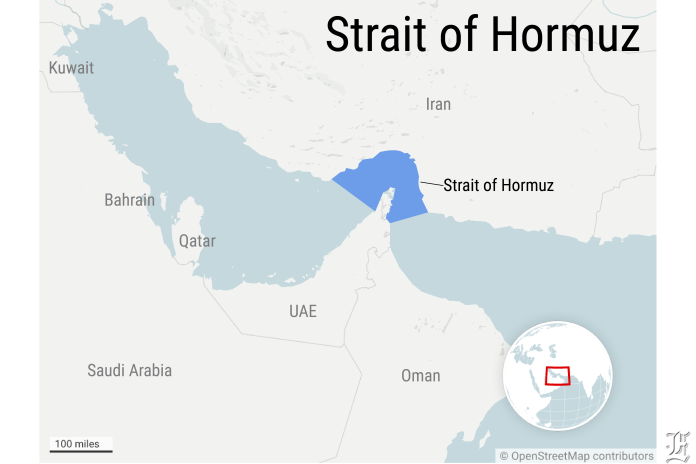
The development bodes poorly for further negotiations, coming just days after Trump extended the ceasefire indefinitely to give Iran more time. Negotiations have so far led nowhere, with the two sides failing to reach a compromise on issues such as control over the Strait of Hormuz and the future of Iran’s nuclear program.
The Trump administration has repeatedly listed Iran freezing its enrichment program and surrendering its stockpile of near-bomb-grade material currently underground as its red lines for peace negotiations.
“We know exactly what they have, and they know that,” Secretary of War Pete Hegseth said about the buried material on April 16. “And they will either give it to us, which the president has laid out, we’ll — they’ll give it to us voluntarily … [Or] We’ll get it. We’ll take it — we’ll take it out.”
Washington appears to be gearing up for a resumption of the conflict, with analysts noting a massive military airlift nearing the scale of that during the buildup before the first strikes against Iran. A third aircraft carrier strike group came within range of Iran this week, marking the first time three aircraft carriers have been deployed to the Middle East since 2003.
Some U.S. politicians are calling for the conflict to resume as well, including Sens. Roger Wicker (R-MS) and John Fetterman (D-PA).
CAN TRUMP SECURE A DEAL ‘FAR BETTER’ THAN THE 2015 IRAN NUCLEAR DEAL?
“The time is over for negotiations with Iran’s regime. The radical successors of Khamenei can never be trusted to keep any promise or agreement,” Wicker wrote Friday. “Our Commander-in-Chief should direct his skilled military leaders to finish destroying Iran’s conventional military capabilities and eliminating any last remnants of their nuclear program.”
The war has been characterized by historically unparalleled disproportionate casualty ratios in favor of the U.S. and Israel, but a simultaneous failure to enact the political leadership change originally hoped for. Hardliners within the Islamic Revolutionary Guard Corps have consolidated control over the country following the assassination of former Iranian Supreme Leader Ayatollah Ali Khamenei, making negotiations even more difficult.


