





BRADDOCK, Pa. — In American politics, when negotiating hard deals that involve high risk and the livelihoods of all involved while requiring great compromise, pain is usually shared unequally. The rarest outcome is for all involved to be grateful.
Yet that was the overwhelming sentiment expressed by the local union leaders, steel workers, plant managers, and U.S. Steel CEO David Burritt when Commerce Secretary Howard Lutnick visited the iconic U.S. Steel Edgar Thomson Works, one year after the hard-fought Nippon deal that included a heavy lift from President Donald Trump.
Even before Lutnick and Burritt took to the microphone after an hourlong tour of Edgar Thomson, it was evident that every man and woman who ran the plant operations at the Mon Valley Work sites were thankful not only that the controversial deal was done, but that investments have already begun and increased one year later.
Lutnick walked over the crowd of steelworkers in their hard hats and bright orange fireproof protective gear, a dozen wide and a dozen deep, and shook hands with each one.
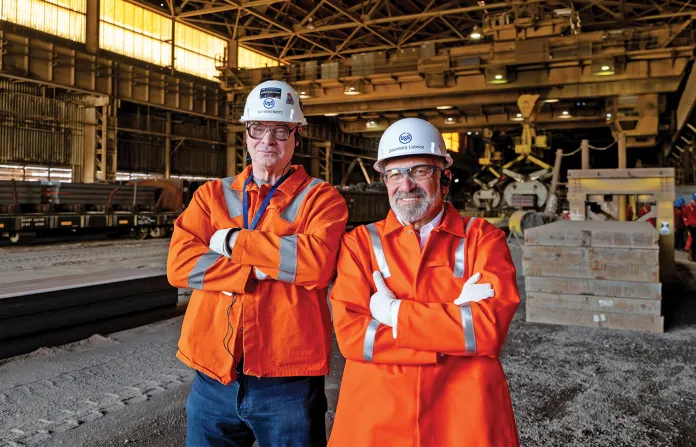
Directly behind them were acres of buildings: two blast furnaces, which convert raw iron ore, coke, and limestone into molten iron; a continuous caster, where the molten steel is solidified into large slabs; and a variety of support structures, including cast houses, boiler houses, blowing engine houses, and vast piping networks.
In the hills across the river Kennywood Park, with the Phantom’s Revenge, its tubular tracks and structure made of steel, plunges hundreds of feet down into a ravine overlooking the mill. Burritt introduced Lutnick, telling the secretary as well as the workers that the investments here at this plant were going to be double what was originally estimated to replace the equipment that rolls steel.
“They said this day would never come, and yet here we are, recognizing the people that made it happen,” Buritt said with a broad smile.
“You guys, you don’t just work in any industry. Steel is not just any product. Steel is the backbone of our nation,” Lutnick said. “A country that can’t make its own steel can’t build its own bridges, can’t make its own ships, can’t do pipelines, can’t do railcars, can’t do factories, can’t do power plants, can’t even make a car, can’t even make a truck.”
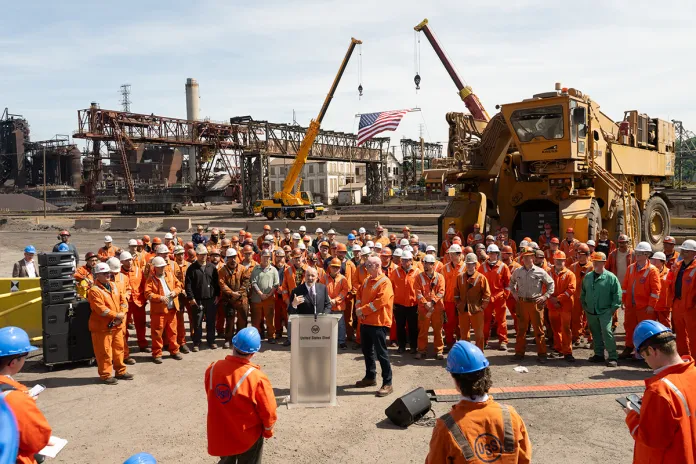
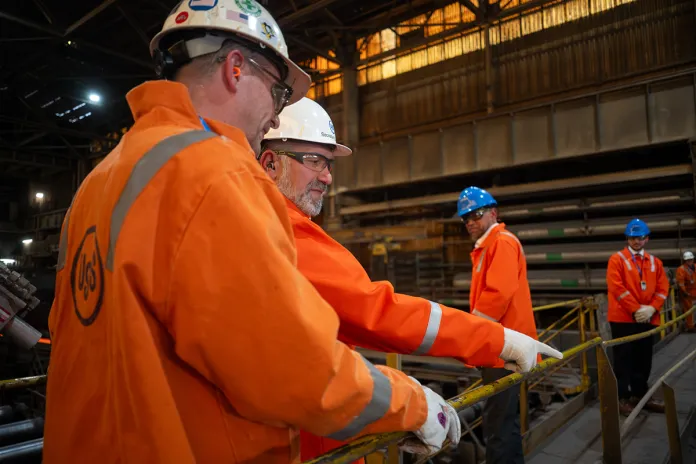
After being greeted with a traditional Pittsburgh cookie table, Lutnick donned orange protective gear, steel-toed boots, heavy gloves (those railings get really hot on a 100-plus degree shop floor), protective glasses, and earplugs. He joined Burritt, plant leadership, and steelworkers to see firsthand what makes Edgar Thomson so important not just to the workers, but also to the entire country.
The U.S. Steel Mon Valley works consists of three plants: the Clairton Coke Works, Irvin Works, both of which are upriver, and Edgar Thomson Works, which has been in operation since Andrew Carnegie first named it after the head of the Pennsylvania Railroad 150 years ago to curry favor for his rail business.
What is made here affects something, if not everything, in our daily lives. Every day, this facility puts out 500 miles of steel. Every 50 days, its output circles the earth. About six times a year, just this one of three facilities here in Pittsburgh is circling the earth in steel.
Their main customers are automotive, construction, and appliance. If you have a Maytag or a Whirlpool anywhere in your house, there is a high probability that that steel came from Mon Valley Works.
Their materials are also used in construction: steel studs for houses and buildings, sheeting for roofs, guardrails, anything that’s galvanized for construction or other applications. When the new hot mill is completed, its output capabilities make all the products to meet the needs of America.
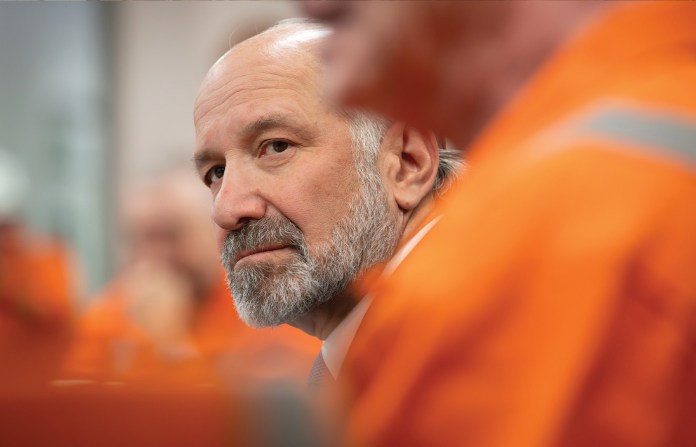
The plant covers over 30 acres. We walked over half a mile within the plant, where at one point the temperature soared over 100 degrees as we watched the liquid iron come out of the furnace.
There’s a sense of relief and disbelief that the deal happened. Everyone is grateful that not just an industry was saved instead of disappearing like so many other industries have, but also communities, schools, churches, and a way of life. They are still all amazed that it happened.
Sitting in the office of one of the plant managers for an interview with the Washington Examiner after the tour, Lutnick was reflective when asked about the impact this deal has had on so many lives, both directly and indirectly.
The commerce secretary said that, when you look around at all of those faces, it makes you feel that the administration was successful at helping American steelworkers.
“President Trump understood that the American economy is so magnetic that the world wants to come to America, that if you protect it, you can protect both American steel companies and the steel workers union,” Lutnick said. “That you can really do both.”
The process was so outside of the norm of American politics that Lutnick said he had the honor of getting phone calls from United Auto Workers Union, who told him, “I can’t believe I’m calling a Republican administration to say thank you.”
“President Trump and I understand that you can do both. That by strengthening American steel, you’re strengthening American steel workers, and you’re strengthening all American companies,” he said.
He also said it was rewarding because he understands that steel union jobs are great jobs for families, that don’t allow foreigners to hollow out our communities and our businesses, but protect and defend them.
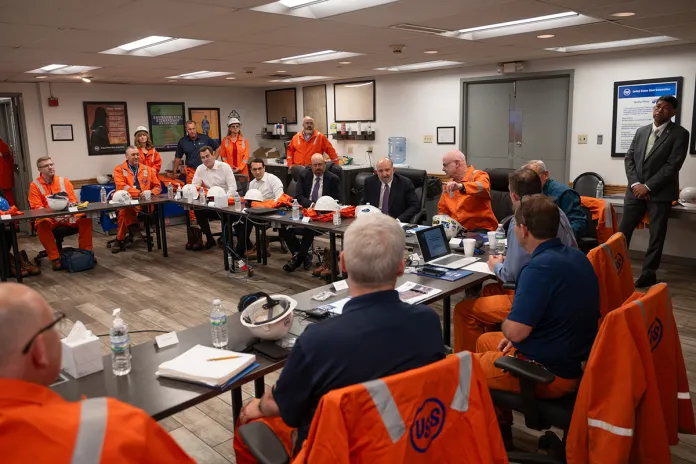
“That is the job of the administration,” Lutnick added. “So I walk into that room and I feel the happiness of the people around me, it really defines that the president’s policies and my execution of those policies are winning.”
The “golden share” was really what made the deal work for the Trump administration, Lutnick told the Washington Examiner.
“What that basically says is you [Nippon], you can’t renege on anything you’ve promised America that we wanted. You will live to the promises you made to us,” he said. “You will invest the $10.8 billion, you will invest the $14 billion, you won’t close plants, you won’t cut people, and you will live up to what you said, and you can’t go off of that.”
“We didn’t ask for, ‘Oh, we want to run the company, this, that. No, none of that stuff. It’s literally ‘Live up to what you promised America,’” Lutnick added. “When you made this deal, you promised us you would make certain investments, you promised us certain employment, all these mission things that were really important to America.”
PITTSBURGH IS JUST BUILT DIFFERENT
The key for the White House was to get the investment right, to set a tariff policy that protected America so that Nippon couldn’t subsidize or otherwise break its promises. The administration treated it like a Wall Street deal, not a government deal.
(Justin Merriman / for The Washington Examiner
One year later, Lutnick said Nippon has lived up to its end of the deal. In a region that has only experienced subtraction since the mills started closing in 1977, addition is a welcome and sometimes foreign concept, especially in the form of additional investment. Nippon initially said it planned to invest $1 billion here when the deal was announced. On June 9, it was announced that the amount had increased to $2.5 billion for the “expanded scope of improvements” planned for Edgar Thomson.
Salena Zito (@ZitoSelana) is a reporter and columnist for the Washington Examiner and author of the New York Times bestseller Butler: The Untold Story of the Near Assassination of Donald Trump and the Fight for America’s Heartland.


