







Not quite a fortnight into Operation Epic Fury against Iran, and markets still haven’t decided whether President Donald Trump has launched us into World War III. But that hasn’t stopped liberals and their media stenographers from praying that oil markets collapse amid the U.S.-Israel strikes against the Shia Islamic theocracy and its fledgling nuclear program.
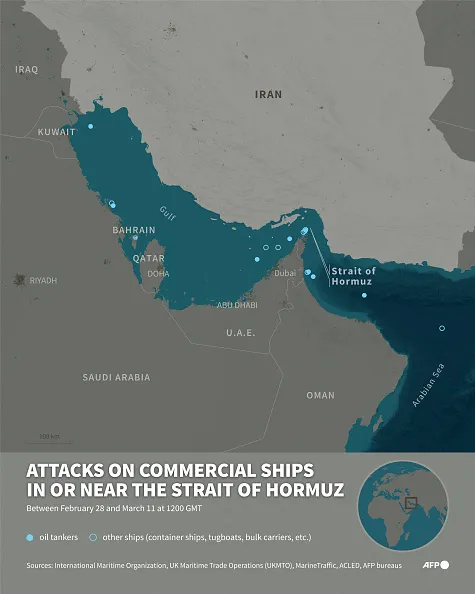
A week-plus into the military efforts, overnight March 8-9, premarket trading mass hysteria spurred Brent crude, the international oil benchmark, and West Texas Intermediate, a domestic American benchmark, both to nearly $120 per barrel. That was an Iranian regime boast after it consolidated control over the Strait of Hormuz, through which a fifth of global oil shipments traverse.
Incapable of concealing its glee, CNN reported at the time the Trump White House was “trapped between the specter of a global economic recession and a naval catastrophe” if the United States wanted to take back the Persian Gulf-to-Indian Ocean waterway.
It turns out that histrionics were a tad unwarranted. Oil prices crashed back below $100 per barrel by the March 9 opening bell. And despite volatility across markets, oil prices don’t seem to be creeping back toward catastrophic levels. They probably won’t, even for an extended time period.
In this one domain, keep calm. And don’t be a “Panican,” a Trump-coined phrase from April 2025 to describe Americans he considered “weak and stupid” for panicking about the global tariff regime imposed during his second term.
Much of the March 8-9 scare over oil was an inadvertent byproduct of the media’s intentional propaganda campaign to blame 2022’s near-double-digit inflation on Russia’s invasion of Ukraine. Instead of on the culprit actually responsible, President Joe Biden’s $1.9 trillion American Rescue Plan, which included enhanced unemployment benefits, $350 billion for state and local governments, and child tax credit expansions.
Russia’s war did lead to a $ 45-per-barrel increase in oil prices. Yet a later Federal Reserve study found that, of the 8% inflation the U.S. experienced in 2022, Russia’s impact on gas prices accounted for one-half of one percentage point.
Why was the impact so muted? Because during Trump’s first presidency, the U.S. became a net domestic exporter of oil for the first time since 1949.
This isn’t to say that the war can’t cause any pain at the gas pump. And whatever remains of Iran’s leadership has stated that their goal in trying to block the Strait is to try to punish the rest of the world with higher gas prices. But even if the mullahs have the emotional support of alt-left and alt-right agitators here at home, the rest of the world has no such patience.
Thanks to Trump’s quixotic capture of Venezuelan dictator Nicolas Maduro, the nation with more proven oil reserves than any other on the planet is now acting as a de facto client state for the U.S., with puppet leader Delcy Rodriguez authorizing the South American nation’s first resumption of crude oil exports in over a year. Trump says the U.S. is imminently getting a fat 100 million barrels of oil from Venezuela, while Chevron and Shell finalize longer-term production deals.
Under ostensible pressure from the White House, the International Energy Agency has announced member countries will release some 400 million oil barrels from strategic stockpiles, including 172 million from the U.S. Trump is reportedly weighing export controls to prioritize sales to Americans first, waiving federal taxes, and finally relaxing the abominable Jones Act, which artificially jacks up domestic prices by banning foreign ships from transporting oil between two American ports.
But the real limiting principle for Iranian aggression in throttling normal market operations is, well, Iran.
Of the estimated 96 ships that Iran’s navy had at the start of the war, America and its allies have destroyed a little more than half. Furthermore, considering that Iran’s missile attacks have plummeted by over 90%, experts estimate that we’ve destroyed a majority of their launchers and their missile stockpile.
Recall that destroying Iran’s navy and missile capabilities were two of the White House’s four stated goals of this war. We’re over halfway through with those two goals, and crucially, the goals will grant us further air superiority to wrap up this war in weeks, not months.
Naturally, Iran is getting desperate, now trying to deploy naval mines in the Strait, which comes with the unfortunate side effect of making it unnavigable not just to the rest of the world, but Iran itself. Considering how dependent the shell of Iran’s economy remains on sales from oil exports, a mass deployment of mines in the Strait would be an economic suicide bombing that likely ends with the loss of patronage of the Chinese, who rely on half of its oil imports from the waterway.
WHITE HOUSE SAYS TRUMP COULD END IRAN WAR WITHOUT TEHRAN’S ‘UNCONDITIONAL SURRENDER’
Don’t mistake short-term panic among America Last investors for the trees here: American gas use has fallen by 4% in the past two decades, while the rest of the economy has grown 42%. We are much more insulated from oil price volatility to the extent that it increases, and the intentional strategy behind this war would indicate that Iran is acting in last-ditch desperation, not a thoughtful, long-term plan to maintain control.
The single most meaningful metric for the White House remains the benchmark 10-year Treasury yield, and Trump should calibrate fiscal policy around it. But oil markets reflect the minutiae of the fog of war. In the long run, don’t be a Panican, and consider the short position over the long run instead of the short-term mass hysteria fueled by a media that wishes Iran were more powerful than it actually is.
Tiana Lowe Doescher (@TianaTheFirst) is an economics columnist for the Washington Examiner.


