



A veterans group that runs multimillion-dollar ad campaigns in support of Democratic candidates, typically retired service members, has been spending heavily on a nonmilitary Senate hopeful who is considered one of Senate Minority Leader Chuck Schumer’s (D-NY) recruits to win several crucial races in the 2026 midterm elections.
VoteVets, a political action committee that presents itself as a veteran advocacy organization, is bankrolled by the Senate Majority PAC, a super PAC closely affiliated with Schumer and “solely dedicated to building a Democratic majority in the U.S. Senate.” According to Federal Election Commission filings, the Senate Majority PAC has given VoteVets more than $31.2 million over the past decade to help Democrats secure Senate seats.
Most recently, VoteVets poured an additional $800,000 into its already seven-figure advertisement blitz supporting the Senate run of Josh Turek, a Democrat serving in the Iowa House.
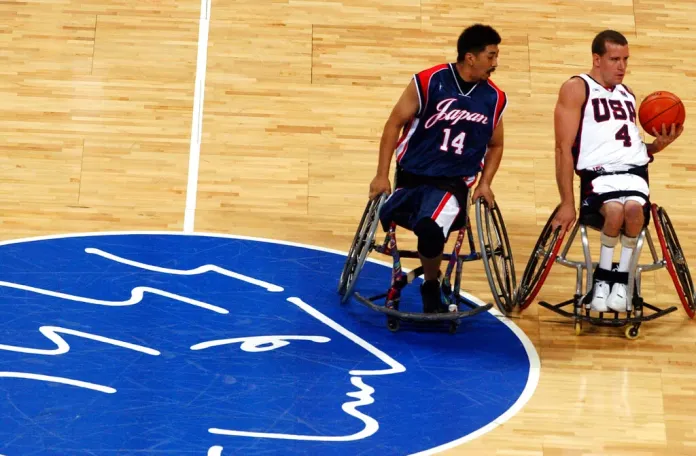
As part of the paid media campaign, VoteVets released a 30-second video last week touting Turek as “the fighter Iowa needs in the U.S. Senate,” although the state representative is not a veteran. His father, however, served in Vietnam, and Turek, a wheelchair-bound Paralympic gold medalist, says his spinal condition was caused by his father’s wartime exposure to Agent Orange.
“Now Josh is running for Senate to end the corruption in Washington,” the VoteVets ad says.
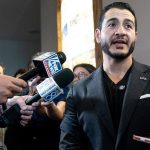
Turek, meanwhile, is widely seen as Schumer’s pick in battleground Iowa. His competitor in next month’s Democratic primary, Iowa state Sen. Zach Wahls, has tied Turek to the Democratic establishment and elites in Washington, D.C.
Wahls, conversely, has positioned himself as an independent voice, telling voters, “As your U.S. senator, I will not be there to work for Chuck Schumer or for Donald Trump or the billionaires or the big corporations.”
The two Iowa Democrats are neck and neck in terms of fundraising, according to their April quarterly reports. Each raised about $1.1 million in the first three months of 2026, with Turek slightly leading over Wahls.
Schumer-backed candidates in other key states have similarly struggled to outraise their competition, as primary challengers have found success running against Democratic Party leadership using anti-establishment messaging. Schumer has not formally endorsed Turek.
SCHUMER’S PRIZED 2026 RECRUITS WON’T COMMIT TO KEEPING HIM AS SENATE LEADER
VoteVets, which is based out of a P.O. box in Portland, Oregon, has spent $5 million on ad buys countering any imagery attaching the bureaucracy of Washington to Turek. Through a series of videos, promoted online and broadcast on TVs statewide, VoteVets is introducing Turek to Iowans as “the only candidate ready to take on the corruption in D.C.”
“Some politicians are for sale. Josh Turek is for Iowa,” one VoteVets video ad told viewers, adding, “Josh isn’t bought and paid for. He refuses to take a single dime of corporate PAC money.”
In response, Wahls has called out Turek for receiving help — in the form of sponsored content — from the outside spending group, going so far as to suggest that VoteVets is a pass-through entity working on behalf of Schumer to tilt the primary in Turek’s favor.
During a Democratic candidate forum last month, Wahls accused Turek of accepting support from Washington insiders via “a dark money super PAC.”
“This organization that is supporting my Democratic opponent, Rep. Turek, is called VoteVets,” said Wahls. “It is known to be linked to Senate Minority Leader Chuck Schumer.”
On the debate stage Tuesday night, Wahls took the allegations further, explicitly stating, “Sen. Schumer is trying to come into Iowa, trying to buy an election to the tune of $6.7 million and climbing.”
IOWA SENATE DEBATE SHOWS SCHISM ON SCHUMER
Polling results, released by Turek for Iowa a day after the debate, show Turek up 53% to 27%, a 26-point advantage against Wahls among Democratic primary voters.
“The momentum behind Josh Turek is surging because Iowans know that Josh is the fighter they need in the U.S. Senate and he is the right candidate to take on Ashley Hinson to fight for working families and hold big corporations accountable,” a Turek campaign spokesperson told the Washington Examiner. “That’s why he’s endorsed by Senator Tom Harkin and over 80 Iowa leaders, and it’s why he’ll win in November.”
Tom Harkin, a former Democratic senator who served as a pilot in the Navy the same decade as Turek’s father, has defended VoteVets’s support of Turek. Turek’s disability, which the U.S. Department of Veterans Affairs has directly linked to Agent Orange exposure, required almost a dozen surgeries by the time he turned 12.
“Josh is as much a victim of the Vietnam War as veterans who were out in the field fighting, absolutely,” Harkin told the Iowa Mercury.
As for VotesVets, Harkin said, “It’s not like they are trying to do something they haven’t before and that is to support good, solid candidates who they believe will be supportive of veterans and veterans’ issues — that’s their bottom line.”
In addition to ad campaigns featuring pro-Turek veterans, VoteVets has hosted a happy hour meet-and-greet connecting Turek with military families while focusing on his familial ties to the military.
“Josh Turek’s connection to the veteran community began at birth,” the VoteVets Action Fund, its 501(c)(4) arm, captioned the outreach event.
In the invite aimed at veterans, VoteVets mentioned that Turek was born with spina bifida and has relied on VA healthcare benefits for most of his life, “so he doesn’t just understand the VA as a policy issue; he understands it as a lifeline.”
Some veterans associations, such as the congressionally chartered Disabled American Veterans, have raised concerns about overtly partisan PACs on both sides of the political aisle harnessing the credibility of war veterans to push certain policy positions.
Paul Rieckhoff, the founder of Iraq and Afghanistan Veterans of America, expressed “deep misgivings about the veteran label being used to advance partisan agendas.” Rieckhoff pointed to how the public often confuses highly partisan veterans groups with nonpartisan veteran services that “put their advocacy for veterans above any political agenda.”
In a statement to the Washington Examiner, VoteVets rebutted the “offensive claim” that the organization is not a legitimate veterans group.
VoteVets pointed to pushback on social media defending the organization, including posts from Democratic strategists Mike Nellis, formerly a senior adviser to Vice President Kamala Harris, and Steve Schale, who was the state director for Barack Obama’s 2008 campaign in Florida.
“I think the actual active duty and veterans who run VoteVets — guys who faced bullets in defense of the nation — would be shocked to learn they are ‘fake,’” Schale posted on X.
VoteVets co-founder Jon Soltz, previously the Pennsylvania co-coordinator of Veterans for John Kerry, served two tours in Iraq. Past board members include Douglas Band, who was the deputy White House assistant to President Bill Clinton, and retired Gen. Wesley Clark, a 2004 Democratic presidential candidate.
“For more than twenty years, VoteVets has effectively worked to elect veterans, national security professionals, and military family members,” VoteVets senior adviser Paul Eaton told the Washington Examiner. “We are proud to support Josh Turek because he knows firsthand the generational costs of war.”
Eaton added, “Josh will fight for our 3,000 members in Iowa who are Veterans and military family members — and for working families across the state. With our country at war and prices soaring, our nation needs Josh in the Senate now more than ever.”
NATIONAL DEMOCRATS SEE HOPE IN IOWA WITH JOSH TUREK’S SENATE BID
VoteVets emerged during the second administration of President George W. Bush to primarily oppose U.S. military intervention abroad by working to elect veterans to Congress who were critical of the wars in Iraq and Afghanistan. The group’s preferred candidates were generally Democrats aligned on the issues of national security and foreign policy.
On the campaign trail, Turek has strongly spoken out against America’s involvement in the Iran conflict, saying that he is “an example of the generational consequences of these forever wars that we continue to find ourselves in.”
“In my lifetime, I’ve seen us spend $1 trillion over in Iraq, another $1 trillion in Afghanistan. For what?” Turek questioned during the debate on Tuesday. “In my father’s conflict, 50,000 men and women [didn’t] come from Vietnam. I’m tired of seeing a blank check to the military industrial complex.”
VoteVets has since expanded its focus area from strictly military matters. When the organization began lobbying about climate change legislation in 2010, progressive critics within the anti-war movement at the time observed, “VoteVets.org looks less like a veterans’ lobby than a full-fledged water-carrier for Democratic interests on Capitol Hill.”


