





The United States is facing a crisis as its two allies in Syria clash in the war-torn city of Aleppo, the fiercest fighting yet between the Syrian government and Kurdish forces.
The U.S.’s main ally in Syria during the civil war was the Syrian Democratic Forces, a militia network primarily made up of Kurds. After the forces of now-President Ahmed al Sharaa toppled the Assad government in December 2024 and seized Damascus, the Trump administration threw its weight behind the new government over the Kurds. The U.S. achieved a balance of the two forces, helping to negotiate a deal between the two to integrate Kurdish forces into the Syrian state military in March.
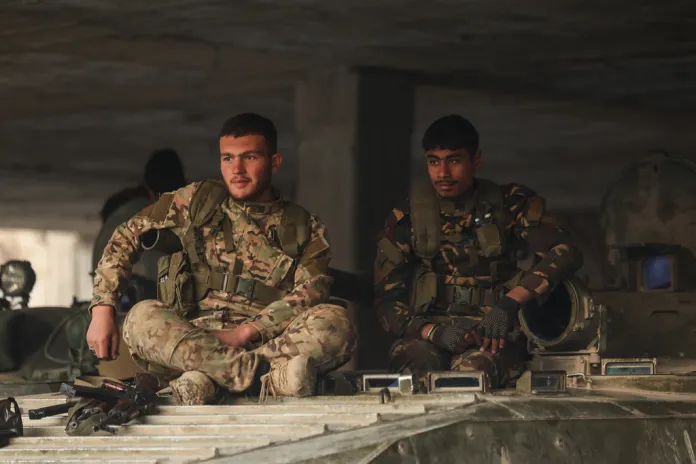
The deal was never implemented, however, escalating into all-out fighting with heavy artillery and ground forces on Jan. 6 in the key city of Aleppo.
In a lengthy statement on X, U.S. Special Envoy Tom Barrack expressed the U.S.’s “grave concern” about the clashes in the Kurdish neighborhoods of Sheikh Maqsoud and Ashrafiyeh. He urged both sides to “exercise the utmost restraint” and place the protection of civilian lives and property “above all other considerations.”
He went on to praise the “historic strides toward stability, national reconciliation, and reconstruction following decades of devastating conflict” made over the past thirteen months, pointing to discussions opened with Israel as one example. Explaining the clashes, Barrack said the scars of war would take time to heal, and the Trump administration remained hopeful.
“Profound transformations of this nature cannot be achieved overnight. The deep scars of prolonged conflict require time to heal, and enduring progress demands patience, tolerance, and genuine mutual understanding across all segments of Syrian society. Nonetheless, we remain steadfast in the vision of a Syria that ensures full inclusion and equal rights for every citizen—Sunni, Kurd, Druze, Christian, Alawite, and all other communities—without exception,” he wrote.
Barrack voiced hope that the March 10 agreement between Damascus and the SDF could still hold, saying it was “eminently achievable.”
“We therefore issue an urgent appeal to the leadership of the Syrian government, SDF, local authorities in Kurdish-administered areas, and all armed actors on the ground: pause hostilities, reduce tensions immediately, and commit to de-escalation. Let us prioritize the exchange of ideas and constructive proposals over the exchange of fire. The future of Aleppo, and of Syria as a whole, belongs to its people and must be shaped through peaceful means, not violence,” Barrack said.
He then cryptically warned both parties to be wary of “disruptive external forces and their proxies that seek to undermine the remarkable progress achieved in the past year and to erode the enduring legacy of @POTUS’s Middle East peace initiatives.”
Damascus and the SDF both accused each other of firing the first shots, mainly of indiscriminately shelling opposing neighborhoods with heavy artillery. Government troops launched an armored offensive on Thursday, with conflicting reports of how the fight proceeded.
Kurdish sources claimed they destroyed numerous armored vehicles, including at least one tank, and inflicted more casualties. Government forces reported that they seized the majority of the Ashrafieh neighborhood by the end of Thursday, Al Jazeera reported. Attention is set to shift to Sheikh Maqsoud, where the Kurds are more entrenched.
The SDF has long held control over its district in Aleppo. Under Assad, Ashrafieh was split between the SDF and government, while Sheikh Maqsoud was entirely under their control.
On March 10, SDF commander Mazloum Abdi signed an agreement with al Sharaa, laying the groundwork for the SDF’s reintegrating into Syria.
The agreement stipulates that the Kurds are “an indigenous community of the Syrian state,” bestowing upon them full political and constitutional rights. Damascus will take control of the region’s vital oil fields, airports, and manage its border crossings. It further calls for “all civil and military institutions in northeastern Syria” to be integrated into the Syrian state.
SYRIAN GOVERNMENT SIGNS BREAKTHROUGH AGREEMENT TO REINTEGRATE US-ALIGNED KURDISH FORCES
“In this sensitive period, we are working together to ensure a transitional phase that reflects our people’s aspirations for justice and stability,” Abdi said at the time. “We are committed to building a better future that guarantees the rights of all Syrians and fulfills their aspirations for peace and dignity. We consider this agreement as a real opportunity to build a new Syria that embraces all its components.”
Developments since have largely derailed the plan. The Kurds became even more fearful of losing their rights after government forces massacred minority Alawites and Druze in fighting throughout 2025. Clashes have periodically erupted since October, although the U.S. has been able to plug the holes and maintain the fragile peace. The ongoing breakout in fighting is the most severe yet, and has exposed Washington as unable to fully contain the situation.


