




The U.S. operation to capture Venezuelan leader Nicolás Maduro has ignited sharp debate in Washington and abroad over whether the move undermines international norms — or delivers a deliberate deterrent message to rivals like China and Russia.
Critics argue that seizing the leader of a sovereign nation risks setting a dangerous precedent — one that adversaries could cite to justify their own military actions beyond their borders.
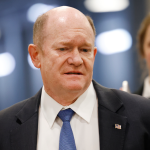
“My main concern now is that Russia will use this to justify their illegal and barbaric military actions against Ukraine, or China to justify an invasion of Taiwan,” Rep. Don Bacon, R-Neb., said in a statement.
“What will we say now if Putin tries to capture Zelenskyy?” Rep. Ro Khanna, D-Calif., asked.
Others counter that such norms have never constrained Moscow or Beijing, and that deterrence is shaped less by legal arguments than by demonstrations of power, speed and capability.
TOPPLING MADURO WAS EASY — GOVERNING VENEZUELA COULD TRAP US FOR YEARS
“I don’t think Putin or Xi ever doubted that power overrides sovereignty,” said Pedro Garmendia, a Washington-based geopolitical risk analyst. “What we’ve seen consistently from China and Russia is that they use rhetoric around international law when it suits them and ignore it when it doesn’t.”
For U.S. adversaries, the most jarring signal may not be diplomatic fallout but the stark demonstration of American lethality.
The operation resulted in the deaths of dozens of Venezuelan and Cuban security personnel, according to Venezuelan and Cuban authorities, as U.S. forces pushed through layers of armed resistance protecting Maduro. Cuban officials acknowledged the loss of multiple military and intelligence personnel deployed in Venezuela, while Venezuelan authorities confirmed heavy casualties among elite security units. Independent estimates place the total death toll — security forces and civilians combined — at several dozen.
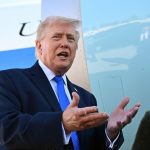
President Donald Trump publicly acknowledged the nature of the mission, describing it afterward as a violent operation by necessity, given the threat environment and the presence of armed foreign forces embedded within Maduro’s security apparatus. Trump argued the level of force reflected the reality of penetrating a defended capital and preventing Maduro from escaping or rallying loyalist units.
Analysts say that willingness to use decisive force — and to own it publicly — carries its own deterrent value.
Garmendia noted that Venezuela was no marginal partner for U.S. adversaries.
“Both countries have invested tens of billions of dollars in the Chávez and then Maduro regime,” he said. “Having the leader of that regime captured and taken into U.S. custody so suddenly — especially when a Chinese special envoy had just met with Maduro hours before — is frankly embarrassing to both countries.”
Beyond casualties, the operation sent a second signal through its execution: speed, precision and deep preparation.
U.S. special operations forces spent months rehearsing the raid, including training on a full-scale replica of Maduro’s compound. CIA officers built a detailed picture of Maduro’s daily routines — tracking when he slept, where he traveled, how his security rotated and which locations offered the narrowest escape routes.
That intelligence allowed planners to identify a precise window when Maduro was most vulnerable. Airspace suppression, rapid insertion and coordinated ground movement unfolded in minutes, denying Venezuelan and allied forces time to respond effectively.
Trump later pointed to that preparation as evidence the operation was deliberate rather than impulsive, arguing that speed and overwhelming force were essential to prevent Maduro from slipping away or turning the operation into a prolonged firefight.
AFTER MADURO, VENEZUELA POWER VACUUM EXPOSES BRUTAL INSIDERS AND ENFORCERS
Former FBI counterintelligence operative Eric O’Neill said those details are likely to matter more to Beijing and Moscow than legal debates at the United Nations.
“At least while Trump is in office, it’s going to look a lot like deterrence to China and Russia,” O’Neill said. “They didn’t even get a chance to blink before Maduro was gone.”
O’Neill added that the execution underscored a broader message.
“That sends a strong signal that the United States can find its adversaries anywhere in the world,” he said, arguing rivals already inclined to violate international norms are unlikely to be emboldened by an action they lack the capability to replicate.
The final deterrent signal lies in experience: the institutional ability to plan and execute complex, intelligence-driven operations built on decades of counterterrorism and special operations campaigns.
U.S. officials point to the seamless integration of intelligence collection, rehearsal, logistics and kinetic force as evidence of a mature operational system that can be activated with little warning — an advantage adversaries must assume exists even when they cannot see it.
Concern has nevertheless been echoed by international institutions.
Ravina Shamdasani, chief spokesperson for the U.N. human rights office, warned the operation could weaken global norms.
“It sends a signal that the powerful can do whatever they like,” Shamdasani said, arguing the intervention “damages the architecture of international security and makes every country less safe.”
China said it was “deeply shocked,” condemning what it called the U.S.’s “blatant use of force against a sovereign state and its action against its president,” and claiming it “seriously violates international law” and threatens stability in Latin America and the Caribbean.
The criticism comes as Beijing has intensified military pressure on Taiwan, including near-daily air incursions and large-scale exercises meant to signal its own willingness to use force.
Russia likewise denounced the U.S. operation at the United Nations as a violation of sovereignty and international law, even as it continues its war in Ukraine while rejecting international legal judgments and condemnation.
For U.S. strategists, that contrast reinforces the intended message: adversaries may invoke international law rhetorically, but what shapes their calculations is demonstrated capability — especially when paired with the experience to plan, rehearse and execute without warning.


