

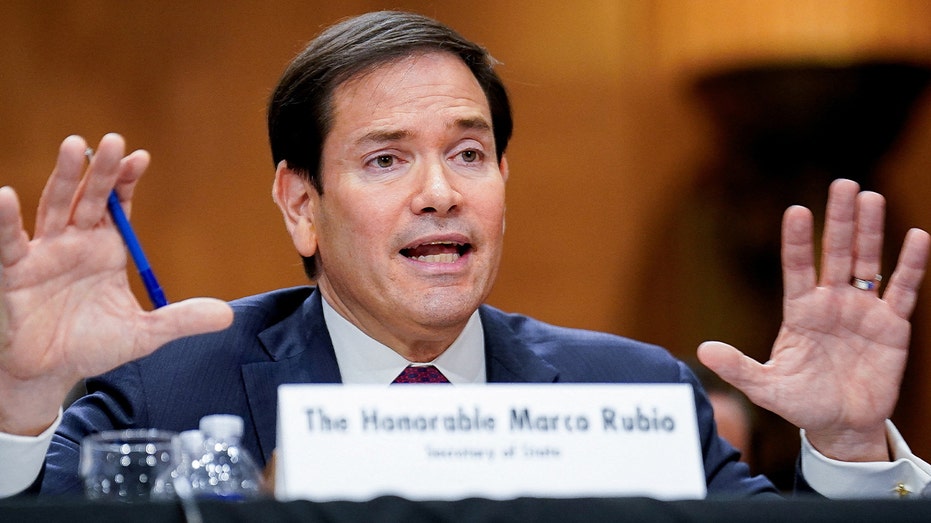
The U.S. will “very quickly” reopen its embassy in Venezuela and establish a diplomatic presence on the ground, according to Secretary of State Marco Rubio.
“We have a team on the ground there assessing it, and we think very quickly we’ll be able to open a U.S. diplomatic presence on the ground,” Rubio told members of the Senate Foreign Relations Committee Wednesday.
The goal, he said, would be not just to interact with officials on the ground but also “civil society and the opposition.”
Such a move would mean restoring diplomatic relations with Venezuela, which were broken off in 2019 when the U.S. embassy’s doors shuttered.
VENEZUELA’S DELCY RODRÍGUEZ SNAPS AT WASHINGTON, DECLARES ‘ENOUGH’ OF US INFLUENCE
The Trump administration has been in dialogue with Delcy Rodríguez, Nicolás Maduro’s former vice president whom U.S. officials describe as an interim leader, since the capture of the wanted Venezuelan dictator.
Reopening the embassy would require the U.S. to acknowledge a governing authority in Caracas, Venezuela, capable of receiving diplomats — a step that would mark a clear shift from Washington’s long-standing refusal to engage Venezuela’s executive.
The current Venezuelan leadership has “been very cooperative on that front,” Rubio said. “Obviously there’s been some hard asks along the way.”
Rubio said the administration is not seeking further military action in Venezuela but stressed that force has not been taken off the table.
“The president never rules out his options as commander in chief to protect the national interest of the United States,” Rubio told lawmakers, while emphasizing that the U.S. is “not postured to, nor do we intend or expect to have to take any military action in Venezuela at any time.”
Rubio also offered details about the first $500 million of the U.S.-brokered sale of Venezuelan oil, saying $300 million went back to Venezuela to pay for public services, while $200 million remains in a U.S.-run account.
CIA DIRECTOR WAS IN VENEZUELA TO MEET WITH ACTING PRESIDENT DELCY RODRIGUEZ, OFFICIAL SAYS
He declined to share details on how long Rodríguez would remain in power, but said a diplomatic presence would help keep a check on the new government.
“I can’t give you a timeline of how long it takes. It can’t take forever,” Rubio said. “But it’s not even been four weeks.”
His comments come amid mixed signals from Venezuela’s interim leadership. In recent days, Rodríguez has struck a defiant tone toward Washington, declaring she had “enough” of U.S. influence in Venezuelan politics during a speech to oil workers broadcast on state television.
The remarks appeared aimed largely at a domestic audience, even as Venezuela remains constrained by U.S. sanctions and dependent on American decisions over oil licenses and revenue controls.
Rubio said the administration’s goal is to push Venezuela toward a democratic transition, describing the Maduro regime as “a base of operation for virtually every competitor, adversary and enemy in the world.”
He said the U.S. is aiming for a “friendly, stable, prosperous Venezuela and democratic … with free and fair elections,” while acknowledging the process will take time.
Pressed on corruption concerns, Rubio said an audit mechanism is being established.
“The audit will be on,” he told senators, stressing that spending would be restricted to approved public needs.


