





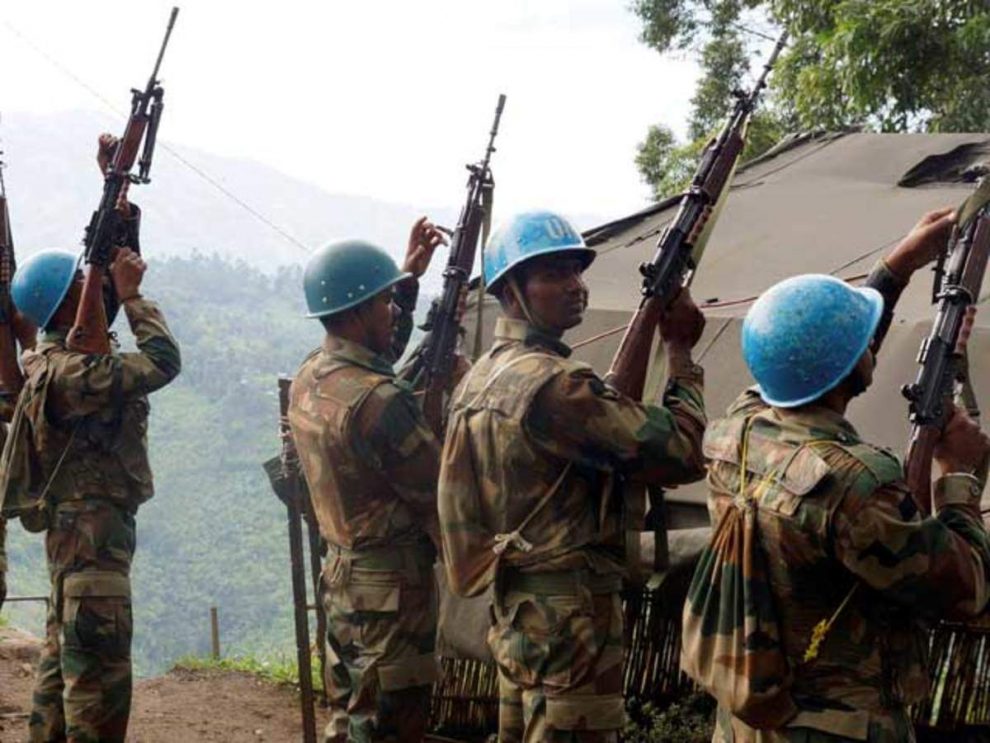
The United Nations may resort to military action against states that defy its mandates on global climate action, according to Ole Wæver, a prominent international relations professor at the University of Copenhagen.
In an interview with ABC News in Australia, Professor Wæver cautions that what he sees as “climate inaction” might draw the U.N. into considering other means to ensure its goals are met, even if that leads to global armed conflict.
Professor Wæver says more resistance to change could potentially threaten democracy although the U.N. would counter that the end justified the means in much the same way countries like Greece had their debt crisis solutions forced on them by European Union bureaucrats in Brussels and Strasbourg.
“The United Nations Security Council could, in principle, tomorrow decide that climate change is a threat to international peace and security,” he says.
Luxury real estate brothers sentenced to 30 years in prison for yearslong sex-trafficking scheme
Jordanian Military Goes After Targets in Syria in Response to Terrorists Killing Christians
‘Beloved’ daredevils who scaled Empire State Building inching toward deal after proposal stunt: attorney
DHS Shuts Down Major Chinese Birth Tourism Loophole in US Pacific Territory
175 Democrats demand Trump admin stop Ilhan Omar investigation, warn it could hurt her re-election bid
Shouting match erupts at UN as Cuban foreign minister moves toward US ambassador’s podium: ‘Back up!’
Trump administration ‘monitoring’ leftist organizers ignoring new terrorism sanctions: State Department official
90 Percent of Largest United Methodist Church Congregation Votes to Leave Denomination – But It Won’t Be Easy
Hundreds of staged armed robberies helped thousands pose as crime victims in US immigration scam: DOJ
The Thing That Never Happens: DOJ Says Hundreds of Foreigners Voted in Multiple US Elections
House report says NYC prosecutors tailored plea deals to shield illegal immigrants from deportation
Norway and Finland break norms by phoning Putin directly to urge breakthroughs at trilateral talks
Multi-state manhunt underway as murder victim’s close friend fears escaped killer could strike again
FBI raids Beverly Hills mansion as part of Eric Swalwell investigation
WNBA Players Run Off the Court Again Before National Anthem Ahead of Monday Finals Game
“And then it’s within their competencies to decide ‘and you are doing this, you are doing this, you are doing this, this is how we deal with it’.”
He believes classifying climate change as a security issue could leave the door open to more extreme policy responses.
“That’s what happens when something becomes a security issue, it gets the urgency, the intensity, the priority, which is helpful sometimes, but it also lets the dark forces loose in the sense that it can justify problematic means,” he says.
This urgency, he says, could lead to more abrupt – and essentially undemocratic – action at an international level.
“If there was something that was decided internationally by some more centralised procedure and every country was told ‘this is your emission target, it’s not negotiable, we can actually take military measures if you don’t fulfil it’, then you would basically have to get that down the throat of your population, whether they like it or not,” he says.
“A bit like what we saw in southern Europe with countries like Greece and the debt crisis and so on. There were decisions that were made for them and then they just had to have a more or less technocratic government and get it through.”
Professor Wæver made his predictions last month on the eve of the United Nations COP25 climate conference now underway in Madrid, Spain.
Almost 25,000 delegates and 1500 journalists have flown into the Spanish capital to attend the two-week long meeting.
COP25 will consider a wide agenda of global action including implementing taxes on developed countries to transfer wealth to nations dealing with “the cost of drought, floods and superstorms made worse by rising temperatures,” as Breitbart News report.
Luxury real estate brothers sentenced to 30 years in prison for yearslong sex-trafficking scheme
Jordanian Military Goes After Targets in Syria in Response to Terrorists Killing Christians
‘Beloved’ daredevils who scaled Empire State Building inching toward deal after proposal stunt: attorney
DHS Shuts Down Major Chinese Birth Tourism Loophole in US Pacific Territory
175 Democrats demand Trump admin stop Ilhan Omar investigation, warn it could hurt her re-election bid
Shouting match erupts at UN as Cuban foreign minister moves toward US ambassador’s podium: ‘Back up!’
Trump administration ‘monitoring’ leftist organizers ignoring new terrorism sanctions: State Department official
90 Percent of Largest United Methodist Church Congregation Votes to Leave Denomination – But It Won’t Be Easy
Hundreds of staged armed robberies helped thousands pose as crime victims in US immigration scam: DOJ
The Thing That Never Happens: DOJ Says Hundreds of Foreigners Voted in Multiple US Elections
House report says NYC prosecutors tailored plea deals to shield illegal immigrants from deportation
Norway and Finland break norms by phoning Putin directly to urge breakthroughs at trilateral talks
Multi-state manhunt underway as murder victim’s close friend fears escaped killer could strike again
FBI raids Beverly Hills mansion as part of Eric Swalwell investigation
WNBA Players Run Off the Court Again Before National Anthem Ahead of Monday Finals Game
President Donald Trump officially withdrew the U.S. from the Paris Climate Accord, which COP25 is a continuation thereof, in October as part of an election promise to voters, saying he was “elected to represent the citizens of Pittsburgh, not Paris.”
Story cited here.


