



Beijing is cracking down on dozens of U.S. companies and corporate leaders after President Donald Trump approved a weapons package for sale to Taiwan.
Boeing, L3 Harris Marine Services, Northrop Grumman Services, Lazarus AI, and more than a dozen other U.S. firms were slapped with sanctions as a result of the package, as well as executives such as Anduril Industries founder Palmer Luckey.
“We stress once again that the Taiwan question is at the very core of China’s core interests and the first red line that must not be crossed in China-U.S. relations,” the Chinese foreign ministry stated Friday. “Any company or individual who engages in arms sales to Taiwan will pay the price for the wrongdoing.”
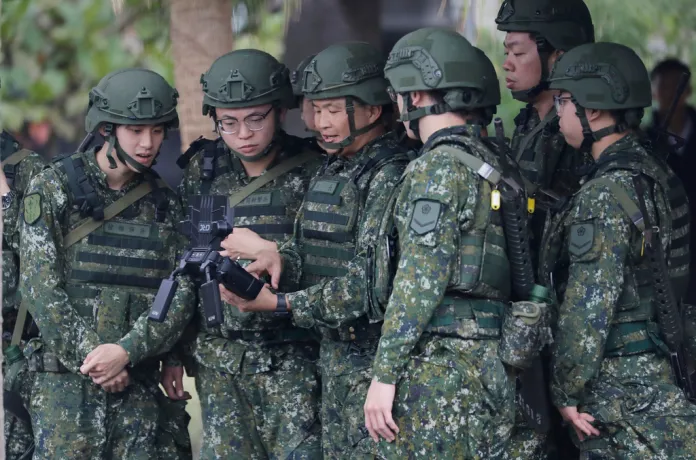
The package will furnish the island territory’s military with a substantial cache of weapons, such as Himars missile launches and howitzer artillery guns, and carries a price tag of approximately $11 billion.
The Chinese Ministry of Foreign Affairs complained that the weapons package, the most expensive in the history of U.S.-Taiwan relations, “seriously violates the one-China principle … interferes in China’s internal affairs, and undermines China’s sovereignty and territorial integrity.”
Accordingly, the companies sanctioned by the Chinese Communist Party will have all “movable and immovable properties, and other kinds of assets within China” frozen, and “all organizations and individuals within China shall be prohibited from engaging in transaction, cooperation and other activities with them.”
Corporate executives will suffer the same asset freeze and block on business in China, as well as restrictions on their ability to obtain a visa for entry, including in Hong Kong and Macao.
The sanctions, while symbolically an escalation in tensions between the United States and China over the future of the rightful governance of Taiwan, are unlikely to have serious effects on the companies and executives targeted.
Firms engaging with the U.S. government on the development and manufacturing of military technology are heavily restricted in conducting business with Chinese companies or the Communist Party.
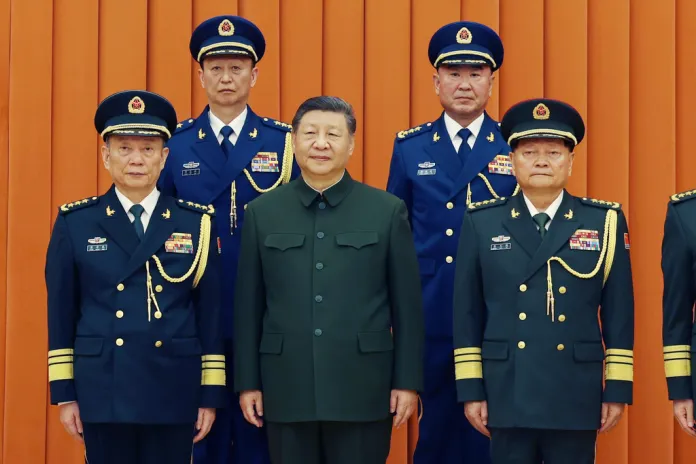
The People’s Republic of China considers Taiwan to be rightful Chinese territory and has made reclamation of the island a top priority in the coming years, frequently threatening military force.
Taiwan, officially known as the Republic of China, rejects Beijing’s governance and considers itself an independent nation with a democratically elected government.
The U.S. executive has long held a position of “strategic ambiguity” on the Taiwan question, deepening bilateral ties and defensive cooperation with the island while never recognizing its independence.
Trump downplayed the bilateral relationship after coming into office, concerned that emphasizing support for Taiwan would damage trade negotiations with China.
TAIWAN ANNOUNCES $40 BILLION DEFENSIVE MISSILE SYSTEM MODELED AFTER ISRAELI ‘IRON DOME’
Taiwanese President William Lai has fluctuated in his confidence about Trump’s support for the territory, at one point attempting to lure the U.S. president into greater action with the promise of a Nobel Peace Prize nomination.
The Chinese Communist Party responded by accusing Lai of “prostituting himself” to U.S. interests.


