


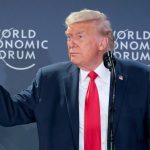

President Donald Trump acknowledged on Thursday that his administration does not know who the leader of Iran is after several senior officials have been assassinated during the war.
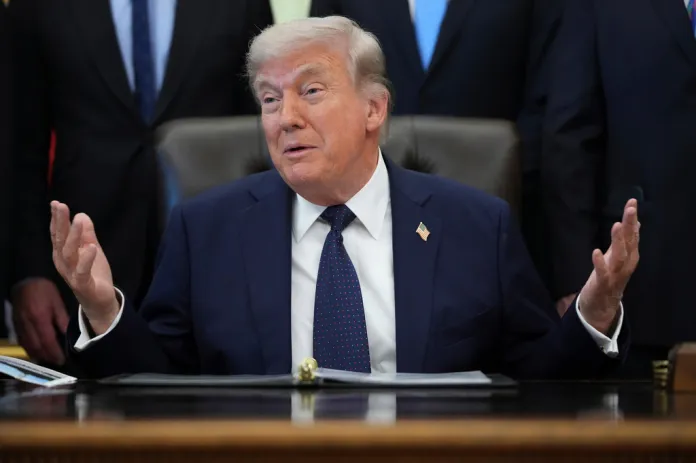
“We don’t know who the leader is in Iran because, remember, regime change,” Trump said in the Oval Office.
Trump’s comment is a nod toward the delayed negotiations between the United States and Iran. The two sides were expected to meet in Islamabad, Pakistan, this week, but they called off the conversation.
They first met there on April 11 and 12, but the two sides left without an agreement in place.
Prior to the war, the supreme leader, Ayatollah Ali Khamenei, had been in power as the senior figure in Iran since 1989. He was killed in the opening strikes of the war. Iran’s Assembly of Experts selected Mojtaba Khamenei to succeed his father, though he, too, was injured during those strikes, according to U.S. officials.
The younger Khamenei has not been seen publicly since assuming the position of supreme leader, which has raised speculation that he could be incapacitated or even dead.
Iranian Foreign Affairs Minister Abbas Araghchi and Parliament Speaker Mohammad Bagher Ghalibaf led the first round of talks with the U.S., though it’s not believed they are the final decision-makers.
Mohammad Pakpour, then the commander of Iran’s Islamic Revolutionary Guard Corps, was killed during the war as well, and he was replaced by Major General Ahmad Vahidi, who has seemingly increased his grip on power since assuming the position.
HARD-LINE IRANIAN REVOLUTIONARY GUARD COMMANDER EMERGES AS KEY PLAYER
Vahidi is believed to be more extreme than Araghchi and Ghalibaf, and his ascension is likely a win for those who share his views.
Trump said earlier this week that the U.S. would extend the ceasefire, which was close to expiring, but he did not specify how much longer it would continue. He said it was “based on the fact that the government of Iran is seriously fractured.”


