





Time is running out for the Virginia Supreme Court to make a decision on the redistricting referendum. The court ruled to block the redistricting map while it makes a decision on the case.
According to House Bill 1384, the election must be certified no later than 14 days after the day of the election. This means the Virginia Supreme Court has until May 6, or the map could be found null and void for the 2026 midterm elections.
“The state board of elections is running up against a clock,” Matthew Hurtt, chairman of the Arlington County Republican Committee, told the Washington Examiner. “If a few more days pass, the political reality is the hands will be tied of the state board of elections.”
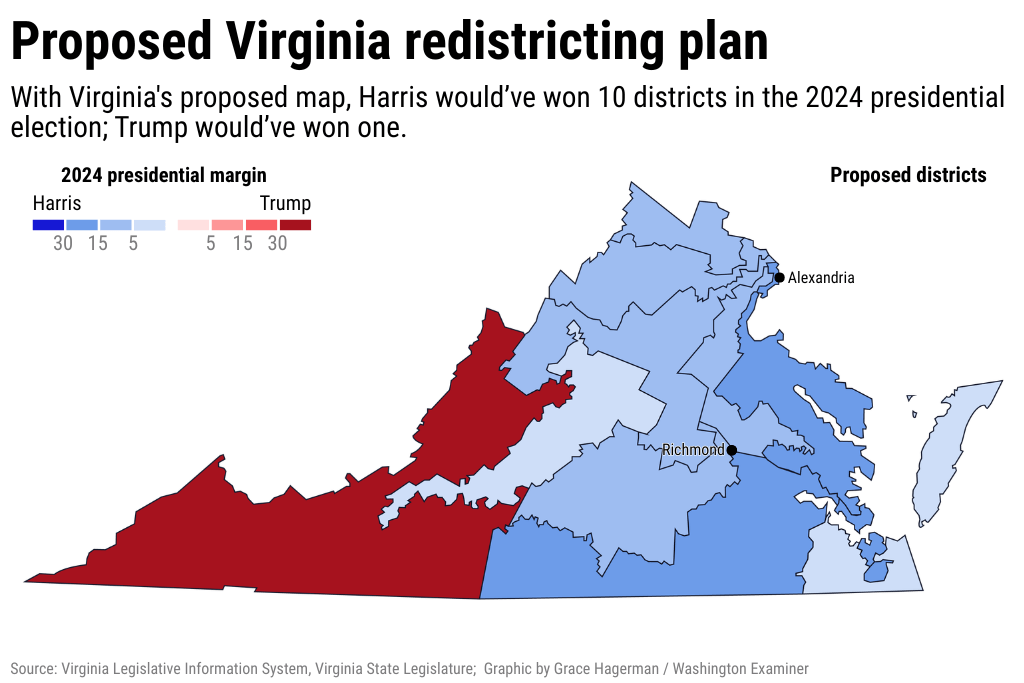
The Republican National Committee is backing multiple legal challenges to Virginia’s new redistricting referendum, arguing it violated the state constitution by pushing through a map giving Democrats a 10-1 majority in the commonwealth.
“I just think it’s unconscionable what the Democrats have done here,” Mike Hurst, general counsel to the RNC, told Washington Examiner. “They’ve lied to the voters. They’ve just completely thrown constitutional requirements out the window.”
Hurst, who is also the chairman of the Mississippi Republican Party, said lawmakers ignored constitutional safeguards that voters themselves approved.
“Virginians established years ago a process for redistricting. They enshrine[d] that in the commonwealth’s constitution,” Hurst said. “What we believe the facts have shown is that the General Assembly violated specifically the commonwealth constitution here by trying to ram this through against the will of the people.”
The RNC is behind three lawsuits, one relating to the compactness of the congressional map and two others about the procedure Democrats used to advance the referendum.
“What the Democrats have done here is unconstitutional. It’s illegal,” Hurst said. “It has taken the voice away from the people, which is what we’re supposed to all be about.”
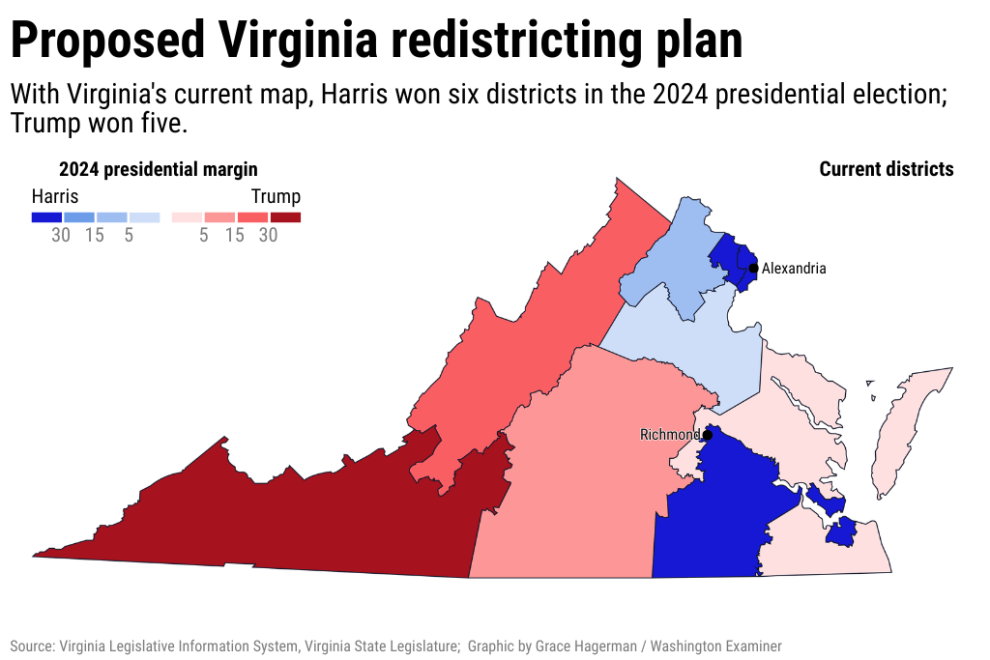
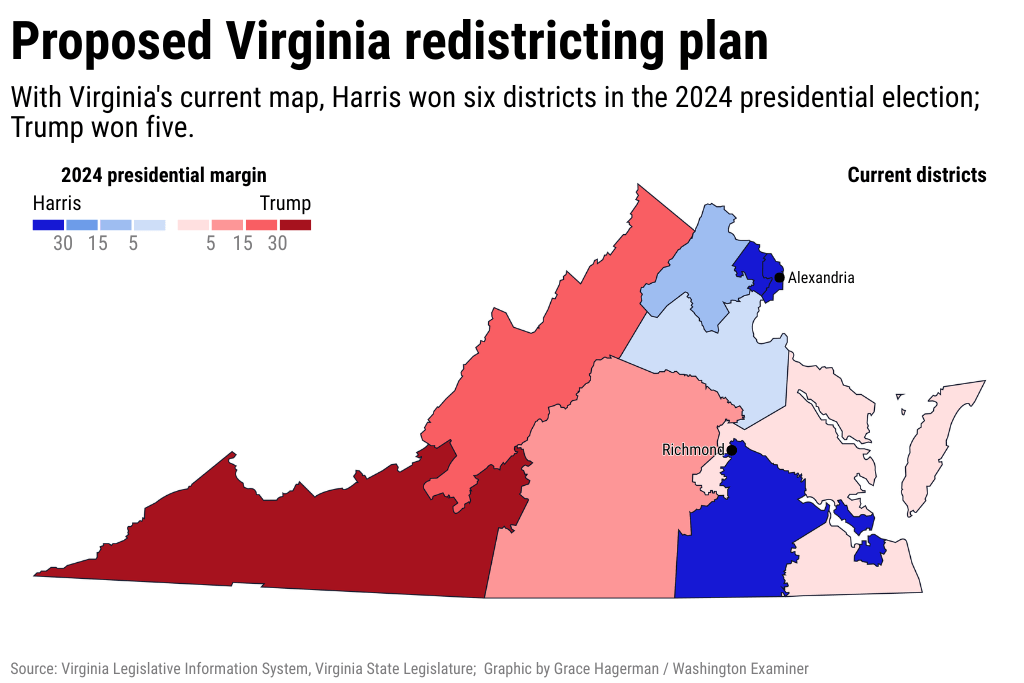
Voters narrowly approved the new congressional map by less than 3 points (51.7%-48.3%) to change a 6-5 Democratic majority to a 10-1 Democratic advantage in Virginia’s U.S. House delegation. Hurst argues the vote should never have happened because the way the maps were brought before Virginians was unconstitutional.
Hurtt, on the other hand, believes this proves the 6-5 map properly represents the people of Virginia.
“I think the vote was so close, and it is representative of the current congressional delegation and voters reaffirmed that,” Hurtt said. “I think what Democrats were expecting was a much wider margin, something like what played out in the 2025 gubernatorial election, and they didn’t get that and so their arguments were not as strong before the [state] Supreme Court.”
Hurtt believes the Virginia Supreme Court will make their decision about the referendum on Monday.
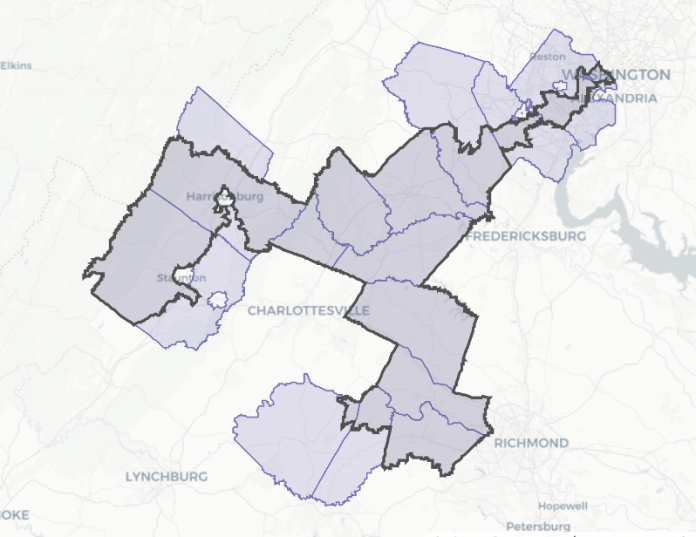
If the court finds Democrats did follow proper procedure, the RNC says there are still more lawsuits against the compactness of the map, which Hurst calls “lobster-mandering” due to the distinct lobster shape of Virginia’s 7th Congressional District.
“The Democrats drew everything in a way that they knew would maximize their numbers in these congressional districts,” Hurst said. “They have specifically shaped these so that northern Virginia is divided up into five different areas extending down to the Central Valley, to the Shenandoah, to the tidewaters, and it’s basically reinforcing the idea that Washingtonians are going to send other Washingtonians to Washington, which is crazy.”
Hurst believes the landmark Supreme Court ruling Wednesday in Louisiana v. Callais will set a precedent in Republicans’ favor and gives him more confidence the Virginia Supreme Court will rule against the redistricted map.
BAN GERRYMANDERING? HOLD YOUR HORSES
“That’s going to be another opportunity, I think, for the Republican Party to look at this, to analyze this, and to assess whether the Democrats have actually violated the Voting Rights Act,” Hurst said.
The high court ruled 6-3 on Wednesday that Louisiana’s creation of a second minority-majority district in compliance with Section 2 of the Voting Rights Act was an unconstitutional racial gerrymander.


