






There’s a familiar rhetorical pattern to retirement announcements by most members of Congress. Whether a Democrat or a Republican, they’ll none-too-humbly brag about the federal largesse brought by them to their state or district.
They’ll also praise their own judgment and wisdom, often with a quote from William Shakespeare or the Bible about knowing when to leave. A favorite retiring lawmaker line overlaps with “Turn! Turn! Turn!” — the 1959 Pete Seeger song, and its 1965 jangly and electrified hit version by The Byrds. A tune based on Ecclesiastes 3:3 scripture: “A time to break down, and a time to build up.”
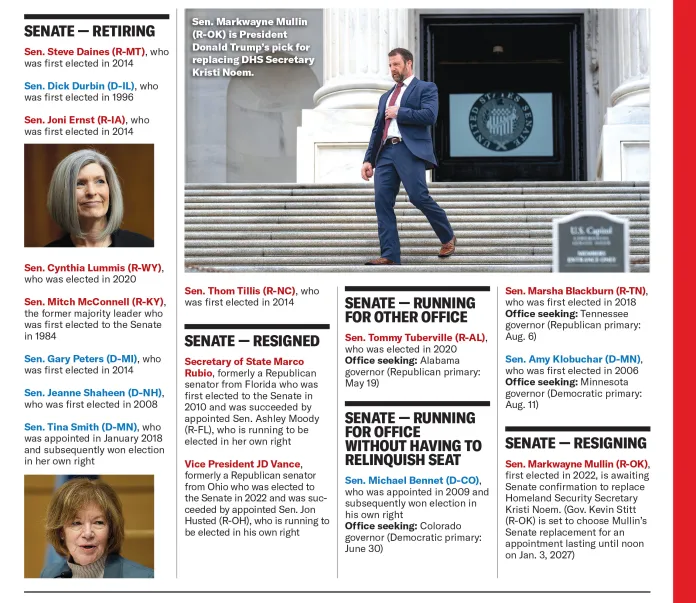
Sen. Cynthia Lummis (R-WY) is offering no such self-serving explanations about her looming Capitol Hill departure.
“Deciding not to run for reelection does represent a change of heart for me, but in the difficult, exhausting session weeks this fall, I’ve come to accept that I do not have six more years in me,” Lummis said in a Dec. 19, 2025, statement announcing her Senate retirement at the end of the 119th Congress, in early January 2027.
“I am a devout legislator, but I feel like a sprinter in a marathon,” Lummis said. “The energy required doesn’t match up.”
That’s a refreshingly honest reason for calling it quits, and an understandable one. Direct flights from Washington Dulles International Airport to Jackson Hole, in Wyoming’s northwest region, run once a week, on Saturdays. Getting to Cheyenne, Wyoming’s state capital, likely means flying into Denver, and then driving 102 miles north from the Colorado capital to the southeast Wyoming city.
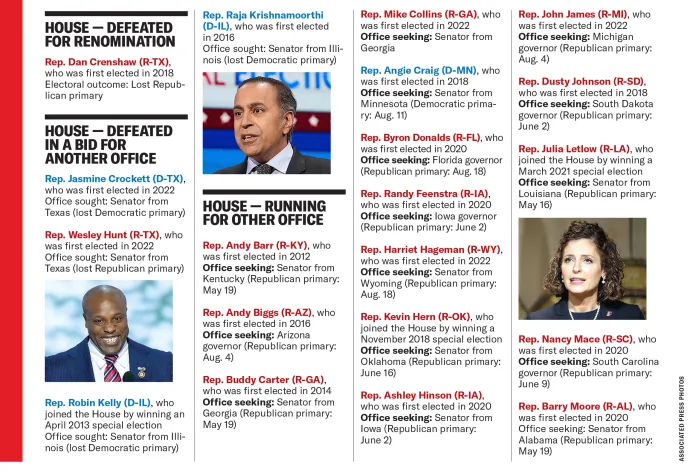
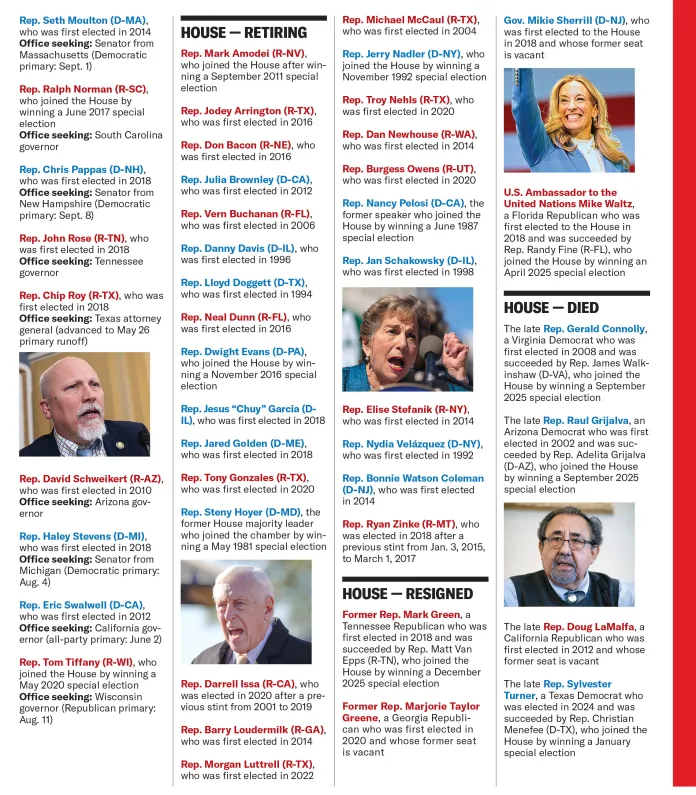
Lummis, 71, is among nine senators not seeking reelection in November 2026. Twenty-six House members are leaving voluntarily. Another 24 House members are seeking bids for other offices, such as senator, governor, or state attorney general. Four House members have lost primary bids for higher office, and another was defeated for renomination.
This exodus represents the highest turnover in the House since 1992 and in the Senate since 2012. There’s no one factor at play. But lawmakers, despite saccharine statements about the virtue of public service and knowing when to hang it up, behind the scenes cite darker reasons, including polarization that makes it difficult to enact legislation, and among Democrats and at least some Republicans, a toxic political environment during President Donald Trump’s second, nonconsecutive term.
As for Lummis, this is actually the second congressional departure. She was Wyoming’s lone House member for eight years but didn’t seek reelection in the 2016 cycle. She returned to Washington after being elected to the Senate in 2020, succeeding a longtime Republican incumbent.
DHS tensions spur Oklahoma political shuffle
The 2026 election cycle was supposed to be relatively quiet in Oklahoma. The deep-red state, where Republican presidential candidates have won all 77 counties going back to the 2004 elections, looked set to back Sen. Markwayne Mullin (R-OK) for a full, six-year term. After 10 years in the House, Mullin won a Senate special election in 2022, just ahead of the prior GOP incumbent’s resignation.
But the Oklahoma situation shifted significantly when, in the first Cabinet shake-up of Trump’s second term, he announced that Homeland Security Secretary Kristi Noem would leave office on March 31. Noem is moving to a newly created position as special envoy for the “Shield of the Americas,” a security initiative focused on the Western Hemisphere.
Noem had been a top public face of the Trump administration’s deportation agenda, which led to several public relations disasters, including a two-day testimony before the Senate Judiciary Committee that reportedly angered Trump.
The president announced his intention to replace Noem with Mullin, who is likely to be confirmed and in office by March 31 because Republicans hold the Senate majority. Plus, Mullin, as a sitting senator, can vote in favor of his own nomination.
To replace Mullin in the Senate, Gov. Kevin Stitt (R-OK) is highly likely to pick a placeholder. That’s due to an Oklahoma law that requires anyone who accepts such an appointment to sign a pledge not to run for the post in the next election.
While this law is likely unenforceable — the Supreme Court has repeatedly held that states cannot impose eligibility requirements on federal candidates beyond those in the Constitution — it would put anyone interested in seeking a full term in an awkward position.
Mullin’s likely replacement for a full term is the most prominent declared candidate, Rep. Kevin Hern (R-OK), a member of the House GOP leadership as House Republican Policy Committee chairman. Hern has long had his eye out for a prominent political post. When the House ousted Speaker Kevin McCarthy in October 2023 after only nine months in the chamber’s top spot, Hern briefly ran to replace the California Republican. However, Hern dropped out before the balloting that chose now-House Speaker Mike Johnson (R-LA).
GRASSLEY SAYS SECRET SUBPOENAS FOR LAWMAKERS’ CALL LOGS UNDERCUT CONGRESSIONAL PROTECTIONS
Hern’s Senate bid opens up the Tulsa-area 1st Congressional District, where he first won in a November 2018 special election. His replacement is virtually certain to be a Republican, as Trump beat Democratic nominee Kamala Harris there 60%-38% in 2024. Candidates in the June 16 Republican primary include Kim David, a member of Oklahoma’s Corporation Commission who previously served as state Senate majority leader, and state Rep. Mark Tedford.