

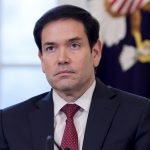
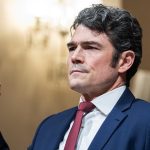


President Donald Trump is planning to announce his choice for Federal Reserve chair after the holidays. Here is a look at the three people most discussed as potential picks.
Fed Chairman Jerome Powell’s term is set to expire in May 2026, and whoever Trump chooses to replace him will become one of the most important decision-makers on Earth, inheriting an economy that is still grappling with inflation and a slowing labor market.
ECONOMY ADDED 64,000 JOBS IN NOVEMBER: THE KEY FACTS AND FIGURES
Just a week ago, National Economic Council Director Kevin Hassett was seen as the runaway choice, and Trump even said he had narrowed the search down to one person. But now, there are reports that former Fed governor Kevin Warsh and current Fed governor Christopher Waller are also in the running.
Investors are getting in on the action. As of Thursday, prediction market Kalshi pegged the odds of Trump picking Hassett at just over 50%, Warsh at 31%, and Waller as a dark horse candidate at 14%.
But who are they, what is their experience, and what are their views?
1. Kevin Hassett
Hassett, 63, is an economist who has served as director of the National Economic Council in the second Trump administration.
A Massachusetts native, Hassett did undergraduate studies at Swarthmore College and then earned a doctorate in economics from the University of Pennsylvania, the same college that Trump attended.
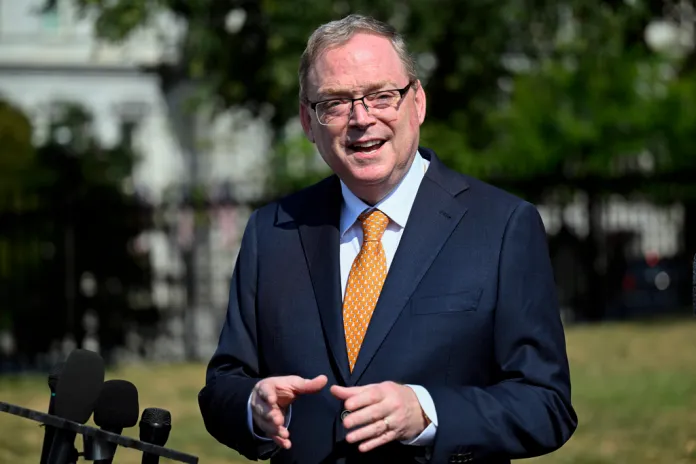
Hassett was a professor at Columbia University in the early 1990s before working as an economist at the Federal Reserve Board of Governors. Hassett was the chief economist for the 2000 presidential campaign of Sen. John McCain and was an economic adviser on the campaigns of then-President George W. Bush in 2004 and former Massachusetts Gov. Mitt Romney in 2012.
Hassett served as chairman of the Council of Economic Advisers from 2017 until 2019 and then as a senior adviser to the president on economic issues for a few months in 2020.
In Trump 2.0, Hassett has been a fixture on TV, defending the administration’s economic policies. He has advocated lower interest rates, something that Trump himself has pushed hard for and has said is a litmus test for the next chair.
Hassett has said an artificial intelligence boom could afford the central bank the opportunity to lower its interest rate target rapidly. He has argued that a positive supply shock from the AI boom could be a reason to lower interest rates.
Of the three men, some think that Hassett would be most willing to do the president’s bidding when it comes to interest rates. That could concern financial markets, given how the Fed is designed to be insulated from White House influence.
Mark Hamrick, senior economic analyst at Bankrate, said financial markets are likely to be most hesitant with a Hassett choice “because of his tendency to parrot administration talking points.”
“I think that that concern is legitimate,” Hamrick told the Washington Examiner. “Would he actually be consistent with the tradition of independence in that role? Certainly, that would be the hope, but there are risks.”
Still, the Fed chairman is only one person and cannot unilaterally set interest rates. He would need the buy-in of others.
Decisions about monetary policy are up to a 12-person board called the Federal Open Market Committee, which consists of the Fed Board of Governors and a rotation of regional Fed presidents. The FOMC collectively decides on the course of interest rate policy. However, the Fed chairman can help set the tone and messaging of the central bank.
Kevin Warsh
Warsh, 55, has experience at the Fed but is a bit of an outsider in the sense that he has not been a public policymaker for over a decade.
Still, he served on the Fed Board of Governors throughout the Great Recession and has been a prominent name in the world of finance and economics for quite some time.
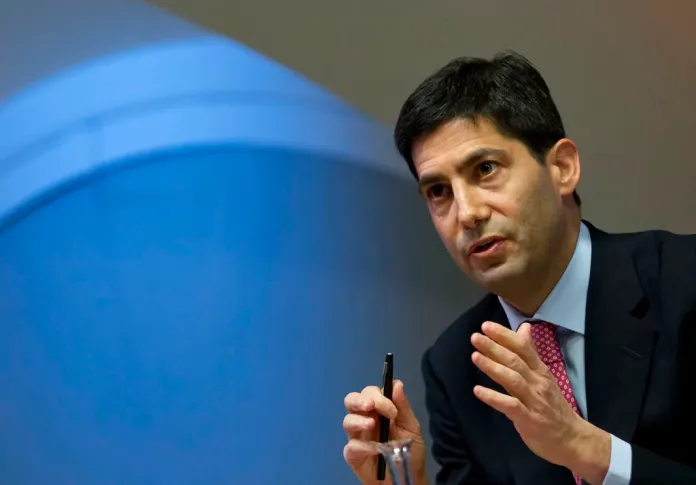
Bush nominated him to the Fed board in 2006, and he served in the role under both Bush and Obama. A big chunk of his time at the Fed overlapped the 2008 financial crisis and Great Recession. After leaving the central bank, Warsh worked as a distinguished visiting fellow at Stanford University’s Hoover Institution.
Warsh has faced some criticism for his handling of the 2008 financial crisis and its fallout. At that time, the Fed took extraordinary actions to intervene in the economy and to prop up the markets. Unemployment was spiraling, and then-Fed Chairman Ben Bernanke spearheaded looser money policies that Warsh at the time panned as being possibly inflationary.
Warsh appeared overly fixated on inflation during a time when unemployment was rising and the economy was collapsing. Some argue that if he had his way, unemployment would have gotten even worse than it did.
“On the inflation front, I continue to be encouraged by the strength in the exchange value of the dollar and the work that is doing for us on import price inflation,” he said in September 2008. “I’m encouraged by the move down across a breadth of commodities — not just energy, metals, and food but really across the entire basket — but I’m still not ready to relinquish my concerns on the inflation front.”
Hamrick pointed out that he has not been in a policymaking role in over a decade.
“He was a critic of the post-crisis quantitative easing,” Hamrick said. “He’s regarded as a little more hawkish on inflation and probably stricter on the standpoint of price stability and fiscal discipline.”
Christopher Waller
Waller, 66, is currently on the Fed board, which gives him the most intimate insight into how monetary policy has been conducted in recent years and the Fed board’s thinking regarding inflation and interest rates.
Waller joined the Fed board in 2020 after being nominated by Trump during the president’s first term. Since then, he has been credited as one of the few top economists who correctly predicted that the central bank could drive down inflation without causing a spike in unemployment.
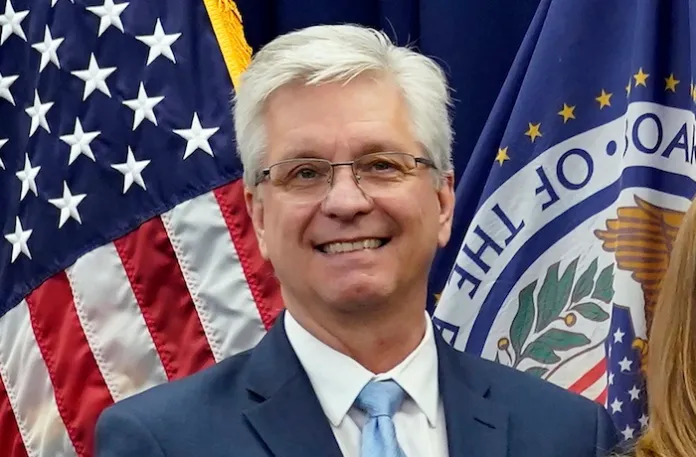
He is now also perhaps the most prominent Fed voice in favor of lowering interest rates — something that has surely ingratiated him with Trump.
“Chris Waller has been as right as anyone in recent years,” Jason Furman, the chairman of former President Barack Obama’s Council of Economic Advisers, recently told the Washington Examiner. “He also makes a good case for substantial interest rate cuts, although I am more nervous about persistent inflation than he is.”
INFLATION DROPPED TO 2.7% IN NOVEMBER, REPORT DELAYED BY SHUTDOWN SHOWS
Waller attended Bemidji State University for his undergraduate studies and later earned his doctorate from Washington State University. Prior to being sworn in as a member of the Fed board in 2020, Waller served as executive vice president and director of research at the Federal Reserve Bank of St. Louis since 2009, which he joined after being a professor at the University of Notre Dame.
Hamrick said Waller is probably the pick that would be most favorable to the markets.


