


Vaticanology, the practice of studying and writing about the inner workings of the Holy See, was a niche area of journalism for most of American history.
The field has experienced a small boost in recent years as Catholicism has risen in prominence within U.S. society; a trend concurrent with the mass media’s ballooning consumption amid the United States’s ongoing culture war.
It’s a unique genre of writing perfected by the Italian press, blending rumors, facts, opinions, speculation, and literary flourish into grand narratives about the direction of Europe’s last absolute monarch and his royal court.
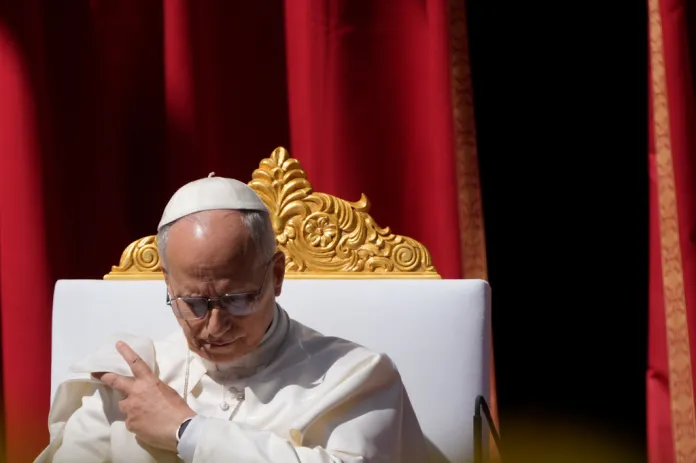
Pope Francis was a blessing to “vaticanistas” — he was a pontiff who spoke off the cuff, less as an academic theologian and more as a loving pastor. This provided heaps of candid statements with enough ambiguity that they could be spun into any number of articles with utterly contrasting takeaways.
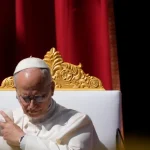
When Pope Leo XIV was elected to replace him on the throne last year, the Catholic Church entered a period in which far fewer newsworthy political statements would be emerging from the Apostolic Apartments.
But when the Vatican won’t play ball and give journalists a juicy story, that’s when things can go awry.
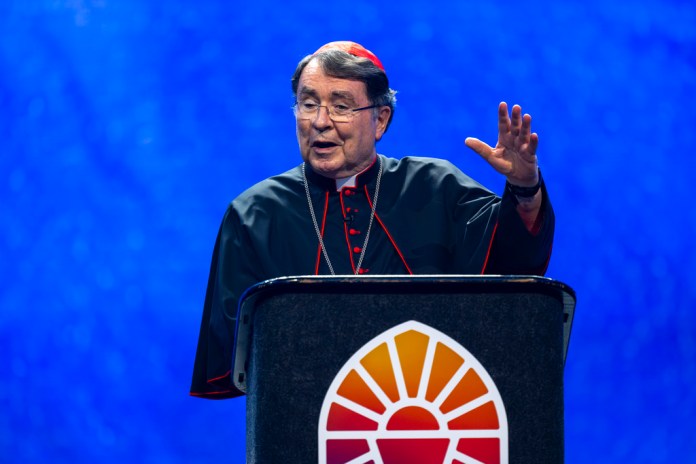
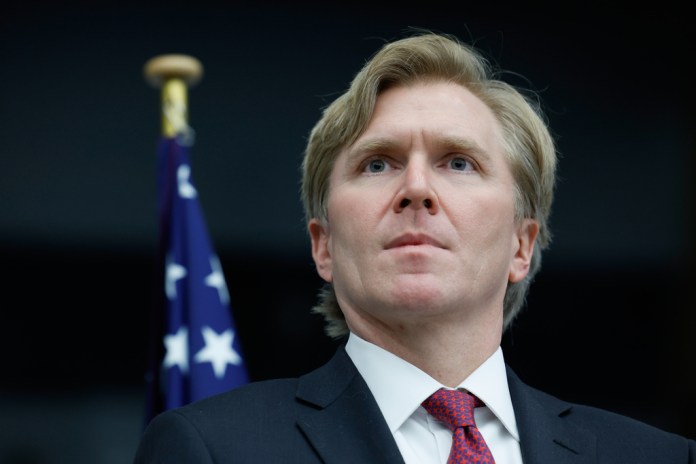
Enter the Free Press. It told the story of a heated exchange between Undersecretary of War for Policy Elbridge Colby with Cardinal Christophe Pierre, the apostolic nuncio to the U.S., in late January at the Pentagon.
The outlet, citing “both Vatican and U.S. officials briefed on the meeting,” alluded only vaguely to a “bitter lecture warning that the United States has the military power to do whatever it wants—and that the Church had better take its side.”
In addition to a lack of named sources, the piece failed to offer concrete quotes from the meeting, such as when it claimed someone on the U.S. end “invoked” the Avignon Papacy — the period in the 13th century when the pope was captured and held in France.
The piece alleged that this unusual clash between the U.S. government and the Vatican’s top diplomat in Washington ultimately drove Pope Leo to turn down a possible visit to the country to celebrate its 250th anniversary this year.
It was sensational, illuminating, mysterious, and read like a diplomatic thriller. In the past, it might have captured modest attention from some Catholics and foreign policy experts, been discussed, and then placed on ice in their minds until future events indicated whether it got more right than wrong.
But the media landscape of 2026 was primed, and an unprecedented army of amateur vaticanistas flooded the zone with retellings of the already questionably sourced piece — and they were shared more widely than the paywalled original.
The New Republic went with the headline “Pentagon Threatened the Pope After He Criticized Trump.”
The Daily Beast ran “Trump Goon Gives Vatican ‘Bitter Lecture’ Amid Growing Rift” and is still running the spin today with the story “Vatican Official Spills Secrets of MAGA Goons’ ‘Bullying’.”
The Palm Beach Post even decided to run a months-old story about Pierre’s appearance at a February installation of a Catholic bishop, announcing “Vatican official threatened by Pentagon attended bishop’s installation.”
Among the most widely circulated aggregations that reheated the Free Press’s leftovers was the article from Letters From Leo, a blog run by a Christopher Hale — a former staffer under President Barack Obama and self-described “political operative” who believes “God raised up a pope from the Americas to confront MAGA authoritarianism.”
The Letters from Leo piece took the vague implications outlined in the original story and made them not only concrete but hyper-aggressive. In addition to the “bitter lecture” delivered by the Department of War, Hale penned the colorful detail that Pierre “sat through the lecture in silence.” (The apostolic nuncio is actually famous within the church for his willingness to confront critics and reporters he deems acting in bad faith.) He also explicitly added that “other officials in the Vatican saw the Pentagon’s reference to an Avignon papacy as a threat to use military force against the Holy See.”
Hale decided to strike while the iron was hot, dropping another piece, alleging that “the anti-Catholic operatives inside the MAGA movement have been running the same play against the papacy for years now.”
It all amounted to a media cycle of speculation from legacy outlets and amateur blogs far beyond even the wildest days of Pope Francis’s reign. When the dust settled, those who were still paying attention found out Catholic diplomacy is not quite as blood-pulsing as they had hoped.
The Department of War and U.S. Embassy in Vatican City both pushed out statements “in light of grossly false and distorted recent reporting.”
“Recent reporting of the meeting is highly exaggerated and distorted,” the War Department statement reads. “The meeting between Pentagon and Vatican officials was a respectful and reasonable discussion. We have nothing but the highest regard and welcome continued dialogue with the Holy See.”
Amb. Brian Burch, who represents the U.S. to the Holy See, spoke with Pierre personally to find out what on earth happened in that Pentagon meeting room.
The apostolic nuncio’s blunt response, quoted directly by the ambassador in his own statement, was that the stories were “fabrications” journalists “just invented.”
“It was a frank and cordial meeting that took place two months ago,” Burch quoted Pierre as telling him, adding that on the issue of Avignon-style threats, there were “none.”
It was an awkward rollout of Pierre’s denial. Not everyone was convinced that the U.S. could be trusted to accurately convey its own exoneration. But seasoned vaticanistas understand that the Holy See is managed and operated largely by geriatric cardinals, many of whom do not use social media and have been abused by the press to the point they’ve given up setting the record straight.
The Vatican’s guiding principle on sensationalist rumors in the media has long been akin to that of another ancient institution battered with more fictional reports than it can hope to correct: the House of Windsor — “Never complain, never explain.”
The most surprising development was that the Vatican did, in fact, explain. Or at least denied it unequivocally through official channels.
“As confirmed by His Eminence Christophe Pierre, former Apostolic Nuncio to the United States, his meeting with Mr. Elbridge Andrew Colby was part of the regular mission of the Papal Representative and provided the opportunity for an exchange of views on matters of mutual interest,” the Vatican said in a Friday statement to the press. “The narrative offered by some media outlets regarding this meeting is completely untrue.”
It is the final nail in the coffin for the fantastical portrait of Trump as a pope-persecuting Philip IV. But a great deal of damage has already been done.
US DENIES VATICAN FEUD, CLAIMS CARDINAL CALLED REPORT OF ANIMOSITY ‘FABRICATIONS’
The Vatican is now emerging from its Baptism by Fire into the world of a frequently post-literate press.
Vaticanistas were once expected to build up their credentials before publishing their literary accounts of machinations within St. Peter’s court. They were expected to spend time in Vatican City, make friends with priests, bishops, and cardinals. And they were expected to temper their intriguing novellas with respect for the institution. That time is long gone.
The Catholic Church, for all its scandals and missteps over the last two-thousand years, remains one of the greatest institutions of moral authority on the planet. Caretaker of more than a billion and a half souls — including presidents, princes, and kings — it is a target unlike any other for political narrative building.
And unlike the dense bureaucracies of republics and democracies, all that power is centralized in a single bishop and his handful of scarlet princes.
Pope Leo XIV chose his pontifical name in honor of Pope Leo XIII, who shepherded the Catholic Church and its faithful through the mind-boggling social changes that came with the Industrial Revolution.
He lamented the perils that may come from the replacement of human voices in a January speech honoring the World Day of Social Communications: “As we scroll through our feeds, it becomes increasingly difficult to determine whether we are interacting with other human beings or with ‘bots’ or ‘virtual influencers.’ The less-than-transparent interventions of these automated agents influence public debates and people’s choices.”
The Bishop of Rome is likely correct that the Vatican will need to help shepherd humanity through the coming storm of mechanized, automated efforts to craft and manufacture public debate.
But the Holy Father may also be underestimating human beings’ capabilities to manufacture “truths” all on their own.


