

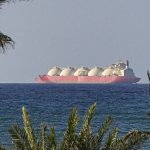





The pause in shipping through the Strait of Hormuz is creating economic disruptions beyond the oil and natural gas markets, affecting the shipment of goods and commodities needed for semiconductors, fertilizer, and more.
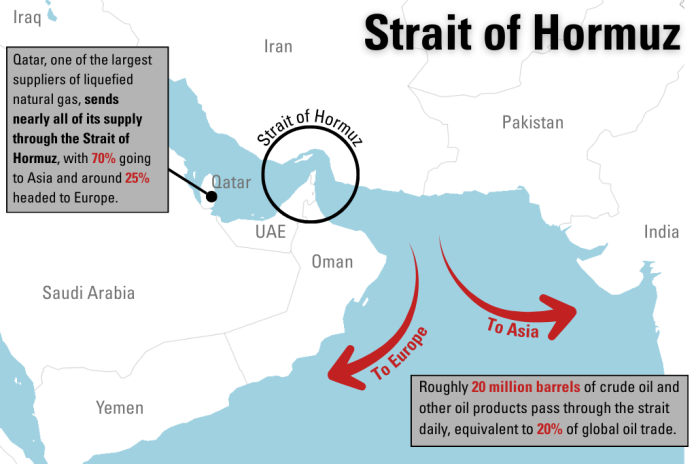
Since the start of the war in Iran, the Strait of Hormuz, a key trading route, has been effectively closed. The most notable effect has been a sharp rise in the price of oil and natural gas, for which the strait is a key global trade route. Before the conflict, nearly 20 million barrels of crude oil and other oil products passed through the strait every day, about a fifth of the total global supply.
But the halt in traffic through the strait has also had major effects on other segments of the economy, such as interfering with chipmakers’ ability to obtain chemicals needed to manufacture semiconductors.
Helium
South Korean chipmakers, such as Samsung and SK Hynix, rely on helium to manage heat during semiconductor production. Qatar provides nearly 40% of the world’s supply and has relied on the strait to export its materials.
More than a quarter of global helium supply would be taken off the market if the strait remains shut down, Phil Kornbluth, president of Kornbluth Helium Consulting, told CNBC.
Sulfur
The United Arab Emirates, Saudi Arabia, Qatar, Kuwait, and Iran are producers of sulfur, which is used as an acid to clean semiconductors.
The price of sulfur in China, which is the world’s largest consumer, has increased by 15% since the start of the war, the Financial Times reported. About 45% of the world’s sulfur exports come from the Gulf.
Bromine
Bromine is another element that is part of the semiconductor manufacturing process, which has been affected by the closure of the strait, with leading producers being Israel and Jordan.
Fertilizers
The fertilizer supply chain has also been disrupted. The United Nations Trade and Development said that nearly one-third of global seaborne trade in fertilizers passes through the strait.
Exports of key fertilizer components have been disrupted, including ammonia, urea, sulfur, and nitrogen.
The U.S. imports a significant amount of urea, a nitrogen-based fertilizer. In the last month, urea’s price has risen 29.71%, and is up 52.15% compared to the same time last year.
The American Farm Bureau Federation sent a letter to President Donald Trump earlier this week, warning that the spike in both fuel and fertilizer prices could hurt farmers, who are facing “a generational decline in farm income driven by out-of-control inflation and dramatically declining crop prices.
“Like oil, global fertilizer markets are highly vulnerable to disruptions in maritime transit routes, especially through the Strait of Hormuz, a critical shipping corridor for key fertilizer materials and finished fertilizer,” the letter reads.
IEA ANNOUNCES RELEASE OF RECORD 400 MILLION BARRELS OF OIL TO COUNTER WAR PRICE HIKES
Trump has sought to encourage ships to move through the strait, including by announcing a $20 billion plan providing insurance for ships in the strait.
On Wednesday morning, though, three vessels were hit by projectiles off the coast of Iran, according to the United Kingdom Maritime Trade Operation.


