







Senate Republicans accused two federal judges of abusing their authority on Wednesday, warning that they are more likely to seek impeachment following a hearing centered on subpoenas targeting GOP lawmakers and a sharply reduced sentence for a would-be Supreme Court assassin.
At the center of the hearing led by Sen. Ted Cruz (R-TX) was Chief U.S. District Judge James Boasberg, who authorized nondisclosure orders in May 2023, preventing telecom companies from alerting at least 11 Republican senators and six House Republican members that their phone records had been subpoenaed during former special counsel Jack Smith’s investigation of President Donald Trump.
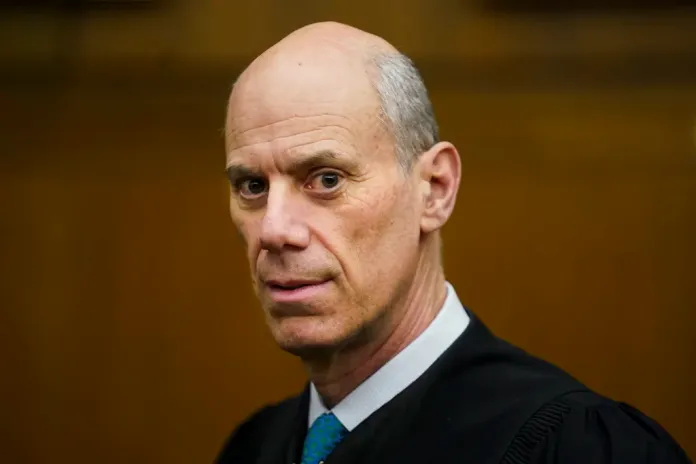
Republicans also used much of the hearing to scrutinize U.S. District Judge Deborah Boardman, an appointee of former President Joe Biden who sentenced Nicholas Roske, the man who traveled to Justice Brett Kavanaugh’s home armed with a gun and knife, to just over eight years in prison, more than two decades below federal sentencing guidelines.
The hearing, held by the Subcommittee on Federal Courts, Oversight, Agency Action and Federal Rights, was a first-of-its-kind opportunity for lawmakers to air grievances against what many GOP members described as abuses at the hands of “rogue judges” on federal courts.
Subpoenas, secrecy, and separation of powers
Republicans argued that Boasberg’s approval of the gag orders, which barred disclosure to lawmakers whose records were sought, violated federal law and the Constitution’s Speech or Debate Clause, regardless of whether the judge knew the identities of the subpoena targets at the time.
Cruz said Boasberg signed multiple orders declaring that notifying the targets would result in evidence tampering or witness intimidation, even though Smith later testified he did not inform the court that the phone numbers belonged to members of Congress.
Judge Boasberg used the authority of his office to authorize and to conceal the targeting of members of Congress.
No republic can survive if its judges help opposition officials surveil the people’s elected representatives.
That’s why I’m working to impeach and remove him. pic.twitter.com/S0SWyvH7e0
— Senator Ted Cruz (@SenTedCruz) January 7, 2026
“It has become public that Judge Boasberg claims he did not know who he was authorizing those subpoenas directed to. That doesn’t make it better,” Cruz said. “It makes it worse.”
Democrats countered that Boasberg, an appointee of former President Barack Obama, followed standard Department of Justice and court procedures in effect at the time and relied on representations from prosecutors. Georgetown law professor Steve Vladeck, a witness called by Democrats, said the nondisclosure process followed then-existing DOJ guidelines and that Congress only revised notification rules after a 2024 inspector general report.
But under questioning from Cruz, Vladeck conceded that approving a nondisclosure order without any factual proffer would be inconsistent with a judge’s oath, if that hypothetical were true.
Jack Smith’s recent deposition looms large
Republicans repeatedly pointed to Smith’s closed-door deposition before the House Judiciary Committee last month, where he acknowledged that his team did not tell Boasberg that the subpoenas targeted sitting lawmakers. GOP senators argued that testimony, released to the public via a transcript on New Year’s Eve, underscored the need for Smith to testify publicly.

“Let’s call Jack Smith before this committee,” Cruz said near the close of the hearing. “Chairman Grassley has made clear he will testify under oath as soon as the due diligence process is complete. I would like it to happen sooner rather than later.”
Democrats, meanwhile, have pushed for Smith’s testimony before Congress to happen in an open hearing. Several members of the House committee said last month that Smith’s testimony should have been presented publicly.
Cruz also pressed his Democratic colleagues to join a bipartisan request for the DOJ to turn over the evidentiary basis for the subpoenas, arguing transparency was necessary to assess whether the secrecy orders were justified.
Senate GOP makes broader push for accountability over judges
Cruz was not alone. Sen. Eric Schmitt (R-MO) called Boasberg a “rogue judge” and said impeachment was warranted based on what he described as repeated abuses of power, including authorizing secret subpoenas and inserting himself into politically sensitive cases. “We have to be able to check a rogue judge through the impeachment process, and I don’t say that lightly.”
Sen. Josh Hawley (R-MO) questioned whether judges could evade accountability by claiming ignorance, arguing that failure to inquire about the legality of an order, especially one implicating Congress, amounted to gross negligence.
“Does that make it better or worse?” Hawley asked. Robert Luther, a law professor at George Mason University, argued Boasberg’s handling was at best “negligent.”
Sen. Mike Lee (R-UT) framed the issue as a structural threat to the separation of powers, saying that impeachment exists precisely to address non-criminal abuses of judicial authority that undermine public trust.
“These are not mere garden variety … disagreements over judicial philosophy or statutory interpretation,” Lee said. “They are alleged breaches of the public trust.”
Focus shifts to judge who gave lenient sentence to would-be Kavanaugh assassin
Republicans also devoted part of the hearing to Judge Deborah Boardman’s sentencing of Roske, who pleaded guilty to attempting to assassinate Kavanaugh in 2022. Federal prosecutors sought a sentence of roughly 30 years, consistent with sentencing guidelines.
Boardman imposed a sentence of 97 months, citing Roske’s mental health and concerns about incarceration conditions and his status as a first-time criminal offender.
Cruz and other Republicans argued the decision minimized the gravity of an attack on the judiciary and could encourage future political violence.
.@tedcruz: “What are the consequences of a partisan, left-wing judge concluding, ‘Because of my ideology, coming to attempt to assassinate a Supreme Court justice is okay?’”@willchamberlain: “Potentially devastating to the republic.” pic.twitter.com/9THdyjtA6H
— Team Cruz (@TeamTedCruz) January 7, 2026
“What are the consequences of a judge concluding that attempting to assassinate a Supreme Court justice warrants a slap on the wrist?” Cruz asked during one exchange.
“Potentially devastating to the republic,” responded Will Chamberlain, a conservative attorney and witness answering before the committee.
Cruz predicts impeachment forthcoming
In a closing statement, Cruz said he had already sent a letter to House Speaker Mike Johnson (R-LA) urging impeachment proceedings against both judges and predicted the House would act.
“I’m going to make a prediction,” Cruz said. “I believe the House will impeach both Judge Boasberg and Judge Boardman, and I believe those impeachments will come to the Senate.”
Cruz added that Democrats would have the opportunity to defend the judges at trial but warned that Boardman’s case, in particular, should be “ominous,” noting that no Democrat at the hearing mounted a substantive defense of her sentencing decision.
Despite the strong calls for accountability, several Democrats including Sens. Sheldon Whitehouse (D-RI) and ranking member Dick Durbin (R-IL) pointed to a rare statement by Chief Justice John Roberts in March last year, who said impeachment calls against judges are “not an appropriate response to disagreements concerning a judicial decision.” Roberts at the time said litigants can dispute decisions via the “normal appellate review process.”
TED CRUZ URGES HOUSE TO IMPEACH JUDGES BOASBERG AND BOARDMAN
Yet Democrats for years have alleged acts of impropriety against Republican-appointed jurists, including Justices Clarence Thomas and Samuel Alito, who have been targeted by impeachment threats from progressive lawmakers such as Reps. Alexandria Ocasio-Cortez (D-NY) and Ilhan Omar (D-MN).
Regardless of which party is calling for the impeachment of judges, the outcome is unlikely to result in a conviction by the Senate. Even if the House succeeded in impeaching a judge, the Senate would need to affirm that decision by a two-thirds majority vote.


