







America turns 250 this year. That’s not exactly breaking news, but 2026 also marks a momentous anniversary for American music — the 50th anniversary of Tom Petty and the Heartbreakers. It might seem presumptuous to connect a rock band to such a major historical event, but there is one bit of Tom Petty lore that makes the connection explicit. “American Girl” — an unlikely anthem with a bittersweet lyric and a Bo Diddley beat, and arguably the band’s most iconic song — was recorded on July 4, 1976. The band had only two weeks in the studio to record their debut album, which came out just four months later, so the timing is just as likely a happy coincidence as it was intentional.
Half-a-century later, few artists are as embedded in the American cultural experience as Tom Petty and the Heartbreakers. They are America’s most agreed-upon band. The Eagles remain the biggest-selling American musical act, but the running joke in The Big Lebowski about hating the Eagles, well, landed because there really are a lot of people who hate the Eagles. Many people might take the music of Tom Petty and the Heartbreakers for granted, but virtually no one actively dislikes them.
Of course, “agreeableness” is a hard thing to quantify. It is fair to say their initial success was the result of a genuine grassroots appeal. Their first record contract was hard-won after years of gigging in Florida roadhouses and college bars, but the band received little promotional support once the record was done. The first single off their 1976 debut, “Breakdown,” flopped on release. It was rereleased after some extensive touring more than a year later, peaking at number 40 on the Billboard Hot 100. The record’s second single, “American Girl,” never even charted. And yet, over time, both songs became more beloved and enduring than a great many No. 1 hits that have since come and gone.
Ironically, radio might be the one area where their popularity is vindicated. When Petty died in October 2017 at age 66, it was reported that an astonishing 1 out of every 40 songs played on classic rock radio was by Tom Petty. That’s more radio play than AC/DC, Queen, or even the Beatles, and all of those acts’ record sales outstripped Petty by multiples. Whether at a sports stadium or in the grocery store, if you’ve been anywhere near a speaker playing music in public, you’re aware that the band’s popularity isn’t diminishing any time soon.
</p>
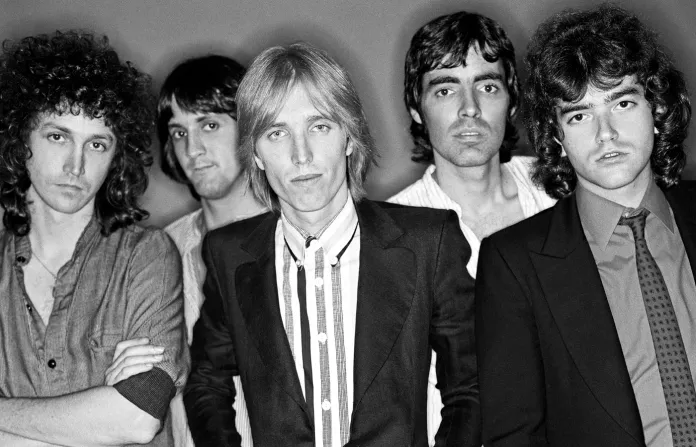
<p> ” data-large-file=”https://conservativemodern.com/wp-content/uploads/2026/06/saluting-americas-most-agreed-upon-band-tom-petty-and-the-heartbreakers.webp” height=”658″ width=”1024″ src=”https://conservativemodern.com/wp-content/uploads/2026/06/saluting-americas-most-agreed-upon-band-tom-petty-and-the-heartbreakers.webp” alt=”Tom Petty and the Heartbreakers in Hollywood, circa 1977. (Aaron Rapoport/Corbis/Getty Images)” class=”wp-image-4628155″ style=”aspect-ratio:1.5570858229950966;width:891px;height:auto” srcset=”https://conservativemodern.com/wp-content/uploads/2026/06/saluting-americas-most-agreed-upon-band-tom-petty-and-the-heartbreakers-1.webp 1400w, https://conservativemodern.com/wp-content/uploads/2026/06/saluting-americas-most-agreed-upon-band-tom-petty-and-the-heartbreakers-1.webp?resize=300,193 300w, https://conservativemodern.com/wp-content/uploads/2026/06/saluting-americas-most-agreed-upon-band-tom-petty-and-the-heartbreakers-1.webp?resize=768,494 768w, https://conservativemodern.com/wp-content/uploads/2026/06/saluting-americas-most-agreed-upon-band-tom-petty-and-the-heartbreakers-1.webp?resize=1024,658 1024w, https://conservativemodern.com/wp-content/uploads/2026/06/saluting-americas-most-agreed-upon-band-tom-petty-and-the-heartbreakers-1.webp?resize=150,96 150w, https://conservativemodern.com/wp-content/uploads/2026/06/saluting-americas-most-agreed-upon-band-tom-petty-and-the-heartbreakers-1.webp?resize=696,447 696w, https://conservativemodern.com/wp-content/uploads/2026/06/saluting-americas-most-agreed-upon-band-tom-petty-and-the-heartbreakers-1.webp?resize=1068,687 1068w” sizes=”(max-width: 1024px) 100vw, 1024px”><figcaption class=) Tom Petty and the Heartbreakers in Hollywood, circa 1977. (Aaron Rapoport/Corbis/Getty Images)
Tom Petty and the Heartbreakers in Hollywood, circa 1977. (Aaron Rapoport/Corbis/Getty Images)Part of the reason for the band’s ubiquity is their sheer endurance and consistency: they started great and stayed great. Their first record in ’76 produced two iconic songs, but Petty was still cranking out bona fide hits such as “You Don’t Know How It Feels” and “Walls (Circus),” into the mid-90s. Twenty years is an astonishingly long time for a pop music act to be consistently producing hits.
Moreover, Petty’s most successful record, the solo album Full Moon Fever, came 13 years after his debut with the Heartbreakers, and its follow-up (with the band), 1991’s Into the Great Wide Open, was also a monster record that produced some of the band’s biggest hits. In the young man’s game of rock and roll, it’s unheard of for a band to be writing some of their best songs and reaching their commercial pinnacle in their 40s.
Their success over time also means that the band’s catalog is far deeper than the hits most casual fans know. If you’ve never heard “It’s Good to Be King,” “Straight Into Darkness,” “It’ll All Work Out,” “Southern Accents, or “Room at the Top,” you’re missing out. That goes double for their live recordings. The version of “Learning to Fly” on their live anthology is pure magic.
Part of the reason for their enduring success is the band’s remarkable ability to synthesize an incredible array of influences while not radically deviating from their roots-rock formula. Petty did hundreds of shows on the band’s satellite radio station before his death. The show was called Buried Treasure, and his knowledge of, and affection for, obscure blues and rock acts such as Koko Taylor and the Spencer Davis Group could shame the most ardent music fans.
At the same time, Petty and the Heartbreakers’ musical vision was never stuck in the past. The band was even tagged as “new wave” after the success of “Don’t Come Around Here No More,” a song built around a melodically recursive sitar hook and slick production by the Eurythmics’ Dave Stewart. If that weren’t adventurous enough, guitarist Mike Campbell is on record as saying he was inspired to write the iconic riff that kicks off “Runnin’ Down A Dream” after seeing alternative glam rockers Jane’s Addiction.
The fact that they endured for so long and were more stylistically nimble than most of their contemporaries means that Petty and the Heartbreakers effectively served as the bridge between classic and modern rock. In fact, one of the first public appearances by Nirvana drummer (and soon-to-be Foo Fighters frontman) Dave Grohl after Kurt Cobain’s death by suicide was when Grohl showed up unannounced behind the kit on their 1994 Saturday Night Live appearance. It’s hard to imagine any other classic rock act engendering the approval of anti-corporate rock, Gen-X Nirvana fans in that moment, but it was a big sign that the music world would recover from the loss of a generational talent.
The band gave back at least as much to rock and roll as they took from it. Nowhere is this more evident than in what Petty did for Roy Orbison. When Petty formed the Traveling Wilburys in 1988 — the supergroup with Petty, George Harrison, Bob Dylan, Electric Light Orchestra’s Jeff Lynne, and Orbison — Orbison was the only one of those superstars whose career had significantly fallen off. The Wilburys’ success probably would have resurrected Orbison all on its own, but for Petty and Lynne, Orbison deserved even more.
So Petty and Lynne put together a whole Orbison record, Mystery Girl, to showcase his incredible voice. Petty cowrote the hit single “You Got It,” and the album features songwriting contributions from such major talents as U2, Elvis Costello, and T-Bone Burnett. Tragically, Orbison died in December of 1988, just weeks after the record was finished, but he got the send-off he deserved: He was the first artist since Elvis to die with two albums in the top five (Traveling Wilburys Vol. 1 was the other one).
It’s easy to see why Petty would resent someone with Orbison’s natural talent being overlooked. Unlike Orbison, Petty’s innate talent as a singer is almost nonexistent; his voice is best described as a nasally yawp, and saying his range is a little better than Bob Dylan’s would be both accurate and damning him with faint praise.
But, like Dylan, Petty’s diligence and intellectual capacities more than make up for his shortcomings. Petty’s cadence and phrasing are near-perfect, and he’s one of rock and roll’s great lyricists, with an unmatched ability to write lines that are both instantly evocative and universal enough for listeners from all walks of life. The lines that grab you, particularly the immortal “she was an American girl, raised on promises,” are downright literary in quality.
A word must also be said for the understated talents of guitarist Mike Campbell and keyboardist Benmont Tench, Petty’s hometown pals and the only two constant members of the Heartbreakers. There’s a case to be made that they’re the greatest sidemen in rock history. Both were rarely flashy; they were just preternaturally talented men who never failed to play whatever part would perfectly serve the song at hand.
CHRISTMAS COMES EARLY FOR THE BEATLES COMPLETIST
It’s true that their story is not without some ugliness. Petty himself could be a remarkably difficult person, and there were requisite rock star problems. Drugs ultimately claimed the lives of bassist Howie Epstein and Petty himself. It’s also regrettable to say the rumors that the band swiped the riff for “Mary Jane’s Last Dance” from “Waiting For The Sun,” by the underappreciated alt-country band the Jayhawks, are quite believable. But relative to other rock legends, it’s hard not to appreciate that the band never let drama overwhelm their art.
Tom Petty and the Heartbreakers was the most American of bands: Southern underdogs who achieved greatness in Los Angeles; musicians who revered their past influences, but never stopped trying to make music that spoke to the present. The greatest measure of the Heartbreakers’ success might simply be that the opening jangle of “American Girl” will be inescapable during July 4th this semiquincentennial year. And on this special occasion, when we most need unity to triumph over polarization, most of us will bop along — and no one will complain.
Mark Hemingway is a senior writer at RealClearInvestigations and the books editor at The Federalist.


