







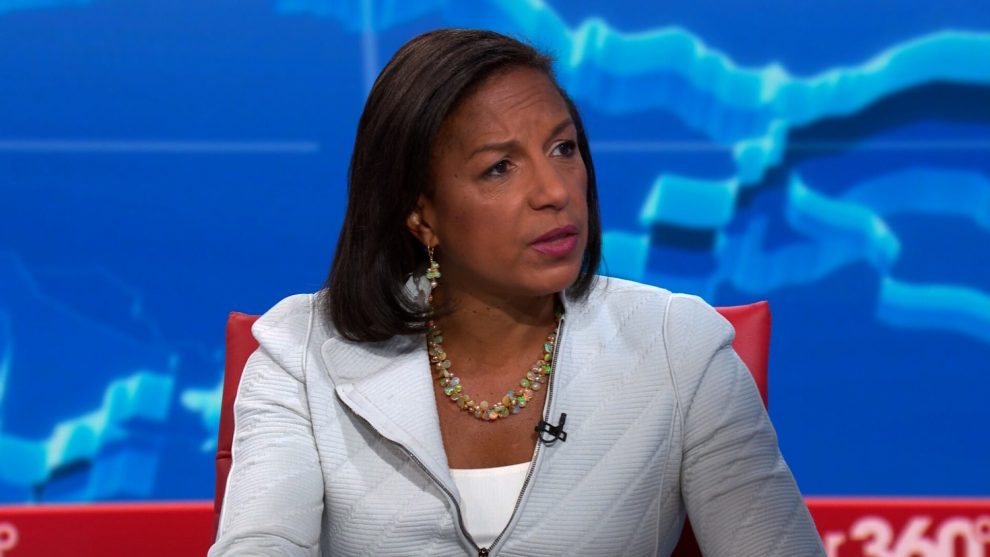
Wednesday on CNN, former Obama administration National Security Adviser Susan Rice said the coronavirus pandemic was an “opportunity” to ensure every American could vote by mail.
Anchor Wolf Blitzer asked, “You’ve written an article, an opinion op-ed in The New York Times, and you say it’s not enough to just get back to normal. You also write this, ‘The coronavirus has laid bare our domestic divisions unequal economy and glaring racial and socioeconomic disparities as well as the fragility of our democracy.’ Ambassador, how should the United States use this crisis right now to address some of those problems that you mentioned fully exposed by the virus?”
Rice said, “Well, Wolf, I say that going back to normal isn’t acceptable because what we’ve seen what was normal has been extraordinarily costly and deadly for all Americans. And yet what we’ve also learned from this experience and for many of us it wasn’t learning it, it was just making it very obvious to those perhaps who didn’t see it is that we have a society that remains extremely unequal, in racial and socioeconomic terms and so many other ways. And yet as we have experienced throughout our history from frankly look at the Great Depression, look at World War II, look at the 1960s, out of every moment of crisis we have found a way to do things differently and better. The Works Progress Administration, the Civilian Conservation Corp in the Great Depression, the GI Bill after World War II, the Great Society, and the expansion and insurance of voting rights for all Americans in the 1960s.”
Have You Seen Him? Police Search for Murderer Who Escaped Tennessee Prison
Breaking: Comey Charged for Reportedly Leaking National Security Secrets in 2016
Not even sky high gas prices or the Iran war will stop Trump supporters voting MAGA
DOJ seeks to prosecute Comey over alleged national defense disclosure
Trump says Brazil election likely ‘rigged’ as Bolsonaro demands Lula’s victory be annulled
Illegal immigrant accused of beheading Iwo Jima monument granted bond
Man found dead on Disneyland property near entrance to ‘Happiest Place on Earth’
Four things to know about the Israeli election
Omar’s menacing message hidden in seemingly innocent tweet exposed: ‘Crushed the enemy’
Haley Stevens ripped by fellow Dems for refusing to explicitly back El-Sayed: ‘Stay the f— off television’
WJ Straw Poll: Rubio Opens Massive Lead Over Vance as Massie Takes Another Hit
Winning: Violent Crime Plunged Nationwide During Trump’s First Year Back in Office
Voice of Bugs Bunny and Daffy Duck Dies Suddenly at Age 46
Trump-appointed judge slams door on DOJ as court losses pile up days ahead of midterms
Ilhan Omar joins ‘polarizing and dangerous’ streamer at campaign event despite Democratic backlash
She added, “This is a moment not only of crisis but inherent in that crisis is opportunity. And we need to take a step to broaden our social safety net to ensure that the most vulnerable have the health care, have the education, have the housing that they need. But in the immediate term because many of those things are going to take time and be ambitious. I recommend two critical steps that Congress could take in the next legislation that it passes. One is to ensure that every American has the ability to vote safely in our November election. We saw the fiasco in Wisconsin, which has cost scores of lives. And we have a real challenge to ensure that voters are able to access the ballot by mail, by longer periods of early voting, by safer polling stations, and that is the job of Congress to ensure. And secondly, Congress can make a down payment on this effort to build a more equitable society by expanding national service. And in particular, by creating something called a health force which can begin by hiring unemployed Americans and the like to be contact tracers when 300,000 of them are going to be needed for us to trace and open up safely.”
Story cited here.


