







EXCLUSIVE — A Rhode Island federal judge is facing a judicial misconduct complaint accusing her of launching false and politically motivated attacks against Justice Department attorneys before referring them for possible discipline in a dispute over federal subpoenas seeking records related to transgender drugs and surgeries for children.
The complaint, filed Wednesday by the conservative Center to Advance Security in America (CASA), asks the 1st U.S. Circuit Court of Appeals to investigate U.S. District Judge Mary S. McElroy over what the group calls an improper and partisan campaign against the Trump administration‘s DOJ personnel who appeared before her court.
“CASA is filing a judicial complaint against the unprofessional Rhode Island District Court Judge Mary McElroy for her inappropriate and inaccurate excoriations she made on the record against attorneys from the U.S. Department of Justice,” CASA Director of Research and Policy Curtis Schube said in a statement accompanying the filing.
“Not only did McElroy make these damaging and false statements, but she followed them up with a vindictive referral of these DOJ attorneys to the District of Rhode Island’s disciplinary committee,” Schube added.
The dispute traces back to a nationwide DOJ investigation that began under former Attorney General Pam Bondi, examining whether hospitals that provided transgender-related drugs or surgical procedures to minors violated federal laws involving fraud, misbranding, or improper billing practices. At the center of CASA’s allegations is McElroy’s accusation that DOJ attorneys misled a federal court in Texas about the status of communications between the government and the hospital.
Beginning in July last year, the DOJ issued administrative subpoenas to several hospitals, including Rhode Island Hospital, seeking records connected to drugs and surgeries provided to children who had obtained gender dysphoria diagnoses. According to court records cited in the misconduct complaint, the hospital produced only a single six-page document before an Aug. 7 compliance deadline, and it continued to quibble over the scope of the subpoena for months.
After nearly 10 frustrating months without receiving additional records from the medical facilities, the DOJ ultimately petitioned the U.S. District Court for the Northern District of Texas on April 30 to enforce the subpoena. Rhode Island Hospital responded by seeking relief in federal court in Rhode Island, where the matter landed before McElroy.
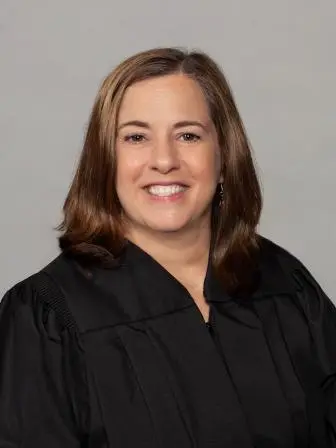
Although McElroy was formally nominated to the federal bench by President Donald Trump in 2018, she was far from the president’s preferred pick at the time. She had previously been nominated to the same judgeship by former President Barack Obama in 2015 but never received a full Senate vote. Her eventual confirmation during Trump’s first term came after Rhode Island’s Democratic senators continued backing her candidacy, making her appointment more a product of longstanding Senate courtesy practices than a new ideological selection by the Trump administration.
In a May 14 ruling quashing the DOJ’s subpoena, McElroy accused DOJ attorneys of engaging in “dishonorable conduct,” being “unworthy of trust,” and acting with “an improper purpose in bad faith.” She later referred the attorneys involved in the matter to the District of Rhode Island’s disciplinary committee.
CASA maintains the government never represented to the Texas court that all communications with the hospital had ceased, which was the basis of McElroy’s hostile comments toward the DOJ lawyers. Rather, DOJ told the court that communications concerning the hospital’s active production of subpoenaed documents had stalled. Emails exchanged afterward, the group argues, primarily involved scheduling discussions and negotiations over the subpoena’s scope rather than evidence of the hospital’s compliance with the subpoena.
“Judge McElroy’s actions go beyond the bounds of acceptable condemnation by a judge and cross into partisan vengefulness,” the misconduct complaint stated.
Federal judicial ethics rules require judges to uphold the integrity and independence of the judiciary, avoid the appearance of impropriety, and perform their duties fairly and impartially. CASA argues McElroy’s conduct violated those standards by allowing political considerations to influence her treatment of the government attorneys appearing before her.
The complaint gives particular attention to language in McElroy’s opinion, suggesting DOJ’s actions were driven by its “political positions.” Schube argues those statements reflected hostility toward the administration’s policy objectives, rather than a neutral assessment of the facts presented to the court.
“This complaint is not about the merits of Judge McElroy’s decision on the RIH subpoena — that issue is properly for the appeals court,” the filing states. “Instead, we are sharply concerned with, and appalled by, the sheer rage over a political subject in front of her resulting in a power struggle with a different court that Judge McElroy took out on DOJ attorneys.”
McElroy’s ruling emerged as a broader jurisdictional fight has unfolded over the Trump administration’s investigation into pediatric transgender drugs and surgeries. Federal judges in Rhode Island, Maryland, and California have all been asked to intervene in cases involving DOJ subpoenas or grand jury demands for hospital records, creating overlapping litigation in multiple jurisdictions.
The Rhode Island litigation became one of the earliest flashpoints in that battle. In her May ruling, McElroy wrote that the DOJ’s conduct undermined the traditional “presumption of regularity” that courts typically afford to government officials and prosecutors, arguing the department had failed to deal candidly with both the hospital and the courts. The presumption of regularity means that courts are generally supposed to assume that the government is acting in good faith and therefore judges should take what the government argues at face value.
The underlying dispute also exposed tensions between federal courts in different parts of the country. While McElroy moved to quash the subpoena in Rhode Island, enforcement proceedings remained pending before U.S. District Judge Reed O’Connor in Texas, where the DOJ sought compliance with the records request.
JUDICIAL TURF WAR IGNITES OVER DOJ INVESTIGATIONS INTO TRANSGENDER DRUGS AND SURGERIES FOR CHILDREN
Adding to further scrutiny of McElroy’s decision, the U.S. Court of Appeals for the 1st Circuit later declined to intervene in key aspects of the Rhode Island litigation, concluding that challenges to enforcement proceedings pending in Texas must be directed either to the Northern District of Texas or the U.S. Circuit Court of Appeals for the 5th Circuit.
CASA is now asking the 1st Circuit to determine whether McElroy’s conduct crossed the line from forceful judicial criticism into sanctionable misconduct and whether disciplinary action is warranted under the federal judiciary’s ethics rules.


