






EXCLUSIVE — Reform UK has found great success leaning into a British culture and identity that has long lain dormant among the Conservatives and Labour.
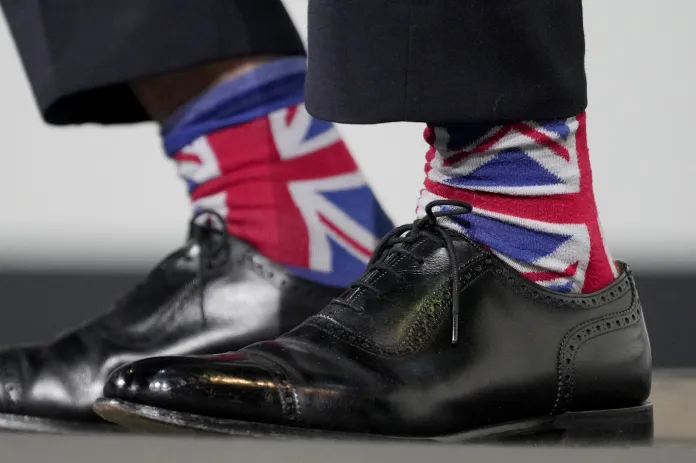
A nostalgic “Rule Britannia” spirit pervades the speeches and interviews of Reformers. A light, cheeky monarchism bubbles up to the surface when party members sing “God Save the King” or are asked about the royals. Oceans of Union Jacks, the United Kingdom’s national flag, can be seen in the hands of supporters at outdoor rallies, and the local pub is held with the same patriotic reverence as the National Health Service.
And that cultural confidence may play just as big a role in the party’s success as the Tories’ broken promises or Labour’s entanglements with convicted sex trafficker Jeffrey Epstein.
“Reform has understood something that the major parties, for different reasons, have been reluctant to acknowledge. Love of country is not something to apologize for, and it’s certainly not something I apologize for,” Andrew Rosindell, member of parliament for Romford since 2001, told the Washington Examiner in an exclusive interview.
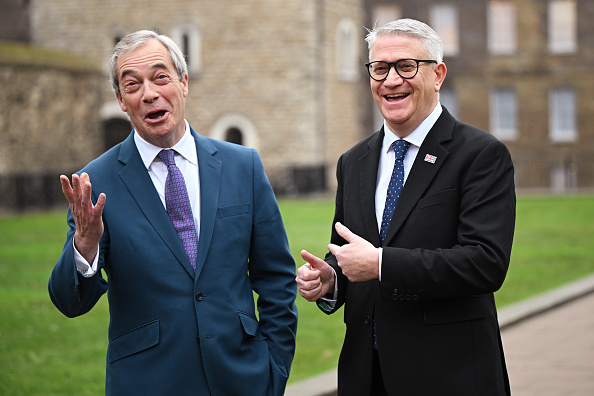
“For years, overt expressions of national pride were treated as faintly embarrassing or politically suspect in mainstream discourse,” the MP explained. “The Union Jack, our history, even our constitutional monarchy, were often handled defensively rather than with confidence. That created a vacuum — one that many voters felt instinctively, even if they could not articulate it in policy terms.”
Rosindell is among the latest crop of longtime Conservative parliamentarians who have crossed the Rubicon and defected, joining Reform UK last month.
The third-party, led by arch-Eurosceptic Nigel Farage, is enjoying a moment of previously unthinkable success. It is polling at the top of British opinion surveys with 29% — followed in a distant second and third by the mainstream parties, Labour with 19% and Conservatives with 18%.
Policy promises to end mass-migration, deport illegal immigrants, scrap environmental regulations, and roll back progressive ideology in state institutions are widely understood as the backbone of the movement’s success.
Less discussed, however, is Reform UK’s embrace of British nationalism at a time when English flags are being taken down by police and the national government is publishing web games teaching citizens not to protest the “erosion in British values.”
The new right-wing has no qualms about celebrating British history as a narrative of triumph. They find republicanism unpatriotic and embarrassing. And they make sure the public understands they’re proud to prefer a British pub to a trendy cosmopolitan scene.
“That cultural confidence did matter to me,” Rosindell told the Washington Examiner. “A party that is comfortable with Britain as it was, and proud of what it represents, is better placed to govern in the national interest. Policy is extremely important, but so is the spirit in which it is pursued.”
Farage’s old-school sense of Britishness, which broke out of the political sphere and into mainstream pop culture with his appearance on I’m a Celebrity…Get Me Out of Here! in 2023, has been linked to Reform’s rise.
On the show, Farage made frequent quips touting British excellence, such as when he scolded his fellow contestants who had not awoke with him at the crack of dawn — “Right, come on, up you go. We didn’t win the biggest empire the world has ever seen laying around in bed, did we?”
That bombastic, sentimental, and quasi-traditional passion for all things British often spills over into the fringes of Reform policy-shaping, as on Tuesday, when Farage promised a slew of tax cuts with an aim to “save British pubs,” and his political ally transformed the topic into a question of civilizational erasure.
“The loss of one pub is not just the loss of livelihood for a landlord, or the loss of a local employment hub. The loss of one pub is a loss to all of us as inheritors of a tradition dating back to Roman rule,” Reform MP Lee Anderson rhapsodized.
Thomas Skinner — a small business owner turned reality TV star and social media influencer — is a prominent example of this cross-section between patriotism and sentimentality. He brought his almost anachronistic “barrow boy” persona to the party earlier this year.
“Do you know what I want to see, as well? Someone with a little bit of confidence and a little bit of ‘I’m proud of this country, let’s back it.’ Right now, everyone’s a little bit nervous what to say, and scared, I suppose, to be a little politically correct and scared of upsetting someone,” Skinner told right-wing GB News, where Nigel Farage has been a host. “I’m a patriot — I love our country, I love our people.”
Skinner runs multiple small businesses and speaks in a thick cockney accent. He frequently films himself seated at his favorite pubs, where he waxes poetic about whatever British cuisine he has ordered — a full English breakfast, a shepherd’s pie — and makes a recurring joke of pouring his gravy without looking “because [he’s] the absolute guv’na.” He often finishes his videos and posts with an emphatic “BOSH!”
“We are the best country in the world, and we’ve sort of lost our identity a little bit,” he complained to GB News.
One wonders if all the effort to appeal to voters is even necessary, as Reform’s primary adversaries, the Labour Party, are self-immolating.
Lord Peter Mandelson, the former British ambassador to the United States, has been found to have divulged sensitive government information to Epstein multiple times over years of correspondence.
U.K. Prime Minister Keir Starmer has admitted that the government’s vetting of Mandelson did uncover that he maintained communications with the disgraced financier, but has claimed that the former ambassador materially misrepresented their relationship.
STARMER APOLOGIZES TO EPSTEIN VICTIMS FOR APPOINTING MANDELSON AS AMBASSADOR
“This involves sex, it involves money, it involves the royal family. It involves the leaking of market-sensitive, confidential information,” Farage said of the scandal. “This is the biggest scandal in British politics for over one century.”
“I don’t know how long Starmer will last as PM,” he added. “Indeed, I’m very worried about it. I want him to stay forever.”


