







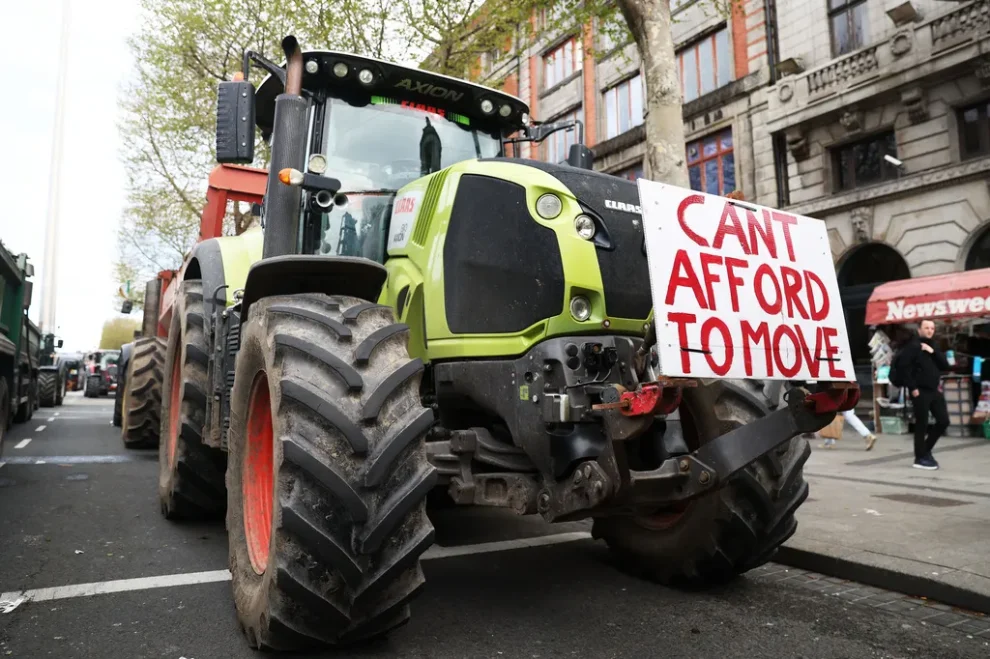
Protests have erupted across Ireland in recent days over the surge in fuel prices driven by the war in Iran, with demonstrators blocking key oil infrastructure and major roads.
The price of diesel has risen to around 71 cents, and petrol has gone up by about 35 cents since the start of the war.
Since last week, protesters have taken to the streets across the country, using tractors and trucks to block roads and disrupt nearly half of the country’s fuel supply as they call for relief from rising prices.
The war in Iran has caused global energy prices to soar as it has tightened the supply of oil and other petroleum products.
Europe has been particularly affected by the war, which has curbed its supply of oil and natural gas. The war has resulted in the effective closure of the Strait of Hormuz, a key trading route, through which 20 million barrels of crude oil and petroleum products normally pass every day.
Here’s what to know about the demonstrations.
What is happening?
Demonstrators have called for cuts in fuel taxes and a cap on prices. They have also called for the interim removal of the carbon tax, which is a duty on fossil fuels aimed at reducing emissions.
The protests, which comprised farmers and haulers, have significantly curbed access to fuel across the country as demonstrators have set blockades on major roads, ports, and other key fuel infrastructure.
Several blockades were broken up by police over the weekend at O’Connell Street in Dublin, Foynes Port in County Limerick, Rosslare Harbour in County Wexford, and Whitegate oil refinery in County Cork.
The Whitegate oil refinery is Ireland’s only refinery, producing about 40% of the country’s fuel. Irish Taoiseach Micheal Martin has called the blockade at Whitegate oil refinery an “act of national sabotage.”
“It makes absolutely no sense in the fuel crisis we are currently facing,” Martin said. “It is beyond belief that people would seek to deny people around the country access to vital fuels. Businesses and people’s livelihoods depend on this fuel. It is an outrage.”
Fuels for Ireland CEO Kevin McPartlan told RTE News on Monday that there are several hundred petrol stations without fuel due to the supply disruptions caused by the blockades. He added that if access to the terminal and refinery returns to normal, it could take up to 10 days to fully restore fuel cycles.
Ireland’s response
Ireland last month approved legislation that would reduce excise duty on fuels until the end of May. The $290 million legislation would cut the excise duty of 18 cents on petrol and 24 cents on diesel. However, the legislation was not enough, as prices continue to rise.
Brent crude, the international oil benchmark, reached $100 per barrel as of Monday afternoon.
The Irish government on Sunday agreed on a slew of tax cuts on petrol and diesel, adding to the government’s previous tax cut agreements made last month.
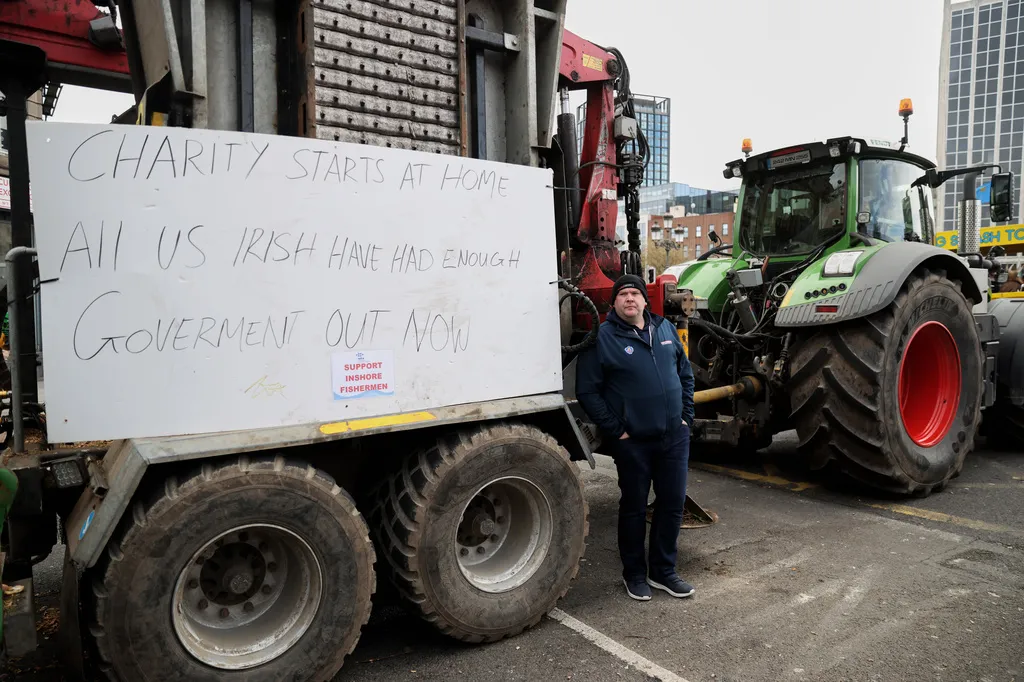
For instance, the legislation would reduce the excise on diesel by 12 cents, bringing the total reduction on diesel to 38 cents per liter. The government will also reduce excise on petrol by an additional 12 cents, bringing the reduction on petrol to 32 cents.
The new tax cuts will take effect on Wednesday and last until July 31.
“As a government, we hear you, we have acted, and we are taking further action today,” Irish Finance Minister Simon Harris said in a statement.
“These measures are an appropriate package that ensures that everyone who is feeling under pressure right now is given some form of relief,” he added.
The legislation will also defer an increase in carbon tax until May.
Latest on Iran
The Trump administration has attempted to end the war, though Vice President JD Vance failed to reach a peace agreement with Iran over the weekend.
The failed deal resulted in President Donald Trump directing the Navy to blockade the Strait of Hormuz to prevent ships from entering or exiting Iranian ports.
OPEC RECORDS 27% DECREASE IN MIDDLE EAST OIL PRODUCTION IN MARCH
As of Monday, the U.S. average price of gasoline was $4.13 per gallon, according to AAA, up from $2.98 before the war began in late February.
The start of the war in Iran has resulted in consumer sentiment dropping in the U.S. According to a preliminary reading of the University of Michigan Consumer Sentiment Index for April, consumer sentiment dropped to 47.6, down from 53.3 in March.


