






The Golden State prides itself on its egalitarianism and willingness to make some of the rich in California squirm.
This desire to take billionaires down a notch is evidenced by the “wealth tax” currently generating debate among financial pundits and gathering signatures in an aggressive ground game before a November vote, if it makes the ballot. The wealth tax proposal has a strange side effect: it boosts the wealthiest cream of the crop and punishes those below them. After all, there’s pride as well in being one of the special few who can manage to keep their heads above water in a political environment that punishes wealth creation.
Take San Francisco: the city’s population growth has been more or less flat over the last few decades, yet its wealth has positively exploded. Just spit-balling: for every three slightly above-average citizen profiles the city bleeds, it gains one high-income, far above-average human capital powerhouse with an advanced degree.
The 2026 Billionaire Tax Act is a “one-time tax” distillation of this same process. The rich who can weather a levy on capital assets without missing a beat, as it applies to both their personal and business endeavors, will gain relative status over those who feel compelled to “flee” to a friendlier red state locale. While in absolute terms they’ve taken a financial hit, they can rest easy knowing they’ve cleared the field of several elite peers and even industry competitors.
As economist Robert H. Frank has noted, Charles Darwin has as much to teach us about economics as Adam Smith. The elk with the larger antlers wins, with nary a care for any general condition of very large antlers on elks (or the elk equivalent of a “pro-business” regulatory and political environment).
A shrinking pool of billionaires to tax
“If you can make it here, you can make it anywhere.”
There’s a reason the above phrase applies to business-unfriendly New York City, and not Lubbock, Texas. In the second quarter of the 21st century, those words have found a second home in California’s tech sector as well.
Nvidia’s Jensen Huang, who sits at the helm of the most valuable company in the United States, is notable for shrugging off this wealth tax proposal.
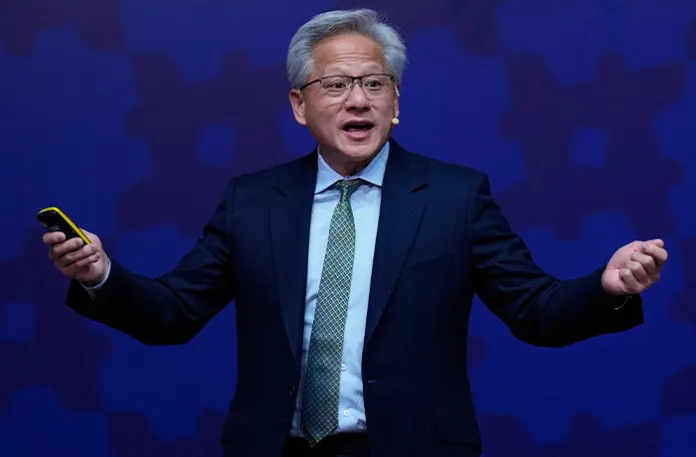
“We chose to live in Silicon Valley, and whatever taxes, I guess, they would like to apply, so be it,” Huang told Bloomberg in early January. “I’m perfectly fine with it.”
Startup Y Combinator’s Garry Tan and Sequoia’s Michael Moritz have claimed that those not like Huang, who are billionaires mostly on paper via equity, would be hamstrung in a way not felt by those with more liquid wealth. It’s akin to asking a middle-income household to dip into their IRA to cover expenses, while their neighbor has $100,000 in a checking account.
Additionally, they’ve called out the unwise fragility of relying on approximately 200 billionaires to bail out the entire state. A state that feels the need to make such a move surely has foundational problems that are likely to create cracks once again, and there are only so many deep-pocketed contractors to fill them in.
“Moritz warned that California’s billionaire tax plan will backfire,” writes Mohd Haider at Benzinga, “noting the state has become overly reliant on a few deep pockets over the past 50 years.”
Gambling with the state’s tax base
Eggs, basket. Basket, eggs.
Other notable opponents of the 2026 BTA include Oracle’s Larry Ellison and Google’s Larry Page, both of whom are moving either residential or business assets out of state. In the public sector, wealth tax opponents include Gov. Gavin Newsom (D-CA) and a new entrant to the already crowded Democratic gubernatorial field trying to succeed him, San Jose Mayor Matt Mahan.
“The unintended consequence is likely to be fewer high-paying tech jobs and less economic opportunity,” Mahan told Bay Area news television station KPIX shortly before announcing his California gubernatorial bid. As mayor of the city presiding over the original Silicon Valley — not the neo-Silicon Valley that wholeheartedly includes San Francisco — Mahan should know.
To be fair, a major proponent of the bill, Rep. Ro Khanna (D-CA), also represents the heart of Silicon Valley. And while Khanna has dismissed concerns that the billionaire class is taking flight for redder pastures, indicators thus far, à la Ellison, Page, and White House artificial intelligence and crypto czar David Sacks, all of whom have already rented U-Hauls displaying Texan and Floridian art, suggest he’s being too blasé on this matter.
“In December, more than 45 California LLCs associated with Page filed paperwork to move out of the state or become inactive,” reports Fox Business, “and a trust with ties to him recently bought a $71.9 million home in Miami.”
Nvidia’s Huang believes the talent pool in Silicon Valley makes it imperative to remain in place, though with the rise of remote work, one wonders how long an in-person tech workforce will remain a compelling angle.
Progressives’ own logic of what motivates wealthy people to become wealthy in the first place suggests that they would, in fact, react negatively to an attempt to extract more of their resources. If greed, a desire to shape the world in their entrepreneurial image, and an insecure grasping hand are in play in the heads of the rich or rich-adjacent, then dodging something like the BTA makes perfect sense.
Of course: It’s all relative. As Huang and evolutionary pressures show, treating a tax merely as the cost of doing business is both easier for the richest and helps raise the status of the same. Indeed, Huang has been cited by union interests promoting the BTA to make the case for its benefits. The Nvidia CEO is, well, “one of the good ones.” That’s status — and if a competitor for that lucrative talent pool is encouraged to hit the road, it’s all the better.
FBI EXECUTES SEARCH WARRANT AT FULTON COUNTY ELECTION FACILITY
Progressives are inadvertently advancing a culling mechanism that peels the almost-top from the very top. Big Tech, not unlike California’s other cutthroat industry, Hollywood, is paradoxically expressive of Democrat-friendly sentiments and social stances at the same time they’re almost totally unwelcoming of your average American plucked from a 7-Eleven. Meanwhile, the biggest employers in Oklahoma or any other conservative region merely need lots of warm bodies to keep the coffers happy. It’s progressive Darwinism vs. conservative open arms.
If you can make it in Palo Alto, you can make it anywhere.
Dain Fitzgerald (@DainFitzgerald) is a writer and “podtuber” in Diamond Springs, California, in the beautiful Gold Country of El Dorado County. His Substack is @mupetblast.


