






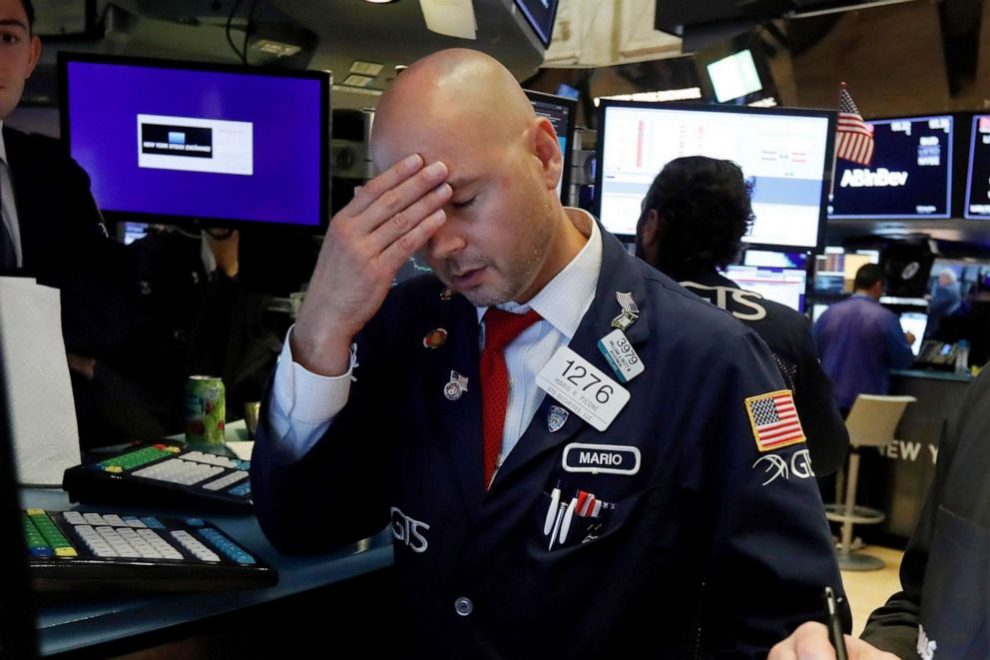
Sharp declines in U.S. stock index futures triggered trading curbs meant to slow panicked markets as the price of oil fell by more than 30 percent and bond yields crashed amid heightened worries over the coronavirus.
E-mini futures on the S&P 500 dropped by 5 percent in overnight trading Sunday, triggering automatic trading curbs that kick-in when the price falls below 5 percent of the closing price of the referenced index Friday. As a result, the futures contract cannot trade at a lower price until the cash market opens at 9:30 a.m., although trades may still be made at higher prices.
The last time futures trading hit the overnight limit was election night of 2016, when markets initially sold off following the news that Donald Trump had won the election. That selling pressure quickly subsided and the major indexes closed up by around 1 percent or so the following day.
The E-mini is an electronically traded futures contract based on the underlying S&P 500 index. The contracts are around one-fifth the size of the standard S&P futures contracts, earning them the monicker “mini.” They are considered highly liquid and are widely traded but they have, in a few past episodes, been prone to so-called “flash crashes.”
Halima Salman convicted of receiving ISIS military training in Syria, faces 10 years in prison
Harley-Davidson’s Decade-Long Electric Motorcycle Initiative Has Turned Disastrous
Rock Legend Donnie Iris Dies Less Than Three Weeks After Retiring from Performing
Federal officials identify 400 noncitizens registered to vote in Washington state: ‘Tip of the iceberg’
Cassidy Hutchinson avoids indictment after DOJ effort to charge her over Jan 6 testimony fails: sources
Man accused of threatening to hijack United flight says it was a drunken joke
Watch: Outrageous Pro-El-Sayed Ad Blames Jewish State for Raising Price of Bananas, Eggs in Michigan
Haitian illegal immigrant charged in Walmart killing entered US via Biden parole program: DHS
Flavio Bolsonaro to be issued visa by State Department after fleeing Brazil
Right-Wing Presidential Candidate Flavio Bolsonaro Secretly Flees Brazil for US After Disputed Election: Report
Luxury real estate brothers sentenced to 30 years in prison for yearslong sex-trafficking scheme
Judge who apologized to accused would-be Trump assassin lights up DOJ in Hunter Biden FBI case
Jordanian Military Goes After Targets in Syria in Response to Terrorists Killing Christians
‘Beloved’ daredevils who scaled Empire State Building inching toward deal after proposal stunt: attorney
Judge slams federal prosecutors over new charges against ex-FBI officials
Futures for the Dow Jones Industrial Average and the Nasdaq Composite remain above the level that would trigger curbs in those contracts.
The chaotic market action was not confined to equities futures on Sunday. Investors bid up Treasuries, pushing yields down to new record lows, and oil prices tanked.
The yield on the 10-year Treasury note sank 37 basis points to touch 0.448 percent in overnight trading Sunday. The yield on 30-year Treasuries fell below 1 percent.
Halima Salman convicted of receiving ISIS military training in Syria, faces 10 years in prison
Harley-Davidson’s Decade-Long Electric Motorcycle Initiative Has Turned Disastrous
Rock Legend Donnie Iris Dies Less Than Three Weeks After Retiring from Performing
Federal officials identify 400 noncitizens registered to vote in Washington state: ‘Tip of the iceberg’
Cassidy Hutchinson avoids indictment after DOJ effort to charge her over Jan 6 testimony fails: sources
Man accused of threatening to hijack United flight says it was a drunken joke
Watch: Outrageous Pro-El-Sayed Ad Blames Jewish State for Raising Price of Bananas, Eggs in Michigan
Haitian illegal immigrant charged in Walmart killing entered US via Biden parole program: DHS
Flavio Bolsonaro to be issued visa by State Department after fleeing Brazil
Right-Wing Presidential Candidate Flavio Bolsonaro Secretly Flees Brazil for US After Disputed Election: Report
Luxury real estate brothers sentenced to 30 years in prison for yearslong sex-trafficking scheme
Judge who apologized to accused would-be Trump assassin lights up DOJ in Hunter Biden FBI case
Jordanian Military Goes After Targets in Syria in Response to Terrorists Killing Christians
‘Beloved’ daredevils who scaled Empire State Building inching toward deal after proposal stunt: attorney
Judge slams federal prosecutors over new charges against ex-FBI officials
Oil prices crashed more than 30 percent Sunday night after Saudia Arabia on Saturday slashed official crude prices for April following the collapse of talks between OPEC+, which includes the traditional OPEC nations plus Russia. Oil had fallen sharply on Friday following the news that talks had fallen apart but took an even deeper tumble, falling an additional 20 percent or so, when it became apparent that the once allied oil producers were now engaged in a price war to take market share from each other.
Low oil prices were an unambiguous boon to the U.S. economy, boosting consumer buying power and keeping a lid on inflation. But now that the U.S. is once again a major world oil producer, low oil prices can weigh on employment, manufacturing, and the financial stability of heavily-leveraged U.S. drillers. That could even shake some regional banks with large exposures to the drillers.
Story cited here.


