







The National Cryptologic Museum is taking visitors through history in an up-close look at artifacts and declassified items from the Sept. 11, 2001, terrorist attacks.
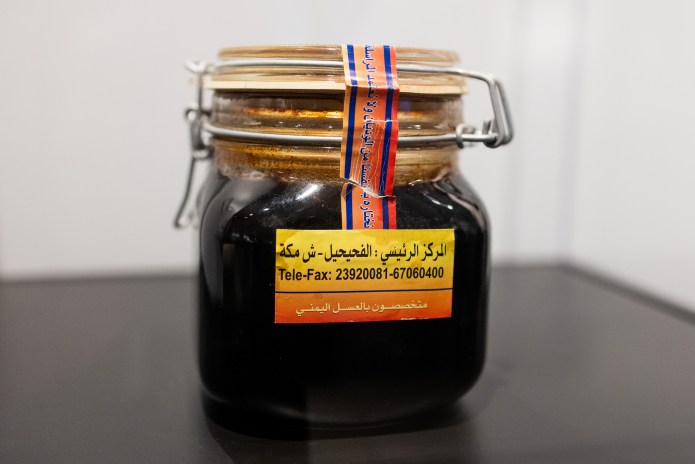
The exhibit sheds light on the National Security Agency’s pivotal role in tracking down al Qaeda leader Osama bin Laden, including a jar of honey with a telefax number on it.
This one jar of honey gave the NSA a phone number that was connected to al Qaeda, and eventually, the Signals Intelligence network they built led them to bin Laden. Through this honey business in the Middle East, bin Laden was able to launder money to fund al Qaeda.
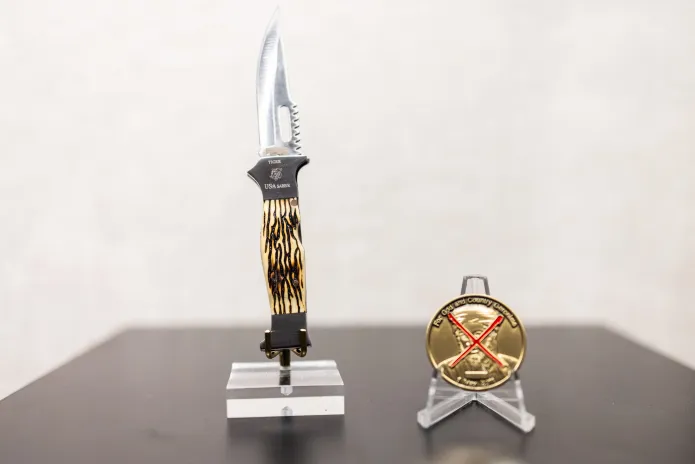
Other artifacts include a piece of rubble recovered from the Pentagon, and a knife given to the lead NSA analysts on the ground in Pakistan after Navy SEALs raided bin Laden’s compound. The knife was taken from his bedroom.
-
Artifacts on display at the National Cryptology Museum highlighting the National Security Agency’s crucial role in the takedown of Usama Bin Laden following the 9/11 attacks. (Taken on Thursday, Sept. 10, 2026 by Graeme Jennings/Washington Examiner) -
Artifacts on display at the National Cryptology Museum highlighting the National Security Agency’s crucial role in the takedown of Usama Bin Laden following the 9/11 attacks. (Taken on Thursday, Sept. 10, 2026 by Graeme Jennings/Washington Examiner) -
Artifacts on display at the National Cryptology Museum highlighting the National Security Agency’s crucial role in the takedown of Usama Bin Laden following the 9/11 attacks. (Taken on Thursday, Sept. 10, 2026 by Graeme Jennings/Washington Examiner) -
Artifacts on display at the National Cryptology Museum highlighting the National Security Agency’s crucial role in the takedown of Usama Bin Laden following the 9/11 attacks. (Taken on Thursday, Sept. 10, 2026 by Graeme Jennings/Washington Examiner)
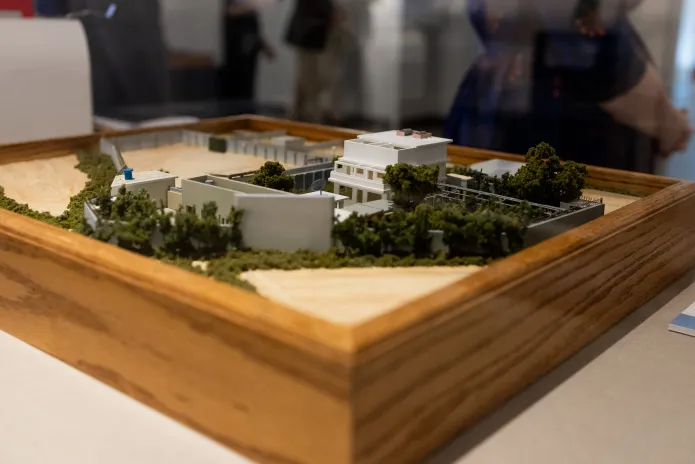
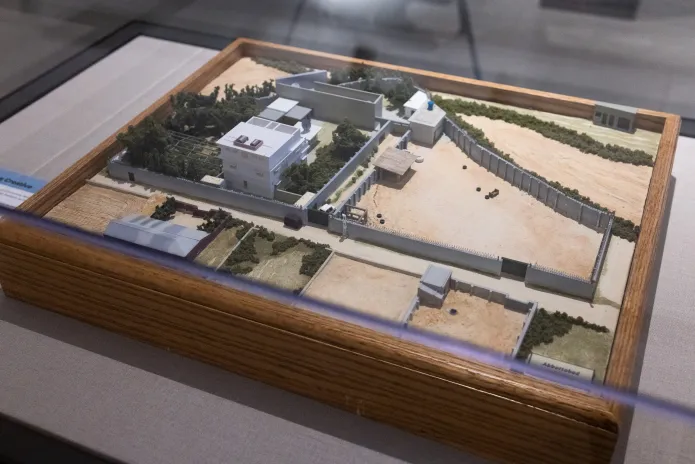
The exhibit also provided a detailed look at bin Laden’s compound, giving visitors a feel for what the United States was up against in navigating the buildings. The miniature replica allows visitors to look over top of it, giving a bird’s-eye view of the complex.
Deana Bowles, a curator at the museum, said the exhibit sheds light on the work that NSA employees, who are unable to tell family and friends about their day-to-day duties, do behind closed doors.
The museum offered a spot for self-reflection, where visitors can leave notes about where they were during the attacks. Some notes left at the museum are from people who were in elementary school and said they didn’t fully understand it at the time, while another note was from a nurse practitioner at a New York hospital who remembers going into lockdown.
Visitors are also encouraged to make paper cranes, which are a Japanese symbol of longevity.
“Fold a paper crane and add your own message of hope,” the sign said, adding the cranes can serve as a remembrance.
Evan Rea, a historian with the Center for Cryptologic History, said the lasting impact of 9/11 is to ensure the history-altering event is never forgotten, and placed emphasis on learning about the day.
WHAT TO KNOW ABOUT THE MEMORIAL CEREMONIES ON 9/11
The museum is also home to encryption machines from World War II, such as the German Enigma machine, and provides a look at the world of code-making and code-breaking.
The museum is open Tuesday through Friday, and the first Saturday of the month, from 10 a.m. to 4 p.m., and is located next to the NSA headquarters in Annapolis Junction, Maryland.