







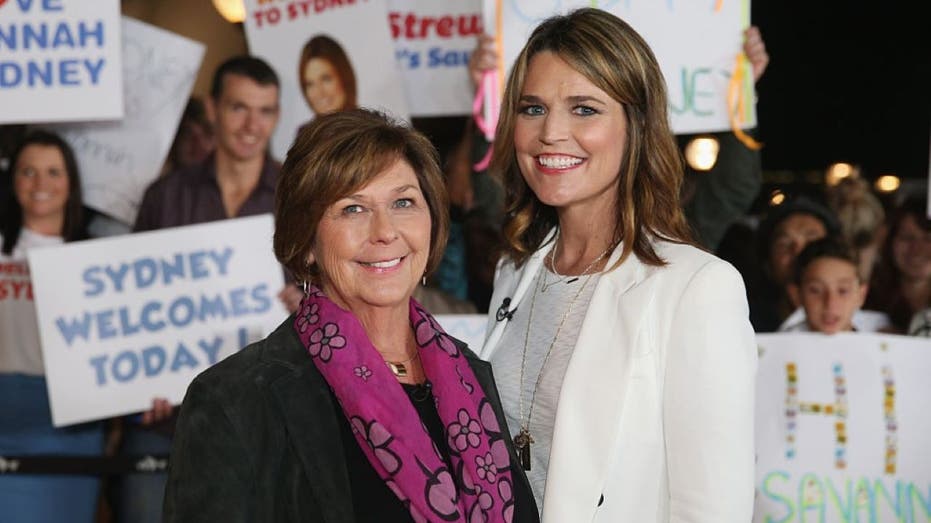
In the search for missing mother Nancy Guthrie, law enforcement isn’t the only force chasing answers.
Across Facebook groups, Instagram threads and neighborhood camera apps, a growing network of self-described “mom detectives” has mobilized — dissecting timelines, swapping Ring footage and organizing shared online files in an effort to piece together what happened.
“I’m crazy about Nancy Guthrie… I’m not even trying to hide it anymore,” Melinda Long, a health and fitness coach, content creator and mother of three, wrote on Instagram, describing “wake-up-at-2am, what-is-the-truth kind of obsessed” deep dives into a case she says has pieces that “don’t quite add up.” She then asked her followers: “Anyone else completely locked into this right now?”
The response was immediate.
BORDER PROTOCOLS AUTOMATICALLY TRIGGERED IN SEARCH FOR NANCY GUTHRIE, RETIRED AGENT SAYS
Within minutes, Long said, women flooded the comments echoing the same sentiment — anxious, invested and unable to look away.
“I’m waking up in the middle of the night, and I’m putting on Fox News, and I am not a girl who watches TV at night,” Long told Fox News Digital. “A lot of women are writing, ‘Same, same girl, same.’ You just said exactly what I’m feeling but afraid to say out loud.”
Long has no personal connection to the Guthrie family. Yet the case feels intensely personal.
FOX NEWS TRUE CRIME NEWSLETTER: RANSOM DEADLINE PASSES, KEY EVIDENCE EMERGES IN NANCY GUTHRIE CASE
“Why do I feel so personal about it?” she said. “Savannah is like America’s sweetheart, right? So her mom feels like your mom. It feels like it could be my mom. I have a 75-year-old mom. I think a lot of moms feel that connection to it.”
She said recent true-crime documentaries have also shaped her perspective. After watching a Netflix series on Elizabeth Smart’s abduction, Long said she was reminded that early assumptions in missing persons cases can be wrong.
“We all thought she was dead. We just thought she was gone,” Long said. “And she wasn’t.”
NANCY GUTHRIE CASE: 5 KEY EVIDENCE PIECES SO FAR
That memory, she explained, reinforces hope, even when details appear limited.
“There has to be more,” she said. “There has to be more information that we don’t know.”
Long says her online community includes “regular moms,” professionals and followers from as far away as the United Kingdom and Austria — underscoring how social media has erased geographic boundaries in modern crime cases.
“Social media really crosses that border of being just a U.S. news thing,” she said.
The intensity Long describes is not isolated.
On a Facebook page called “True Crime Mama,” one recent post asked followers: “Curious where everyone stands… Do you think she will be found or do you think she will never be found?”
In another group, a user named Lori Sparks wrote that she had been following the case “from the beginning,” adding that she was monitoring updates on “2 separate laptops that way I don’t miss anything,” along with hashtags calling for justice and Nancy’s safe return.
On Instagram, Michele McNaughton posted a reel of herself scrolling on her phone with text overlay that read: “The one new step I never skip in my morning routine: checking social media to see if they found Nancy Guthrie yet.” In the caption, she asked: “Why in the world is this taking so long to solve?”
GENETIC GENEALOGY THAT CAUGHT NOTORIOUS KILLERS NOW USED IN NANCY GUTHRIE CASE
“I really do hope they find this woman. This whole thing just feels Mickey Mouse and botched. It’s sad,” McNaughton told Fox News Digital. “None of it makes sense.”
McNaughton added that she was “hooked on the story from the start.”
“I felt this could be my neighbor or mom who’s gone missing,” she said. “And I’m pretty sure we all thought the cops would’ve had it wrapped up in no time.”
But as the case unfolded, she said her confidence began to fade.
“As the days dragged on and the story got weirder, I started to think they were bumbling this case,” she said, describing what she viewed as a series of confusing developments — including mentions of ransom notes, talk of payment, suspects being detained and later released. “It’s a rollercoaster ride.”
The reaction in her comment section reflected similar frustration.
“The Moms of the World would’ve solved this by Tuesday,” one follower wrote.
“And the way this is going,” she added, “I’m starting to wonder if we could have.”
For some women, checking for developments has become part of their morning routine — alongside coffee, workouts and school drop-offs.
At the heart of the online engagement, Long insists, is concern not cruelty.
“I want them to know that everybody’s concern is genuine and real,” she said, referring to Guthrie’s family. “Any concerns are only because everybody wants her to be found. There are a lot of prayers and a lot of good intentions.”
NANCY GUTHRIE’S FAMILY MEMBERS CLEARED AS SUSPECTS IN DISAPPEARANCE
The phenomenon extends beyond the Guthrie case.
In recent years, mothers and online communities have mobilized around high-profile investigations including the 2022 University of Idaho murders and the disappearance of Gabby Petito — cases that unfolded in real time across TikTok, Reddit and Facebook, with civilians analyzing bodycam footage, social media posts and digital timelines.
Petito’s case in particular demonstrated the power of online attention to amplify a missing persons investigation nationally, but it also highlighted the risks of speculation spreading rapidly across platforms.
Now, digital tools that once served primarily for social connection, like neighborhood camera apps, shared drives and group chats, are being repurposed into informal investigative hubs.
What once might have been passive consumption of true crime has, for some, evolved into active participation.
The idea of mothers stepping into investigative roles is not entirely new.
In his new book, “The Carpool Detectives: A True Story of Four Moms, Two Bodies and One Mysterious Cold Case,” author Chuck Hogan details how a group of suburban mothers helped revive a 15-year-old double homicide that had long eluded investigators.
As first reported by the New York Post, the case centered on a 2005 incident involving a suburban businessman and his wife whose bodies were discovered near their wrecked SUV in a Los Angeles County canyon after they vanished without a trace. The family business had collapsed, millions of dollars were unaccounted for, and leads had dried up.
The effort was spearheaded by Marissa Pianko, who learned about the case while taking a broadcast journalism class at UCLA in 2020. What began as an academic exercise evolved into a years-long civilian push to reexamine evidence and press for renewed attention.
Fox News Digital reached out to the group for comment.
The story has fueled discussion about whether organized civilian involvement can sometimes surface overlooked details or whether it risks complicating official investigations.
For Long, the constant scrolling and late-night updates aren’t about playing detective — they’re about hope.
PIMA COUNTY SHERIFF NO STRANGER TO CONTROVERSY AS CRITICISM IN NANCY GUTHRIE CASE RAMPS UP
“There has to be more,” she said. “There has to be more information that we don’t know.”
Watching public appearances by family members has only deepened her emotional investment.
“She looks like hell,” Long said candidly. “And I’m thinking, I would look like hell too. I can’t even imagine if I’m getting up in the middle of the night and not sleeping…imagine the sickness and horror that she feels.”
That identification, daughter to mother, mother to mother, may help explain why so many women are gathering in digital spaces to follow cases so closely.
Until there are clearer answers, she and thousands of other mothers say they’ll keep watching, refreshing feeds, sharing posts and waiting for the update they’re hoping to see.


