

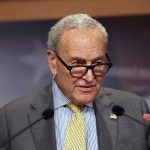


Sen. Lindsey Graham (R-SC) on Wednesday expressed confidence that other countries will join the U.S.’s blockade of key Iranian ports.
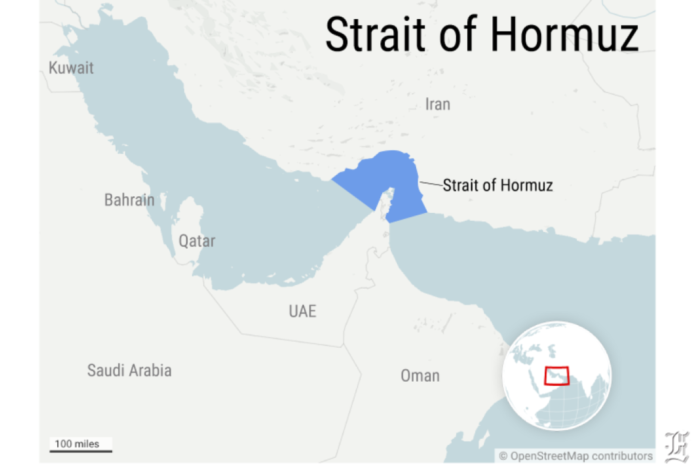
President Donald Trump announced a blockade of all Iranian ports in the Strait of Hormuz on April 12. The blockade affects all vessels entering or departing Iranian ports, a move that could prove economically devastating as it cuts off one of the regime’s major sources of funding.
The United States has led the blockade. But Graham said this week he expected it to “become global soon,” and touted the maneuver as effective in curtailing Iran’s terrorist activity. His hopes come as the United Kingdom and France are holding meetings on Wednesday and Thursday on how a coalition of over 30 nations can help reopen the Strait of Hormuz.
“I not only expect this blockade to stay in place until Iran shows a commitment to change their ways, I expect the blockade will be growing and that it could become global soon,” Graham said as he praised Trump for launching the blockade.
“Well done to President Trump and his team,” he said. “This is the best chance since 1979 to change the behavior of the regime, and I hope this can be accomplished through diplomacy. I think the President’s decision to leave the blockade in place is very smart. It is having a strong effect on the ability of Iran to continue to be the largest state sponsor of terrorism, which they appear intent on doing.”
Graham’s words come as British Prime Minister Keir Starmer and French President Emmanuel Macron hold a two-day meeting in London with military planners from over two dozen nations, designed to craft a multinational mission “to safeguard freedom of navigation in the Strait.” Macron has stressed that such a mission would be “strictly defensive” and peaceful. German Chancellor Friedrich Merz has confirmed his country will help ensure freedom of navigation in the Strait of Hormuz, but only once the fighting stops.
Vice President JD Vance met with U.K. Deputy Prime Minister David Lammy earlier this month, with Lammy saying it is vital that “we get shipping flowing freely again through the Straits of Hormuz.”
Iran essentially closed the Strait of Hormuz, which lies in the Middle East and connects to the Persian Gulf, after the U.S. and Israel launched attacks on Iran on Feb. 28. By controlling access in and out of the strait, Iran was effectively the only country that could export hydrocarbons for several weeks as oil prices spiked roughly 40%, surging toward $120 a barrel.
But Trump’s move in April to impose a naval blockade on Iranian ports in the region “neutralized” that strategic advantage, Lucila Bonilla, lead emerging markets economist at Oxford Economics, told CNBC Tuesday.
$1.5 TRILLION NATIONAL DEFENSE BUDGET DOES NOT INCLUDE IRAN WAR COSTS
Some experts believe that by Sunday, Iran could run out of storage space for the oil it is producing and cannot export due to the blockade.
Treasury Secretary Scott Bessent said Tuesday that “in a matter of days, Kharg Island storage will be full and the fragile Iranian oil wells will be shut in,” and noted that “constraining Iran’s maritime trade directly targets the regime’s primary revenue lifelines.” Though it remains in talks with the U.S. to end the war, Iran has sought to maintain its chokehold on the world economy by firing at and seizing commercial ships trying to pass through the strait.


