






A federal magistrate judge on Monday repeatedly compared the treatment of White House Correspondents’ Association dinner shooting suspect Cole Allen to defendants charged in the Jan. 6 Capitol riot, questioning why the man accused of attempting to assassinate President Donald Trump was subjected to stricter confinement measures than accused rioters.
During a hearing in Washington, D.C., Magistrate Judge Zia M. Faruqui said Allen appeared to be “treated differently than anyone I’ve ever observed” in the city’s jail system, pointing to his years overseeing Jan. 6 cases as a benchmark.
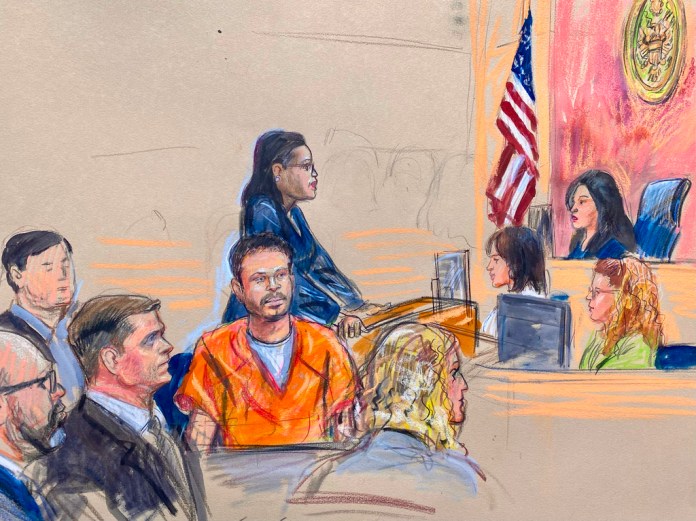
“I never had a Jan. 6 defendant put in five-point restraints or in a safe cell,” Faruqui said, adding that even individuals accused of politically motivated violence were not handled as restrictively in his courtroom experience.
The comments came as Faruqui scrutinized Allen’s placement on suicide-watch protocols at the jail, despite defense attorneys saying repeated mental health screenings found no indication he posed a risk to himself. Allen’s attorney, public defender Eugene Ohm, said his client was initially placed on full suicide watch and later downgraded, but remained under conditions that restricted phone access, legal materials, and personal items, including a Bible.
Faruqui suggested the environment could be counterproductive, at one point remarking that the conditions “may induce someone to be suicidal,” and pressed jail officials to explain the basis for the restrictions.
A representative for the District of Columbia Department of Corrections, Tony Towns, said Allen’s placement was based on an “ongoing” psychiatric evaluation.
Prosecutor Jocelyn Ballantine added that Allen’s initial detention status was influenced by statements he made after his arrest, including telling FBI agents he did not expect to survive the alleged attack. Faruqui said he interpreted that statement as an expectation of being shot by law enforcement, not evidence of suicidal intent.
The judge’s comparison to Jan. 6 defendants runs up against conflicting evidence in past cases handled under the Biden administration. In the months following the Jan. 6 Capitol riot, some detainees were also placed in restrictive housing inside the district jail, including for extended periods of isolation, prompting criticism from lawmakers across the political spectrum.
Sen. Elizabeth Warren (D-MA) and Sen. Dick Durbin (D-IL) publicly objected in 2021 to the use of solitary confinement-like conditions for pretrial Jan. 6 detainees, arguing the practice was excessive for individuals who had not yet been convicted. At the time, jail officials said restrictive housing decisions were driven in part by safety concerns and pandemic-related protocols, according to a report from Politico.
While prosecutors say Allen carefully planned his assassination attempt and traveled across the country with multiple weapons, one of which he allegedly fired at a Secret Service agent, to accomplish it, most Jan. 6 defendants were unarmed, and many had not planned in advance to engage in violence.
Still, Faruqui indicated Allen’s situation stood out even in that broader context, emphasizing that he had not previously seen defendants placed in “five-point restraints” or similarly restrictive conditions under comparable circumstances.
At one point, the judge apologized directly to Allen and said the court has an obligation to ensure detainees are treated appropriately while awaiting trial. He warned that if the jail could not justify its approach, he would consider involving federal authorities to reassess Allen’s placement and explore alternative housing options.
Allen, 31, is accused of opening fire with a shotgun during the April 25 White House Correspondents’ Association dinner at the Washington Hilton, where Trump and other officials were present. He faces charges including attempted assassination of the president and firearm offenses related to allegedly shooting a U.S. Secret Service agent wearing a bulletproof vest.
PIRRO SAYS TRUMP DINNER SHOOTING SUSPECT ‘DEFINITIVELY’ SHOT SECRET SERVICE AGENT
If convicted, he could spend the rest of his life in prison. Allen has not yet entered a plea.
Allen remains in custody after waiving his right to challenge pretrial detention for now. A preliminary hearing in his case is scheduled for May 11.


