


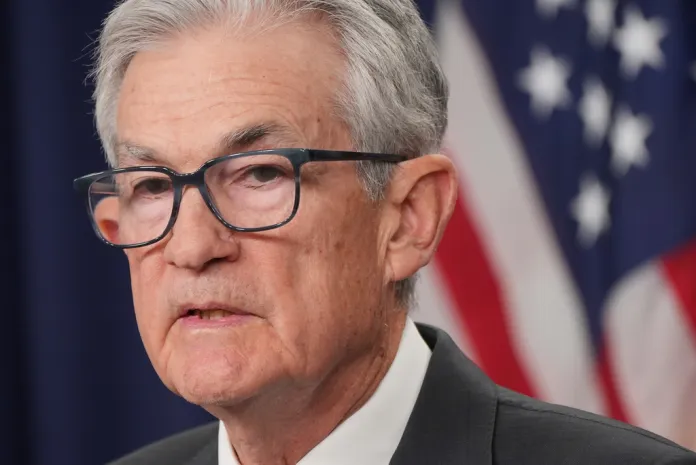
A federal judge blocked the Justice Department on Friday from enforcing subpoenas issued against Federal Reserve Chairman Jerome Powell, ruling the government failed to show any legitimate basis for the demands.
U.S. District Judge James Boasberg quashed two subpoenas served on the Federal Reserve’s Board of Governors that sought records related to a $2.5 billion renovation project at the central bank’s headquarters, a matter Powell testified about before Congress last year. The DOJ had opened an inquiry in November into whether Powell made false statements to lawmakers about the project’s cost.
In a 27-page opinion unsealed on Friday, Boasberg, an appointee of former President Barack Obama, said the evidence suggested the subpoenas were issued to pressure Powell rather than to investigate a crime. “The case thus asks: Did prosecutors issue those subpoenas for a proper purpose?” the judge wrote. “The Court finds that they did not.”
Boasberg pointed to “abundant evidence” that the subpoenas were part of a broader effort to force Powell either to lower interest rates or step aside. “There is abundant evidence that the subpoenas’ dominant (if not sole) purpose is to harass and pressure Powell either to yield to the President or to resign and make way for a Fed Chair who will,” he wrote.
The judge said prosecutors failed to present any meaningful evidence that Powell had committed a crime. “The Government has produced essentially zero evidence to suspect Chair Powell of a crime,” Boasberg wrote, adding that the DOJ’s justification for the subpoenas was “so thin and unsubstantiated that the Court can only conclude that they are pretextual.”
The subpoenas sought documents tied to the Federal Reserve’s renovation of its Marriner S. Eccles Building and the adjacent Federal Reserve Board East building in Washington, projects originally estimated at $1.9 billion but later revised to roughly $2.5 billion because of design changes, rising construction costs, and other unforeseen conditions. The buildings date back to the 1930s and had not undergone major renovations since opening.
DOJ officials said Friday the inquiry, which has been open for nearly five months, is intended to examine possible false statements and fraud related to Powell’s testimony about the project.
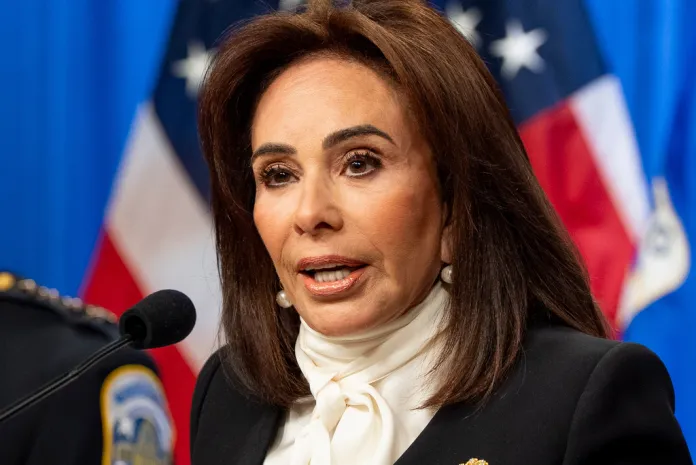
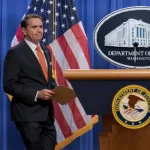
U.S. Attorney for the District of Columbia, Jeanine Pirro, said Friday the investigation should be allowed to proceed before a grand jury, noting the subpoenas were only filed after Powell’s office allegedly never returned responses to her office’s outreach.
“Give me the information so the grand jury comprised of regular Americans can say there’s nothing there,” Pirro said during a 15-minute press conference following Boasberg’s decision. “And I’ll accept it the way I accept other cases.”
Pirro sharply criticized Boasberg’s ruling, saying “this process has been arbitrarily undermined by an activist judge,” and arguing the decision improperly interfered with a grand jury investigation. Pirro repeatedly said she would be asking for the court to reconsider its decision.
“This judge has put himself at the entrance door of the grand jury and slammed it shut,” Pirro said. “According to the Supreme Court, the highest court in the land … every grand jury has broad discretion to ‘investigate merely on suspicion that the law is being violated or because it wants assurance that the law is not being violated.’”
BREAKING: Tyrannical Judge James Boasberg just ridiculously BLOCKED US Attorney Jeanine Pirro from investigating Federal Reserve Chair Jerome Powell
Jerome Powell now has essential TOTAL IMMUNITY. He just made Pirro effectively powerless.
THIS IS INSANE! IMPEACH BOASBERG! pic.twitter.com/5EsGfwxkG3
— Eric Daugherty (@EricLDaugh) March 13, 2026
“In fact, the law says that a grand jury may act on tips and rumors,” Pirro continued. “And yet this judge is shockingly requiring the judge to show something akin to probable cause in order to justify the issuance of a grand jury subpoena,” she added, saying probable cause “is not and has never been the law of the land” to secure a subpoena.
The ruling deals a burdensome but potentially temporary blow to the DOJ’s investigation. Pirro’s office plans to file a motion to reconsider, and said she would appeal to the D.C. Circuit if necessary.
President Donald Trump has repeatedly criticized Powell, whom he appointed to lead the central bank in 2017, and has said the Fed should move more aggressively to cut borrowing costs. Yet the president previously denied knowledge of Pirro’s investigation into Powell.
Powell has defended the Fed’s independence and warned against political pressure influencing monetary policy. When the investigation was announced on Jan. 11, he created a video of himself from the Federal Reserve press podium, arguing the investigation raised broader questions about whether the central bank would continue setting interest rates based on economic conditions rather than political demands.
The legal fight has also spilled into Congress. Sen. Thom Tillis (R-NC) said the ruling confirmed how weak the case against Powell appeared and has threatened to block any nominee to replace the Fed chair until the investigation is resolved.
Trump has nominated former Federal Reserve governor Kevin Warsh to succeed Powell when his term as chairman expires in May. Warsh is expected to win confirmation in the Republican-controlled Senate, but Tillis, a member of the Senate banking committee, has indicated he may withhold support while the criminal investigation is open.
The Federal Reserve also faces another looming legal battle. The Supreme Court is expected to decide soon whether the Trump administration had the authority to dismiss Fed Governor Lisa Cook despite statutory protections designed to shield members of the central bank’s board from political removal.
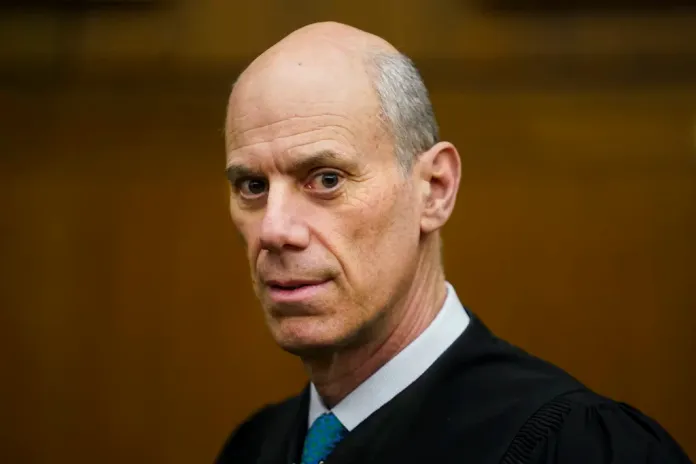
Boasberg, who serves as chief judge of the U.S. District Court for the District of Columbia, has in recent months drawn a firestorm of criticism from Republicans over his separate role approving nondisclosure orders tied to subpoenas issued to GOP members of Congress amid former special counsel Jack Smith’s investigation into efforts to overturn the 2020 election. His approval of those orders, seen as a political double-standard in light of his Friday opinion, prevented major phone carriers from notifying targets that their call metadata had been obtained, including records connected to several Republican lawmakers.
POWELL DEFENDS FED INDEPENDENCE IN FIRST QUESTIONS ABOUT DOJ INQUIRY
Those subpoenas were issued by Smith’s office, but the secrecy orders required judicial approval, which Boasberg granted as part of the court’s oversight of such requests. Friday’s ruling marks a rare instance where the judge rejected a DOJ investigative tactic outright, concluding that the government’s stated rationale did not withstand scrutiny.
The case is expected to continue as the DOJ pursues an appeal.


