

A Utah judge on Monday denied accused Charlie Kirk assassin Tyler Robinson’s request to close portions of a preliminary hearing to the public.
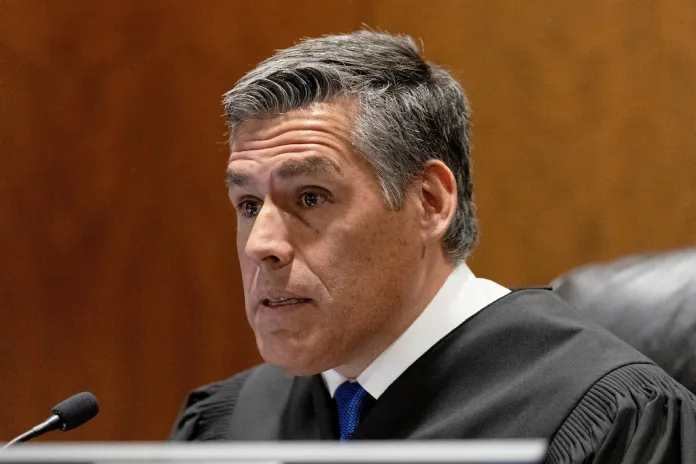
During a virtual hearing, Utah District Judge Tony Graf issued two rulings stemming from arguments heard last month in the high-profile murder case, denying the defendant’s efforts to keep further proceedings away from media coverage, while setting up a separate hearing to determine whether prosecutors violated a pretrial publicity order through comments they made to media outlets.
Monday’s hearing resolved two disputes ahead of Robinson’s July 6 to 10 preliminary hearing, where prosecutors are expected to present evidence supporting their effort to bring the case to trial. It also set up a June 12 evidentiary hearing focused on Robinson’s claims that prosecutors improperly discussed the case publicly.
Graf denied Robinson’s request to close portions of the July hearing and seal related proceedings from public view. However, the judge noted that the parties had already reached an agreement that neither the public nor the media would be permitted to inspect or copy exhibits introduced during the preliminary hearing unless those exhibits were published in court as part of the proceedings.
Robinson’s attorneys had argued that evidence presented during the preliminary hearing could receive widespread media coverage and possibly prejudice future jurors before trial.
“The public and the media enjoy a presumptive right to access court proceedings, including preliminary hearings,” Graf said from the bench.
The judge found that Robinson failed to demonstrate that keeping the hearing open would create “a realistic likelihood of prejudice” to his right to a fair trial.
Graf said the defense had raised generalized concerns about hearsay evidence and expert reports without identifying specific evidence that would justify closing the courtroom. He also noted that much of the evidence prosecutors intend to present has already been disclosed through charging documents and probable cause filings.
The judge further concluded that less restrictive alternatives remain available, including expanded juror questionnaires, larger jury pools, and extensive questioning of prospective jurors during jury selection.
In a separate ruling, Graf granted Robinson’s request for a hearing examining whether members of the Utah County Attorney’s Office violated the court’s pretrial publicity order through comments made to media outlets.
Robinson’s attorneys alleged that Utah County Attorney Jeff Gray and Deputy Utah County Attorney Chris Ballard improperly discussed the case with organizations including TMZ, USA Today, Fox News, and PolitiFact.
Graf stressed that his ruling does not mean prosecutors violated the order.
“The issuance of this order reflects a determination that defendant has made a sufficient preliminary showing under Utah law to warrant further proceedings and does not constitute a finding of contempt,” the judge said.
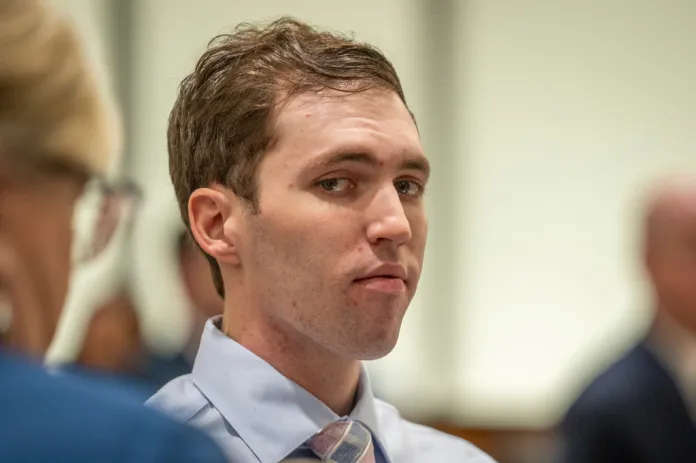
Robinson, 23, is charged with capital murder in the Sept. 10, 2025, killing of Kirk, the conservative activist and founder of Turning Point USA, at an event on the campus of Utah Valley University. Prosecutors are seeking the death penalty.
The June 12 hearing will focus on whether prosecutors knew the requirements of the publicity order, had the ability to comply with it, and intentionally violated it through statements to the media. Each side will have 90 minutes to present evidence before Graf takes the matter under advisement.
WATCH LIVE: JUDGE DENIES TYLER ROBINSON’S REQUEST TO KEEP HEARING BEHIND CLOSED DOORS
The rulings came as Robinson’s attorneys continue a separate effort to halt proceedings while seeking review from the Utah Supreme Court. Last week, the defense renewed its request to stay the case, including the July preliminary hearing, pending appellate review of Graf’s May 8 decision allowing cameras in the courtroom.
Robinson’s lawyers have argued that expanded media coverage could undermine his ability to receive a fair trial. Graf previously rejected the defense’s request for a blanket camera ban, prompting Robinson to seek review from the state’s highest court. As of Monday, no stay had been granted, leaving the July preliminary hearing on track.


