






Niigata is not Japan’s most prominent prefecture, but there are a handful of areas in which it stands out. Snowboarders and skiing enthusiasts from around the world travel there for the pillowy snow on its mountains. Its rice is considered some of the best in the country, and that fact contributes to its status as the sake capital of the world.
But there is another, more grim, fact for which Niigata is known. The prefecture was the site of Japan’s most famous disappearance case, Megumi Yokota. She has been missing for almost five decades, and her family believes she is alive in North Korea.
Yokota is one of at least 17 Japanese citizens who were abducted by North Korean operatives between 1977 and 1983, according to the Japanese government. The Japanese National Police Agency has a list of over 850 more missing person cases that they cannot rule out as a North Korean abduction.
Yokota was 13 years old when she was taken, the youngest confirmed victim.
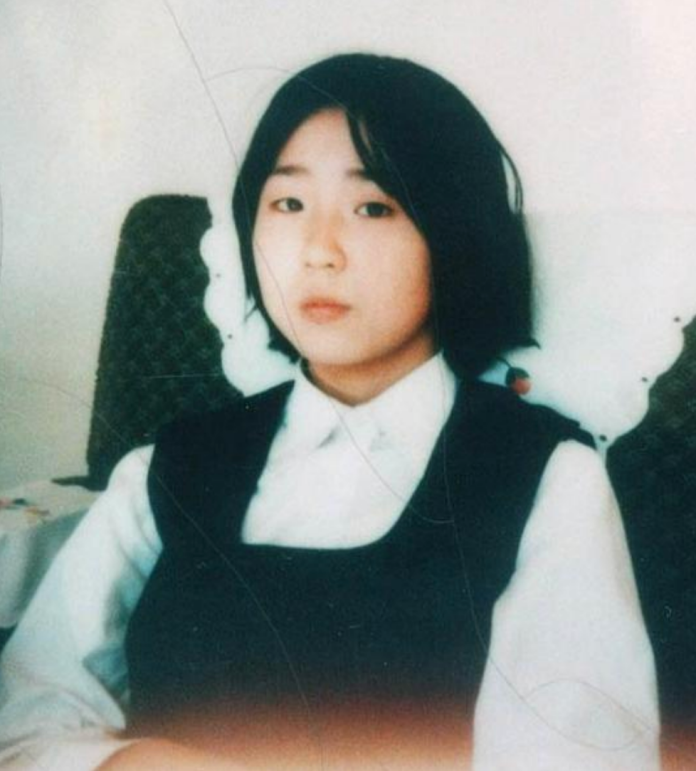
 100vw, 924px”><figcaption class=) This photo of Megumi Yokota, provided by the Government of Japan, became an iconic image following the revelation that the teenage student was abducted by North Korean operatives while walking home from school in 1977. The photo shows Yokota after her abduction, while she was a teenager in North Korea.
This photo of Megumi Yokota, provided by the Government of Japan, became an iconic image following the revelation that the teenage student was abducted by North Korean operatives while walking home from school in 1977. The photo shows Yokota after her abduction, while she was a teenager in North Korea.The Japanese government is making a concerted push to bring the North Korean abduction issue back into the international spotlight, hoping that family members of these victims can receive closure before they die from old age.
Japanese Prime Minister Sanae Takaichi highlighted the effort in her maiden speech on the floor of the U.N. General Assembly on Sept. 22.
“The issue of abductions by North Korea is an ongoing matter with lives at stake,” Takaichi told the world. “The abductees are still denied their freedoms and their families continue to suffer. This is a matter of great concern not only for Japan but for the international community.”
She emphasized that to this end, her country, which maintains no formal relationship with North Korea, is prepared to work with Pyongyang to rebuild their bilateral diplomacy.
“As the abductees and their families are aging, the abductees issue must be resolved immediately,” Takaichi continued. “For the sake of the future of both Japan and North Korea, I am prepared to engage in dialogue and take concrete action to establish a mutually fruitful relationship.”
When citizens first began disappearing near coastal regions of Japan, the public did not suspect that the North Koreans were responsible. The accusation was treated as a conspiracy theory in Japanese media and inappropriate as Tokyo sought to normalize relations with the hermetic dynasty across the sea. When Japanese officials even approached the topic in bilateral conversations with Pyongyang, their counterparts at times “literally slammed the negotiating table with their fists and walked out.”
But in the background, the Japanese intelligence community was encountering evidence and testimony from a variety of sources that began to concretely link North Korea to the disappearances.
The dispute came to a head in 2002, when then-Prime Minister Junichiro Koizumi threatened to leave a summit in Pyongyang over North Korean negotiators’ refusal to address the abductions.
What came next sent shockwaves across the Sea of Japan. As Koizumi later recalled in an address following the summit: “Chairman Kim Jong-Il honestly acknowledged that these [abductions] were the work of persons affiliated with North Korea in the past and offered his apologies, expressing his regret.”
Kim Jong Il claimed that his country had abducted 13 Japanese nationals, but only five were still alive. He allowed those five to return to their home country in a media spectacle that commanded the entire nation’s attention.
 ** JAPAN OUT, JAPAN ONLINE OUT **</p>
<p> ” data-large-file=”https://conservativemodern.com/wp-content/uploads/2026/10/japan-seeks-us-help-to-bring-north-korean-abductees-home-1.webp” src=”https://conservativemodern.com/wp-content/uploads/2026/10/japan-seeks-us-help-to-bring-north-korean-abductees-home-1.webp” alt=”Koizumi and Kim” class=”wp-image-4747732″ style=”aspect-ratio:1.5467654877950536;width:405px;height:auto” srcset=”https://conservativemodern.com/wp-content/uploads/2026/10/japan-seeks-us-help-to-bring-north-korean-abductees-home-6.webp 1024w, https://conservativemodern.com/wp-content/uploads/2026/10/japan-seeks-us-help-to-bring-north-korean-abductees-home-6.webp?resize=300,194 300w, https://conservativemodern.com/wp-content/uploads/2026/10/japan-seeks-us-help-to-bring-north-korean-abductees-home-6.webp?resize=768,497 768w, https://conservativemodern.com/wp-content/uploads/2026/10/japan-seeks-us-help-to-bring-north-korean-abductees-home-6.webp?resize=150,97 150w, https://conservativemodern.com/wp-content/uploads/2026/10/japan-seeks-us-help-to-bring-north-korean-abductees-home-6.webp?resize=696,451 696w” sizes=”auto, (max-width: 1024px) 100vw, 1024px”><figcaption class=) Japanese Prime Minister Junichiro Koizumi, left, shakes hands with North Korean leader Kim Jong Il prior to their summit talks in Pyongyang, North Korea, Tuesday, Sept. 17, 2002. (AP Photo/Japan POOL)
Japanese Prime Minister Junichiro Koizumi, left, shakes hands with North Korean leader Kim Jong Il prior to their summit talks in Pyongyang, North Korea, Tuesday, Sept. 17, 2002. (AP Photo/Japan POOL) North Korea handed over to Japan a tranche of files consisting of death certificates, traffic accident reports, and other documentation meant to explain the abductees’ deaths. Pyongyang also handed over the cremated human remains of Yokota, who they said allegedly died by suicide in 1994. They provided photos of Yokota in North Korea, and reported that she had been married with a child.
“DNA tests revealed that [the remains] belong to other individuals,” Yoko Tsuda, director of the Policy Planning Division at the Headquarters for the Abduction Issue, told the Washington Examiner.
Tsuda continued: “Moreover, all ‘death certificates’ given to the Japanese investigation team were issued from the same hospital with identical certification stamps, despite the chronological and geographical differences among the ‘deaths’… There are many other inconsistencies and contradictions in North Korea’s claims as well.”
North Korea later admitted that the death certificates were cobbled together around the 2002 summit, though they maintained that the unreturned abductees were truly dead. It was on the basis of this deception that Japan began seeking justice on the premise that those unaccounted for abductees remain alive until contrary evidence is produced — even now, decades later.
“As there is no evidence in the explanations presented by North Korea that corroborates their ‘deaths’, the Government of Japan is simply asking North Korea to conduct a search for the abductees on the premise that they are alive,” Tsuda said.
Just hours before Takaichi delivered her address at the United Nations, two representatives of the Association of Families of Victims Kidnapped by North Korea sat down for an exclusive interview with the Washington Examiner. One interviewee was its president, Takuya Yokota, the younger brother of Megumi Yokota.
Takuya Yokota brought to the embassy an assortment of objects belonging to his missing sibling, including her old gym-class uniform and a scarf she had knitted before her disappearance but never got to wear.
His mother is still alive, waiting for the day her daughter comes home, and carries a “small dream” in her heart.
“That dream is that when Megumi comes home, the two of them will be able to lie in a field and look up at the white clouds in a blue sky and [she can] whisper to her, ‘You’re free again,’” Yokota said.
Yokota was joined by the association’s secretary-general, Koichiro Iizuka.
Iizuka was only 1 year old in 1978 when his mother, Taguchi Yaeko, was taken by North Koreans while living in Niigata. He and his sister were adopted and raised by relatives, but Iizuka has made it his life’s mission to reunite with the mother he never truly knew.
“I have no recollection of what it was like to talk to her, to touch her, or what her face looked like,” Iizuka said, gesturing to an old family photo.
Taguchi was confirmed as an abductee at the summit in 2002, but North Korean officials reported her among the deceased. Iizuka rejects that report and instead speculates that Japanese nationals remain alive as possible future bargaining chips.
Yokota and Iizuka came to Washington, D.C., to reintroduce the abductions issue to American government officials, experts, think tanks, and anyone else of importance who would listen to their stories.
“Naturally, we are just regular citizens and have no idea what goes on in the world of intelligence,” Iizuka said.
They were tight-lipped about the specifics of their agenda and would not relay any information they received from the U.S. government, but referenced meeting with officials at the State Department.
“We, as the family members, would like to see the U.S. leverage everything […] in order to get all of our family members back,” Yokota told the Washington Examiner.
</p>
<p> ” data-large-file=”https://conservativemodern.com/wp-content/uploads/2026/10/japan-seeks-us-help-to-bring-north-korean-abductees-home-2.webp” src=”https://conservativemodern.com/wp-content/uploads/2026/10/japan-seeks-us-help-to-bring-north-korean-abductees-home-2.webp” alt=”Takuya Yokota and Iizuka Koichiro” class=”wp-image-4738543″ style=”aspect-ratio:1.5000734753857459;width:449px;height:auto” srcset=”https://conservativemodern.com/wp-content/uploads/2026/10/japan-seeks-us-help-to-bring-north-korean-abductees-home-8.webp 1024w, https://conservativemodern.com/wp-content/uploads/2026/10/japan-seeks-us-help-to-bring-north-korean-abductees-home-8.webp?resize=300,200 300w, https://conservativemodern.com/wp-content/uploads/2026/10/japan-seeks-us-help-to-bring-north-korean-abductees-home-8.webp?resize=768,512 768w, https://conservativemodern.com/wp-content/uploads/2026/10/japan-seeks-us-help-to-bring-north-korean-abductees-home-8.webp?resize=150,100 150w, https://conservativemodern.com/wp-content/uploads/2026/10/japan-seeks-us-help-to-bring-north-korean-abductees-home-8.webp?resize=696,464 696w” sizes=”auto, (max-width: 1024px) 100vw, 1024px”><figcaption class=) Takuya Yokota and Iizuka Koichiro hold up photos of their relatives taken by North Korea in the 1970’s. Pyongyang has claimed both victims have died, but DNA testing and counter-intelligence has convinced both that their family members are still alive. (Photo by Timothy Nerozzi)
Takuya Yokota and Iizuka Koichiro hold up photos of their relatives taken by North Korea in the 1970’s. Pyongyang has claimed both victims have died, but DNA testing and counter-intelligence has convinced both that their family members are still alive. (Photo by Timothy Nerozzi)He understands that it is a big request, but believes that mutual respect and cooperation between like-minded Japanese and American leaders might present an opportunity to persuade President Donald Trump.
“[Takaichi] has established a relationship of trust with President Trump and is also engaging in strong messaging directed at the international community,” he continued. “And so for that reason, I think that she, even from a North Korean perspective, is in a strong position to negotiate [with Pyongyang].”
The multifront campaign spearheaded by Takaichi, Yokota, and Iizuka seems to have succeeded, at least in reconfirming U.S. support for Japan’s cause.
“The United States is committed to the immediate resolution of the issues of abductees, detainees, and unrepatriated prisoners of war as well as the issue of separated families,” a State Department spokesperson told the Washington Examiner.
Seth Bailey, principal deputy assistant secretary for the State Department Bureau of East Asian and Pacific Affairs, met with the Japanese delegation on the sidelines of the U.N. assembly to discuss “the ongoing effort to resolve this issue.”
“[America] will stand with Japan until all abductees are reunited with their families,” the bureau said on social media.
Takaichi’s current goal is to secure a summit with the North Korean regime, where she can raise the abduction issue and work toward a solution. This has become a common talking point in her political rallies and speeches.
“I would like to take a courageous step forward with Mr. Kim [Jong Un] for the citizens of both countries and their youths of the future. […] I am prepared to hold talks and take concrete actions to build a relationship that is fruitful for the two nations,” Takaichi said at a rally in May. “I am determined to make a breakthrough and resolve the abduction issue without excluding any options.”
Trump would be crucial for this endeavor, having met with Kim Jong Un multiple times and maintaining something approaching a workable relationship with the dictator.
Trump has acknowledged the North Korean abduction victims multiple times across both his presidencies.
During a speech at the U.N. in 2017, Trump acknowledged Megumi Yokota: “We know [the North Korean government] kidnapped a sweet 13-year-old Japanese girl from a beach in her own country to enslave her as a language tutor for North Korea’s spies.”
In October of last year, Trump joined Takaichi for a meeting with the victims’ families in Tokyo, where he expressed solidarity on behalf of the United States.
“I’ve met the families before, and I’m with them all the way and the U.S. is with them all the way,” he said at the meeting.
</p>
<p> ” data-large-file=”https://conservativemodern.com/wp-content/uploads/2026/10/japan-seeks-us-help-to-bring-north-korean-abductees-home-3.webp” src=”https://conservativemodern.com/wp-content/uploads/2026/10/japan-seeks-us-help-to-bring-north-korean-abductees-home-3.webp” alt=”Trump meets with families of victims abducted by North Korea” class=”wp-image-4738688″ style=”aspect-ratio:1.5000315875923937;width:443px;height:auto” srcset=”https://conservativemodern.com/wp-content/uploads/2026/10/japan-seeks-us-help-to-bring-north-korean-abductees-home-10.webp 1024w, https://conservativemodern.com/wp-content/uploads/2026/10/japan-seeks-us-help-to-bring-north-korean-abductees-home-10.webp?resize=300,200 300w, https://conservativemodern.com/wp-content/uploads/2026/10/japan-seeks-us-help-to-bring-north-korean-abductees-home-10.webp?resize=768,512 768w, https://conservativemodern.com/wp-content/uploads/2026/10/japan-seeks-us-help-to-bring-north-korean-abductees-home-10.webp?resize=150,100 150w, https://conservativemodern.com/wp-content/uploads/2026/10/japan-seeks-us-help-to-bring-north-korean-abductees-home-10.webp?resize=696,464 696w” sizes=”auto, (max-width: 1024px) 100vw, 1024px”><figcaption class=) President Donald Trump, center left, with Japan’s Prime Minister Sanae Takaichi, center right, meets with family members of Japanese nationals abducted by North Korea, at the Akasaka Palace state guest house in Tokyo, Japan, Tuesday, Oct. 28, 2025. (Kiyoshi Ota/Pool Photo via AP)
President Donald Trump, center left, with Japan’s Prime Minister Sanae Takaichi, center right, meets with family members of Japanese nationals abducted by North Korea, at the Akasaka Palace state guest house in Tokyo, Japan, Tuesday, Oct. 28, 2025. (Kiyoshi Ota/Pool Photo via AP)The president has claimed that a meeting with Kim is on the horizon — potentially as early as this year. Kim Yo Jong, the powerful sister of the dictator, counter-signaled that idea in August when she said she was “completely unaware of” any upcoming meeting.
If Trump were to secure a summit with Kim, it is almost certain that the Japanese government would press him to raise the issue and serve as a mediator.
As the potential for a Trump-led appeal to North Korea for the release of the victims becomes more possible, simple but grim questions loom. Are any of these victims truly still alive? And even if they are, what can actually be expected from Pyongyang?
The amount of time that has elapsed since Megumi Yokota and her fellow abductees were taken is immense. Even if the North Korean government was lying about their deaths at the 2002 summit, more than two subsequent decades have come and gone in a totalitarian state known for its brutality and poverty.
Jenny Town, a senior fellow at the Stimson Center and the director of 38 North, an outlet specializing in analysis of North Korea, finds it hard to talk about the situation with much confidence.
Asked what the odds are that the abduction victims really do remain alive inside North Korea, Town hesitated for several seconds before saying, “I think it’s maybe 50-50 if they are still there, if the North Koreans actually know where they are, if they are still alive.”
“I don’t have a good sense of what that probability is, to be honest,” she continued. “It’s really hit or miss.”
But when asked about the prospects of Trump actually securing the release of these Japanese nationals alive after almost five decades, her uncertainty turned to outright pessimism.
“That is a scenario that would never happen,” Town told me over the phone, explaining that Japan even just “receiving any further information” about the abductions “brokered through a separate country” would be “unprecedented.”
It is, when one truly contemplates it, an almost fantastical idea — Trump escorting a group of elderly Japanese hostages out of North Korea after half a century of captivity. Beyond the question of whether the victims survive, the scenario would require an inconceivable revolution of thought in Pyongyang that would transform the country overnight.
Town suggested that deep down, many victim families are probably just hoping for closure. They want answers about what happened to their loved ones and to learn the story of how they lived after being taken away from everything they’d ever known.
“I think a lot of the families are probably resigned to the idea that information — if they can get further information — is probably the best they can do. Even if they’re asking for the actual return of the people,” Town told the Washington Examiner. “I think it’s just that closure that they’re looking for — any kind of grain of information of what happened to them. Are they still alive? Do they have family members that are in North Korea”
US COURT FINDS IRAN AND NORTH KOREA LIABLE FOR TERRORIST ATTACKS HARMING AMERICANS
Only the Sea of Japan separates Niigata Prefecture from North Korea. That proximity can be difficult to ignore when phones buzz with the latest warning that Pyongyang has fired another rocket into the ocean. The past and present threat of North Korea weighs heavily on the region and its people.
Every November in Niigata, one can observe posters and signs memorializing the anniversary of Megumi Yokota’s disappearance. In some photos, she is standing under cherry blossoms. In others, she is outside her public school.
One picture stands out among them. In this photo, she is seated and dressed in a simple black-and-white outfit. Her eyes are visibly filled with fear. Her mouth is closed, and her expression is otherwise blank.
That photo was one of several provided to the Yokota family by North Korea following the 2002 summit. It was taken inside North Korea following her abduction.
“Looking at this photo, each person will try to put into words — in their own hearts — what it is that Megumi is trying to convey to us,” Takuya Yokota, her brother, told the Washington Examiner as he presented a copy.
He continued: “We can’t hear Megumi’s voice, but I believe that she is crying out, ‘Mom, Dad, here I am, please help.’ I believe that if you were to picture yourself being on the other side of that camera, or your family or your child or your sibling on the other side of that camera, you would be able to imagine how outrageous this issue is.”
Timothy Nerozzi (@TimothyNerozzi) is senior foreign affairs reporter at the Washington Examiner.


