

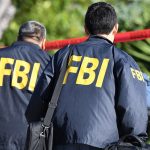


Cellphone data helped the FBI crack the years-old Jan. 6 pipe bomber case this week. However, for years, the FBI claimed that the data didn’t exist.
That detail, along with several others in a seven-page affidavit filed in the case of Brian Cole Jr. this week, has raised questions about an investigation that has captured public fascination for nearly half a decade.
Senior officials under then-FBI Director Chris Wray during the Biden administration told Congress that cellular data, which could have led investigators to a pipe bombing suspect, who was seen in footage using a cellphone while planting two pipe bombs outside the Republican National Committee and the Democratic National Committee on the night of Jan. 5, 2021, was “corrupted” and therefore unusable. A congressional report published earlier this year by a House subcommittee tasked with investigating the Jan. 6 response, however, said the FBI’s explanation “does not reconcile” with what major phone carriers later told Congress. The carriers had said that they supplied intact records and were never informed of any issues. And on Thursday, the FBI said that cellphone data placed its suspect at the scene of the crime.
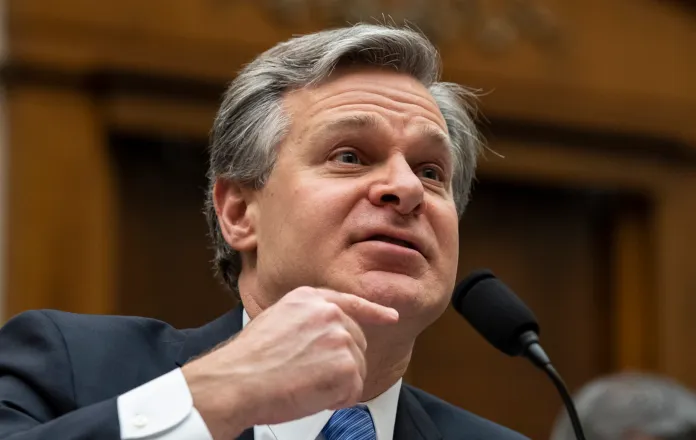
Rep. Thomas Massie (R-KY) highlighted those contradictions on Thursday, seizing on the arrest to restate his long-running criticisms of how the FBI handled the case under Wray, who was appointed to replace former FBI Director James Comey in 2017 during the first Trump administration. Under Wray, the FBI said investigators could not identify the pipe bomb suspect despite exhaustive efforts to find him or her; current FBI Director Kash Patel claimed the evidence that led his investigators to Cole, 30, had already been in the bureau’s possession before Wray’s departure.
Massie, one of the most persistent skeptics of the bureau’s Jan. 6 investigation, wrote on X that there are “three things I’ll never believe” about the pipe bomb episode: that the bomber acted alone, that the FBI was “this incompetent for four years on a case this consequential,” or that the perpetrators were pro-Trump.
Three things I’ll never believe about the January 5/6 pipe bomb story:
the bomber was a lone wolf
— Thomas Massie (@RepThomasMassie) December 4, 2025
Massie’s commentary resurfaced scrutiny of the bureau’s earlier explanations one day after the Justice Department’s announcement that the suspect, Cole of Woodbridge, Virginia, was arrested Thursday morning after investigators allegedly tied him to the devices using precisely the type of cell phone data the FBI once described as unusable.
According to Cole’s criminal affidavit, Cole allegedly purchased the components used in the devices, including galvanized 1×8-inch pipes, kitchen timers, wiring, battery connectors, and steel wool, throughout 2019 and 2020. Investigators also allege that Cole’s cellphone connected to towers matching the bomber’s path between the RNC and DNC, and that his vehicle was picked up on a license-plate reader less than half a mile from the scene of the crime. The bombs did not detonate, but the FBI has said it considered them viable, although critics have questioned that claim.
The Oversight Subcommittee’s Jan. 2 report indicated that much of the evidence used to identify Cole was collected by investigators years earlier. The subcommittee noted that there is “conflicting information as to whether the FBI received ‘corrupted’ cellular data” related to the movements of the pipe-bomb suspect. A former senior FBI official testified to Congress in 2023 that the FBI had been provided with location records that were allegedly corrupted or incomplete.
However, the subcommittee wrote that the major cellphone carriers later informed Congress that “they did not provide corrupted data to the FBI” and that “the FBI never notified them of any issues with accessing the cellular data.”
“The FBI has failed to provide a consistent account of its efforts,” the report said, adding that the bureau’s conflicting explanations “undermine confidence in the FBI’s investigative posture.”
The subcommittee also detailed several early investigative leads that the FBI failed to pursue, and officials have not addressed how Cole’s alleged involvement fits into the evidence investigators had already collected.
Joint Pipe Bomb Report Cn Bd Cn Mj Db Bd Db Bd Ch Bd Db Db Bd Db Bd Final Version Redacted2 by reportoftheday
Those leads included five persons of interest whose phone movements partially aligned with the bomber’s route, an individual who searched “pipe bomb DC” shortly after the devices were allegedly planted, a man who, prior to the bomb placement, photographed the RNC alley where one bomb was found, and a vehicle carrying a passenger resembling the suspect minutes after the placement. The report said these leads “appear not to have been fully examined.”
Attorney General Pam Bondi stressed on Thursday that no new tips or information triggered the breakthrough and did not indicate whether any additional defendants would be named in the future. She credited Patel and FBI Deputy Director Dan Bongino for reexamining existing material “that had been sitting there collecting dust” under prior leadership. Patel said agents reviewed “three million lines” of existing data and applied new technical expertise to long-standing evidence.
Cole’s arrest marks the most significant development in the case since the bombs were discovered at the height of the Jan. 6 riot nearly five years ago. But by relying on data that Wray-era FBI officials once described to Congress as unusable, and because the House subcommittee exposed other potential leads that may have been discarded, the current state of the case now raises further questions than ever for not just the Wray-era FBI, but also the current administration.
A spokesman for the FBI did not respond to the Washington Examiner when asked whether there was any clarification that could be made about former officials’ testimony on cellphone data corruption claims, as well as for clarity about the five former persons of interest cited by the subcommittee.
FBI SAYS JAN. 6 PIPE BOMB SUSPECT PURCHASED BOMB PARTS IN 2019
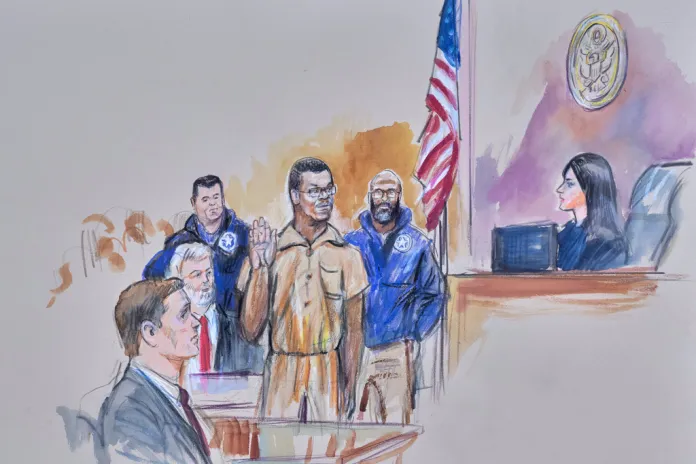
Cole made his first court appearance Friday, wearing a tan jumpsuit and glasses as Magistrate Judge Moxila Upadhyaya explained the charges to him. He was not shackled. Family members shouted, “We love you, Brian. We’re here for you, baby,” as he was led out of the courtroom. Prosecutors informed the judge that Cole had spoken with investigators for more than four hours the previous day, and a transcript would be turned over to his attorney, John Shoreman, this weekend. Cole will remain in custody at least until a Dec. 15 detention hearing.
Meanwhile, reporting from MS NOW on Friday, citing two sources familiar with the matter, claimed that Cole confessed to planting the bombs and told federal agents he supported President Donald Trump and held anarchist views. Federal authorities have not publicly confirmed the alleged confession, and Shoreman did not respond to a request for comment.


