






Secretary of War Pete Hegseth said the war with Iran was entering a new phase, as the United States was focusing on destroying Tehran’s defense industrial base.
At a Friday Pentagon briefing, Hegseth and Gen. Dan Caine, chairman of the Joint Chiefs of Staff, outlined the progress of “Operation Epic Fury.” After boasting of the destruction of Iran’s air force, navy, and ballistic missile capabilities, Hegseth said the air campaign had switched to preventing Iran from rebuilding its missile forces through the systematic targeting of its defense infrastructure.
“But it’s not just that Iran doesn’t have a functioning air force, or that their entire navy is at the bottom of the Persian Gulf, or their missile force is shrinking daily. Even more importantly, they also don’t have the ability to build more. That’s the most important component I’d like to emphasize today,” he declared.
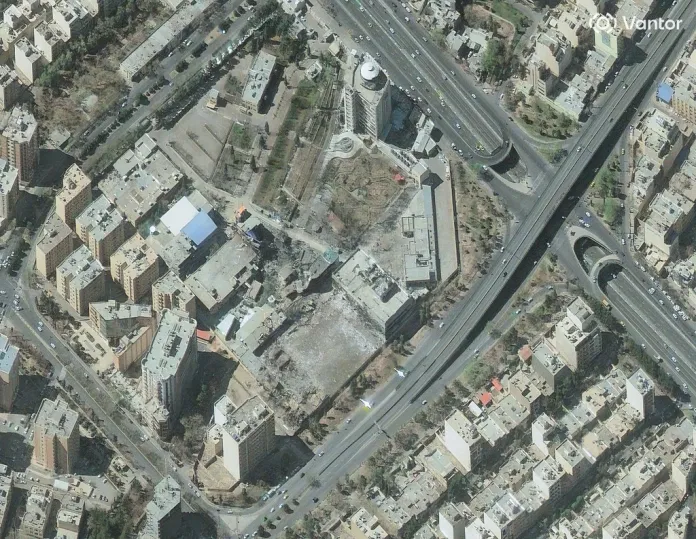
“Soon, and very soon, all of Iran’s defense companies will be destroyed. For example, as of two days ago, Iran’s entire ballistic missile production capacity, every company that builds every component of those missiles, has been functionally defeated. Destroyed buildings, complexes, and factory lines all across Iran, destroyed,” Hegseth added.
This meant that while the U.S. continued to shoot down and destroy missiles Iran still had in stock, it was now focusing on “their production lines, their military plants, their defense innovation centers.”
IN FOCUS: TRUMP CLOSED THE GAP BETWEEN RHETORIC AND ACTION ON IRAN
As of Friday, Hegseth said that over 15,000 targets in Iran had been struck, a number securing its status as the most intensive air campaign since the 1991 Gulf War. This strategic bombing campaign was set to have its most intensive day on Friday, with strikes up by roughly 20%, he said. These strikes would be even more effective as well, he argued, as intelligence kept getting “better and better” with each round of strikes.
Iran’s missile industry has been one of the primary targets of Operation Epic Fury, alongside its nuclear program. After its isolation from the U.S. and Soviet Union, and acknowledging the unlikelihood that its dated air force could stand a chance against the U.S. and Israeli air forces, Iran made a calculated decision to cede the air and focus its efforts on its missile program instead. Iran’s air force still primarily relies on dated U.S. planes purchased by the shah in the 1970s, many of which were destroyed on the ground during the current war.
Iran’s ballistic missile program has played a central role in its regional strategy of containing Israel. Tehran’s bet until the wars following Hamas’s Oct. 7, 2023 attack was that Israel would be unable to attack any of its proxies in the “Axis of Resistance,” as the combined missile arsenals of Hezbollah in Lebanon, Hamas and Palestinian Islamic Jihad in Gaza, the Houthis in Yemen, and the network of militias in Iraq would be able to overwhelm Israel’s missile defense systems and lay much of the country to waste. This conventional threat also lessened Iran’s perceived need for a nuclear weapon, as the threat of conventional destruction posed enough of a threat.
Hegseth presented Iran’s conventional ballistic missile program as symbiotic with its nuclear program, arguing on Friday that its conventional missile capabilities were made to deter attempts to take out its nuclear program, as he said had been done previously with “Operation Midnight Hammer” in June 2025.
“The conventional side is a huge part at getting at denying nuclear capabilities,” he said.
The growing intensity of U.S. strikes won’t raise the cost of the operation either, as the U.S. has switched almost entirely away from much more expensive standoff munitions.
“Only 1% of the munitions we’re using today are standoff munitions. The rest are older types, of which we have a plethora … which is our goal. From the beginning, you use standoffs, which are more exquisite, you transition to a much larger magazine depth, ensuring that you’re preserving all the capabilities you have and your options across the force,” Hegseth said.
HOW MUCH HAS THE WAR WITH IRAN COST THE US?
The first 48 hours of combat operations were the most expensive of the war, with U.S. officials telling the Washington Post that the United States ate through $5.6 billion in munitions during this period. Once Iranian air defenses were neutralized, the daily cost of the war decreased to around $1 billion to $2 billion.
As of the 13th day of fighting, the total cost of the war is estimated at $19.1 billion to $30.1 billion.


