







The Yemen-based, Iranian-aligned Houthis targeted Israel over the weekend, the first time the group carried out an attack since the U.S.-Israel-Iran war began, and its entry into the conflict could have significant impacts on the global economy.
The Houthis launched two missiles at Israel on Saturday, though no casualties have been reported yet, but the possibility of the group moving to shut down shipping through the Red Sea could pose even more consequences for the world.
In a statement, the military spokesman for the Iran-backed Houthis, Yahya Saree, said the group has “executed the first military operation, carried out in a salvo of ballistic missiles that targeted sensitive military objectives of the Israeli enemy in southern occupied Palestine.”
He also said before the attack on Friday that the Houthis’ “fingers are on the trigger for direct military intervention” if other countries join operations against Iran or its partners.
Mohammed Mansour, deputy information minister in the Houthi government, told CNN that closing the Bab el Mandeb Strait “is a viable option, and the consequences will be borne by the American and Israeli aggressors.”
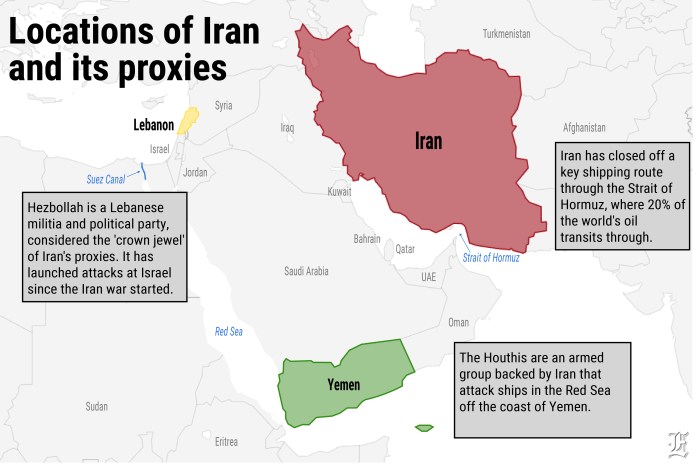
Unlike Hezbollah and Iraqi-based militias, both of which are a part of Iran’s so-called “Axis of Resistance,” the Houthis had not gotten involved in the war in the region.
The two sides have engaged in sporadic retaliatory aerial attacks in recent years, though the fighting between them had largely simmered down in recent months. However, the Houthis in 2023 began conducting attacks on shipping vessels transiting the Bab al-Mandeb and the Red Sea off Yemen’s coasts.
Treasury Secretary Scott Bessent said Monday on Fox News the Houthis’ attacks were “Israel specific,” and he added, “They’ve been pretty quiet so far, and I would expect them to likely remain that way.”
If the Houthis move to try to limit shipping through the Red Sea now, it would almost certainly further the disruption of the maritime industry and the global economy amid Iran’s closure of the Strait of Hormuz. This could be one way Iran and its proxies respond to possible U.S. escalation.
Since the U.S. and Israel’s parallel wars against Iran began on Feb. 28, Iran has effectively shut down the strait, blocking thousands of tankers from entering or exiting the Persian Gulf, preventing tens of millions of barrels of crude and other oil products from passing through.
Leading up to the start of the war, crude oil prices were around $70 per barrel, with Brent Crude selling at $72 and West Texas Intermediate at $67. As of last Friday, prices remained around the $100-per-barrel line, with Brent crude selling at around $113 per barrel and West Texas Intermediate priced at $99 per barrel.
Saudi Arabia has begun using its Red Sea port of Yanbu more frequently amid tensions in the Strait of Hormuz. Over the first 28 days of March, the amount of crude oil transiting the Bab-el-Mandeb Strait jumped by 21% compared with February, CNN reported, citing Vortexa.
The Houthis targeted more than a hundred vessels in the aftermath of Hamas’s Oct. 7, 2023, attack in southern Israel, sinking two of them and killing four sailors, from November 2023 until January 2025.
TRUMP’S TWO PATHS FOR IRAN WAR: NEGOTIATION OR ESCALATION
Shipping companies decided to avoid the waterways due to safety concerns, choosing longer, more expensive routes instead. The U.S. and U.K. militaries carried out multiple rounds of strikes against the Houthis, and the U.S. spearheaded an international effort to help defend ships that wanted to sail through the Red Sea.
The Trump administration launched a nearly two-month-long war with the Houthis last spring, and then the president abruptly announced a ceasefire agreement, in which he said the group agreed to stop threatening the maritime shipping route in exchange for a cessation in U.S. strikes. The deal did not force the Houthis to stop targeting Israel.


