







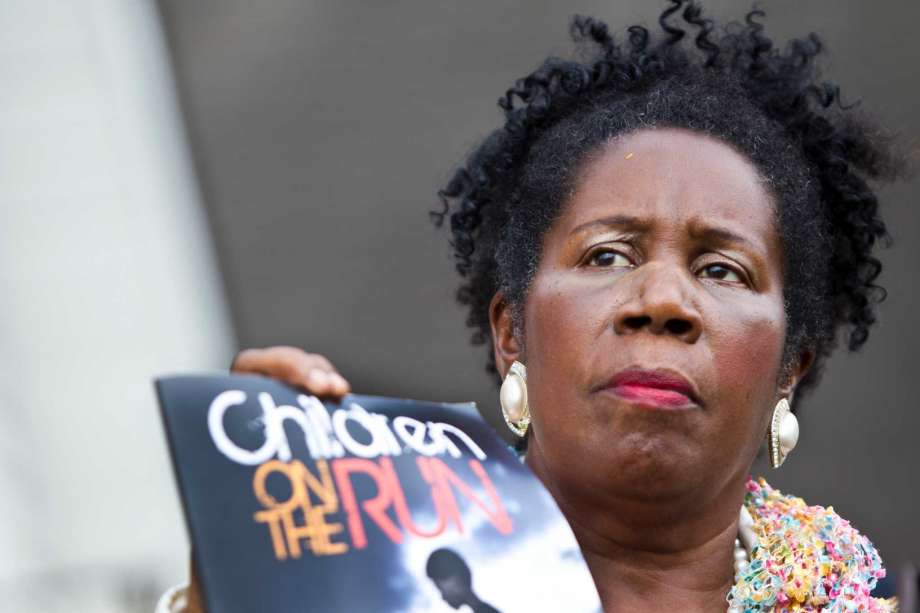
A House Judiciary subcommittee will hold hearings on reparations next Wednesday, marking the first time in more than a decade that the House will discuss potentially compensating the descendants of slaves.
“The Case for Reparations” author Ta-Nehisi Coates and actor Danny Glover are reportedly set to testify before the House Judiciary Subcommittee on the Constitution, Civil Rights and Civil Liberties, and the hearing’s stated purpose will be “to examine, through open and constructive discourse, the legacy of the Trans-Atlantic Slave Trade, its continuing impact on the community and the path to restorative justice,” according to a Thursday Associated Press report.
The June 19 hearing also “coincides with Juneteenth, a cultural holiday commemorating the emancipation of enslaved blacks in America.”
Rep. Sheila Jackson Lee (D-TX), who sits on the subcommittee, again introduced H.R. 40 earlier this year to create a reparations commission. Jackson Lee said her bill would create a commission “to study the impact of slavery and continuing discrimination against African-Americans, resulting directly and indirectly from slavery to segregation to the desegregation process and the present day.” She added in January that the “commission would also make recommendations concerning any form of apology and compensation to begin the long delayed process of atonement for slavery.”
Middle school teacher arrested in alleged prostitution scheme at casino hotel
Stranded hikers cling to steep California mountain ridge as helicopter crew swoops in
Longtime Serbian leader Vucic’s defeat at the hands of student movement leaves Washington in awkward position
Watch: El-Sayed Staffer Lets His True Feelings About Americans and the Muslim Brotherhood Slip in Devastating Undercover Video
DHS suspends visa-free travel program for Chinese nationals amid birth tourism, security concerns
Germans Furious After Audi CEO Teams with Trump to Announce New Georgia Plant
The Hitchhiker’s Guide to why removing Ilhan Omar from Congress could be harder than Trump expects
Billionaire with Epstein ties emerges as top Dem donor bankrolling ads weaponizing disgraced financier’s files
Utterly Incompetent WNBA Faces Potential Championship Game Disaster – Was it Because DEI Staff Failed to Book Stadium?
Powerful: Video Shows Grieving Mom Offer Illegal Alien Trucker Forgiveness Over Son’s Death: ‘I Pray for You’
Trump’s Board of Peace Selects Former Biden Admin Official for Key Role
Have You Seen Him? Police Search for Murderer Who Escaped Tennessee Prison
Breaking: Comey Charged for Reportedly Leaking National Security Secrets in 2016
Not even sky high gas prices or the Iran war will stop Trump supporters voting MAGA
James Comey charged with leaking national defense information
“The impact of slavery and its vestiges continues to effect African Americans and indeed all Americans in communities throughout our nation,” Jackson Lee said. “This legislation is intended to examine the institution of slavery in the colonies and the United States from 1619 to the present, and further recommend appropriate remedies. Since the initial introduction of this legislation, its proponents have made substantial progress in elevating the discussion of reparations and reparatory justice at the national level and joining the mainstream international debate on the issues. Though some have tried to deflect the importance of these conversations by focusing on individual monetary compensation, the real issue is whether and how this nation can come to grips with the legacy of slavery that still infects current society. Through legislation, resolutions, news, and litigation, we are moving closer to making more strides in the movement toward reparations.”
Jackson Lee argued that despite the progress of African-Americans in the private sector, education, and the government in addition to “the election of the first American President of African descent, the legacy of slavery lingers heavily in this nation.”
Middle school teacher arrested in alleged prostitution scheme at casino hotel
Stranded hikers cling to steep California mountain ridge as helicopter crew swoops in
Longtime Serbian leader Vucic’s defeat at the hands of student movement leaves Washington in awkward position
Watch: El-Sayed Staffer Lets His True Feelings About Americans and the Muslim Brotherhood Slip in Devastating Undercover Video
DHS suspends visa-free travel program for Chinese nationals amid birth tourism, security concerns
Germans Furious After Audi CEO Teams with Trump to Announce New Georgia Plant
The Hitchhiker’s Guide to why removing Ilhan Omar from Congress could be harder than Trump expects
Billionaire with Epstein ties emerges as top Dem donor bankrolling ads weaponizing disgraced financier’s files
Utterly Incompetent WNBA Faces Potential Championship Game Disaster – Was it Because DEI Staff Failed to Book Stadium?
Powerful: Video Shows Grieving Mom Offer Illegal Alien Trucker Forgiveness Over Son’s Death: ‘I Pray for You’
Trump’s Board of Peace Selects Former Biden Admin Official for Key Role
Have You Seen Him? Police Search for Murderer Who Escaped Tennessee Prison
Breaking: Comey Charged for Reportedly Leaking National Security Secrets in 2016
Not even sky high gas prices or the Iran war will stop Trump supporters voting MAGA
James Comey charged with leaking national defense information
“While we have focused on the social effects of slavery and segregation, its continuing economic implications remain largely ignored by mainstream analysis,” she continued. “These economic issues are the root cause of many critical issues in the African-American community today, such as education, healthcare and criminal justice policy, including policing practices. The call for reparations represents a commitment to entering a constructive dialogue on the role of slavery and racism in shaping present-day conditions in our community and American society.”
In the Senate, Sen. Cory Booker (D-NJ), a 2020 presidential candidate, introduced the companion legislation, saying creating a reparations committee “is a way of addressing head-on the persistence of racism, white supremacy, and implicit racial bias in our country.”
“It will bring together the best minds to study the issue and propose solutions that will finally begin to right the economic scales of past harms and make sure we are a country where all dignity and humanity is affirmed,” Booker said in April.
House Speaker Nancy Pelosi (D-CA), in addition to nearly every Democrat running for president, has endorsed Jackson Lee’s bill.
And though Coates praised Sen. Elizabeth Warren (D-CA) this week on the reparations issue, Warren, like nearly every other 2020 Democrat with the exception of former San Antonio Mayor Julian Castro, has squirrelly dodged questions about whether the United States government should make cash payments to the descendants of slaves.
Story cited here.


