







The fate of a key government surveillance tool is expected to be decided next week, as House GOP leadership rushes to reauthorize the program before an April 30 deadline.
GOP leaders dropped the latest iteration of legislation to reauthorize Section 702 of the Foreign Intelligence Surveillance Act on Thursday. Under the plan, FISA, which allows warrantless wiretapping of noncitizens, would be extended for three years, with new oversight guardrails and penalties for abusing the spy tool.
House Speaker Mike Johnson (R-LA) is hoping to vote next week on extending the program, and the House Rules Committee is set to debate and vote on the three-year reauthorization on Monday.
However, the latest deal to extend FISA does not include a warrant requirement for gathering information on U.S. citizens, something conservative hardliners have been demanding be included to get their support.
Without the warrant requirement, Johnson is expected to face conservative opposition to the extension on the House floor. House GOP leadership was forced to pass a short-term extension of the spy authority earlier this month after GOP hardliners sunk both a five-year extension and a “clean” 18-month extension over warrant demands.
Twelve Republicans voted against a five-year extension on April 17, with 20 voting against the “clean” 18-month reauthorization.
Johnson can only afford to lose two Republican votes, assuming all Democrats are present and vote no. Rep. Thomas Massie (R-KY), a consistent thorn in Johnson’s side, is expected to vote no, meaning he can only afford to lose one other GOP vote.
However, the speaker may be able to enjoy some Democratic support on the procedural rule vote, which is usually a party-line test of unity, as three Democrats supported the five-year extension last week. Those Democrats were Reps. Jared Golden (D-ME), Josh Gottheimer (D-NJ), and Marie Gluesenkamp Perez (D-WA).
Here are the key players to watch next week:
Rep. Andy Harris (R-MD)
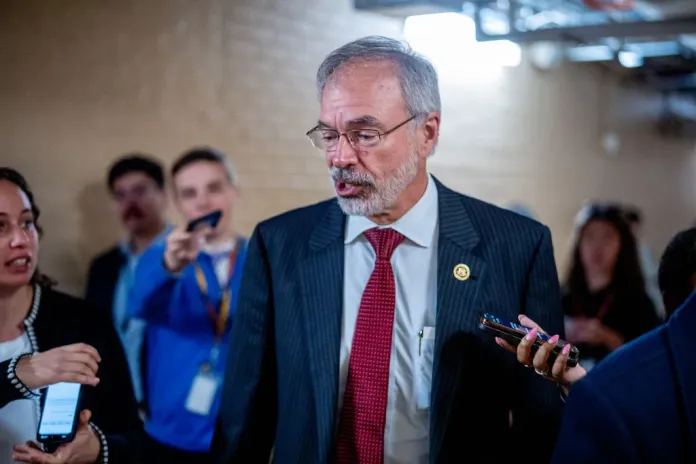
As the chairman of the House Freedom Caucus, Harris will be an important member for Johnson to get on his side. Harris’s support would be crucial to potentially swaying other members of the Freedom Caucus.
Harris voted no on the five-year extension on April 17.
Rep. Keith Self (R-TX)
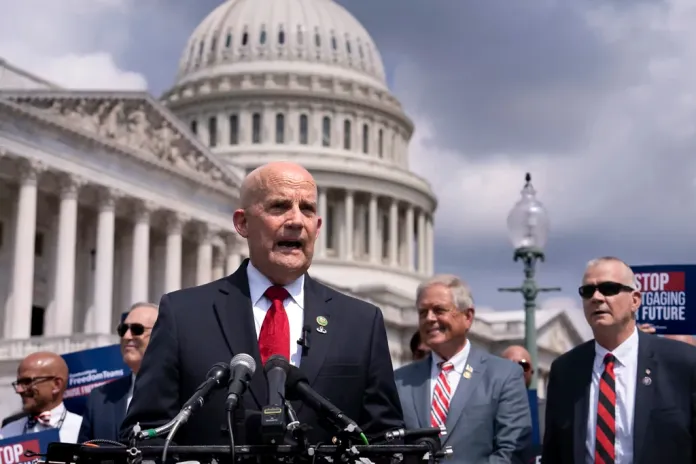
Self was another “no” vote on the five-year extension and has been vocal in his opposition to a deal that doesn’t include both a warrant requirement and a ban on central digital bank currency.
In a statement, Self called “abuses” of Section 702 and a possible digital bank currency “two sides of the same surveillance-state coin.”
“Both erode the Fourth Amendment’s protections against unreasonable searches and seizures,” Self wrote on X. “Both must be rejected.”
Rep. Eric Burlison (R-MO)
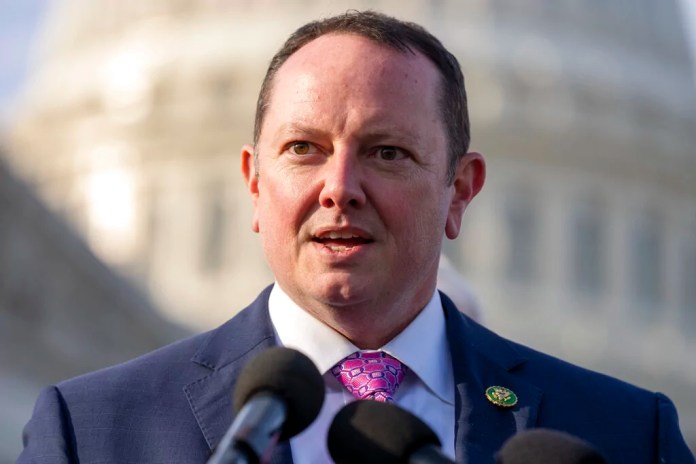
While a yes vote on the five-year deal, Burlison will be an interesting one to watch next week. The sophomore member told reporters on April 21 that he and other GOP holdouts were “insistent” that a ban on digital bank currency is included in any FISA extension as it is the “ultimate deep state, federal government power grab to stop people from in controlling your dollars.”
“We think it absolutely fits on the bill,” Burlison said. “It’s germane. What was frustrating is that other groups think that Freedom Caucus is getting like, a bell and whistle added on — that was not that was a new negotiated item. And that’s not the case whatsoever. We, we had this negotiated and baked in months and months ago. And so we and we were promised.”
Burlison has also been adamant that a warrant requirement be added on, writing it should be the “bare minimum” in an April 18 statement.
Other GOP hardliners
Johnson will have to get several of the conservative hardliners who voted no on the five-year plan on board if he wants to pass an agreement to extend FISA. These include Reps. Andy Ogles (R-TN), Scott Perry (R-PA), Lauren Boebert (R-CO), John Rose (R-TN), and Jeff Van Drew (R-NJ).
HOUSE GOP PUSHES FISA RENEWAL WITHOUT REQUIRING WARRANTS FOR SPYING ON AMERICANS
Rose, who wants a warrant requirement, also wants another safeguard implemented, a requirement for a “DOJ IG review of the FBI’s ‘advanced filtering tool’ abuses and a briefing for every Member of Congress.”
“That’s a serious miss—and makes the path forward on the rule very unclear,” Rose said in a X post on Friday.”


