







The Chinese Communist Party is furious that the Dalai Lama took home a Grammy over the weekend, calling the award a political stunt.
Tenzin Gyatso, the 14th Dalai Lama, won big at the 68th Annual Grammy Awards on Sunday in the category of best audiobook, narration, and storytelling recording with Meditations: The Reflections of His Holiness the Dalai Lama.
“I receive this recognition with gratitude and humility,” the exiled Tibetan Buddhist leader said in a statement following the news. “I don’t see it as something personal, but as a recognition of our shared universal responsibility.”
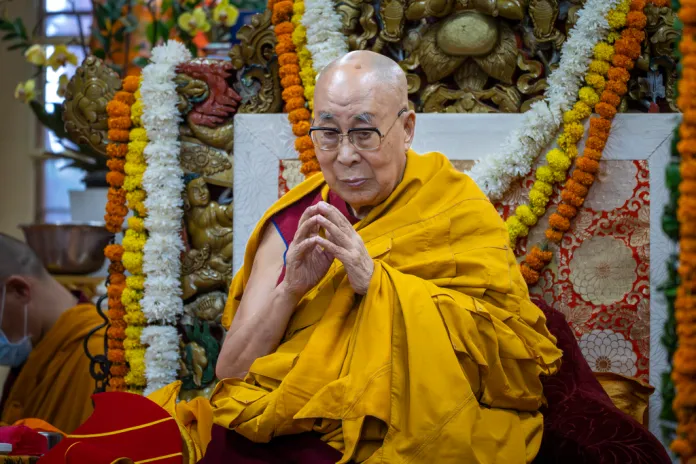
“I truly believe that peace, compassion, care for our environment, and an understanding of the oneness of humanity are essential for the collective well-being of all eight billion human beings,” he continued. “I’m grateful that this Grammy recognition can help spread these messages more widely.”
The Dalai Lama has lived in exile since 1959, when the CIA helped him evade encroaching Communist Party authorities by spiriting him away to the Indian town of Dharamshala. Rufus Wainwright, a Canadian singer-songwriter, accepted the award in his place.
Reactions from Beijing were swift and bellicose, with the Ministry of Foreign Affairs releasing a statement decrying his win as propaganda.
“It is well known that the 14th Dalai Lama is not merely a religious figure but a political exile engaged in anti-China separatist activities under the guise of religion,” foreign ministry spokesman Lin Jian said.
“We firmly oppose the relevant party using the award as a tool for anti-China political manipulation,” Lin added.
Prior to the Chinese Communist Party annexing Tibet in 1951, the region was governed both spiritually and politically by the Dalai Lama, the highest authority in Tibetan Buddhism and considered the manifestation of bodhisattva Avalokiteśvara.
The Dalai Lama, who is now 90 years old, has never renounced his right to rule and continues to operate a government-in-exile out of India.
Tibetan separatist sentiments remain a source of irritation for Beijing, which has fought tooth and nail to assert its control over the “autonomous region” and curb the influence of religion.
Chinese President Xi Jinping visited Tibet in August 2025 and told the public that “religious affairs” must be regulated to help “guide Tibetan Buddhism to adapt to socialist society.”
The Dalai Lama announced last year that he would not be reincarnated within the borders of Tibet due to Chinese occupation. Instead, he has promised to reincarnate in the “free world” so that his role as the “symbol of Tibet embodying the aspirations of the Tibetan people” can continue without interference.
The Chinese Communist Party has waged a decadeslong war against the Dalai Lama’s reincarnation, passing the legislation known as the “Measures on the Management of the Reincarnation of Living Buddhas in Tibetan Buddhism” in 2007.
XI TAKES JAB AT DALAI LAMA IN TIBET, SAYS ‘RELIGIOUS AFFAIRS’ MUST ‘ADAPT TO SOCIALIST SOCIETY’
“The reincarnation of living Buddhas, including the Dalai Lama, must comply with Chinese laws and regulations,” party spokeswoman Mao Ning reaffirmed to reporters last year.
The communist government abducted Gedhun Choekyi Nyima — a then-6-year-old Tibetan boy believed to be the reincarnation of the Panchen Lama, the spiritual leader tasked with finding the next Dalai Lama reincarnation — in 1995. His whereabouts are still unknown.


