






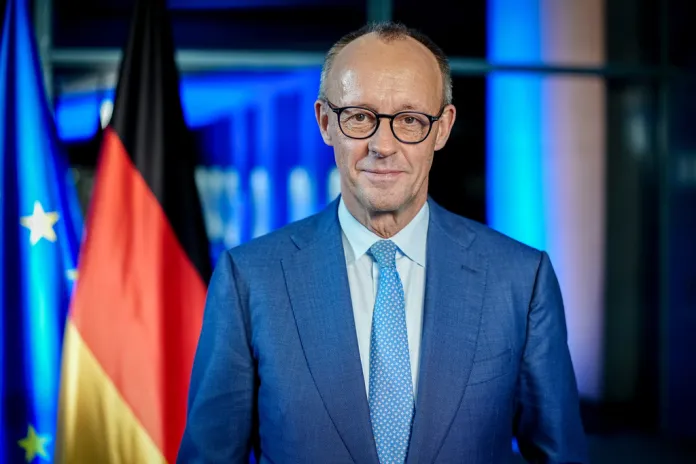
German Chancellor Friedrich Merz delivered a national address on New Year’s Eve that warned Europeans to take the future into their own hands without relying on the United States.
In his first speech since being elected to lead Germany earlier this year, Merz called on his nation and the wider continent to take a more aggressive posture defending their interests amid changes in the trans-Atlantic alliance.
“Our partnership with the United States of America, which has long been the reliable guarantor of our security, is changing,” Merz said. “For us Europeans, this means that we must defend and assert our interests much more strongly by ourselves.”
It is the latest evidence of a growing rift between the U.S. and its European allies since President Donald Trump returned to the Oval Office in January.
The warning of deterioration in U.S.-EU relations was just one of many topics Merz addressed, including “protectionism in the global economy,” Russia’s “aggression” in Ukraine, and daily “sabotage, espionage, and cyberattacks” within Germany itself.
Merz called on Germany to reclaim its international prominence and abandon a mentality of deferring conflict to “great powers.”
“Esteemed fellow citizens, all of these developments show that we are witnessing an epochal shift,” the chancellor said. “But I want to tell you, with the very deepest inner conviction, that it is up to us to overcome each of these challenges with our own strength. We are not the victims of extraneous circumstances. We are not at the mercy of great powers. Our hands are not tied.”
The White House has treated Europe with a carrot-and-stick approach — at times chastising the European Union for failing to take sufficient actions to ensure its self-defense, and other times talking about a “sentimental” attachment to the continent and seeking to save it from “civilizational erasure.”
European leaders have both heeded the U.S. demands for greater military capacity and lambasted the White House as having betrayed their alliance.
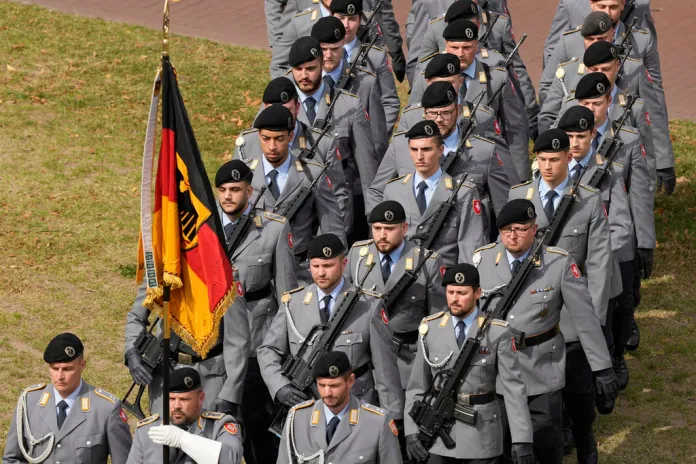
Remilitarization was a major topic of Merz’s address on Wednesday, with the chancellor boasting of a reinvigorated voluntary military service, the newly established National Security Council, and the Bundestag’s movement toward compulsory military enrollment.
New Year’s celebrations in Germany are notoriously raucous and unrestrained, with citizens of all ages flooding the streets to set off commercial and homemade fireworks.
The wild celebrations have become a major subject of debate, with critics of the country’s loose firework laws demanding tighter regulations due to frequent bodily harm.
Last year, five people died in fireworks-related incidents, and hundreds more were injured in Berlin alone.


