



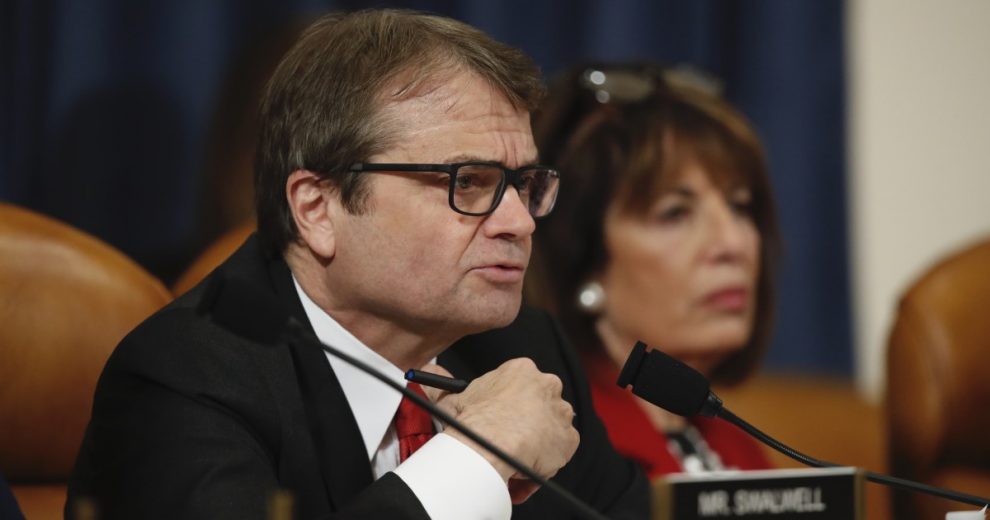
PBS: Rep. Mike Quigley (D-IL) questioned George Kent, deputy assistant secretary of state for European and Eurasian affairs, and Bill Taylor, the top U.S. diplomat in Ukraine, in the first public hearing in the impeachment inquiry against President Donald Trump. Quigley pushed back against Republican assertions that the Trump administration’s handling of Ukraine was appropriate and that “hearsay” should not be allowed in the testimony.
Halima Salman convicted of receiving ISIS military training in Syria, faces 10 years in prison
Harley-Davidson’s Decade-Long Electric Motorcycle Initiative Has Turned Disastrous
Rock Legend Donnie Iris Dies Less Than Three Weeks After Retiring from Performing
Federal officials identify 400 noncitizens registered to vote in Washington state: ‘Tip of the iceberg’
Cassidy Hutchinson avoids indictment after DOJ effort to charge her over Jan 6 testimony fails: sources
Man accused of threatening to hijack United flight says it was a drunken joke
Watch: Outrageous Pro-El-Sayed Ad Blames Jewish State for Raising Price of Bananas, Eggs in Michigan
Haitian illegal immigrant charged in Walmart killing entered US via Biden parole program: DHS
Flavio Bolsonaro to be issued visa by State Department after fleeing Brazil
Right-Wing Presidential Candidate Flavio Bolsonaro Secretly Flees Brazil for US After Disputed Election: Report
Luxury real estate brothers sentenced to 30 years in prison for yearslong sex-trafficking scheme
Judge who apologized to accused would-be Trump assassin lights up DOJ in Hunter Biden FBI case
Jordanian Military Goes After Targets in Syria in Response to Terrorists Killing Christians
‘Beloved’ daredevils who scaled Empire State Building inching toward deal after proposal stunt: attorney
Judge slams federal prosecutors over new charges against ex-FBI officials
REP. MIKE QUIGLEY (D-IL): Mr. Kent, as the day-to-day State Department point person in Washington on Ukraine policy, were you aware of this effort to persuade President Zelensky to issue a statement in order to get a White House meeting while they were happening?
KENT: When this exchange happened on August 10, I was not.
QUIGLEY: When did you learn about them?
KENT: As Ambassador Taylor referenced earlier in his testimony in oral answering, he heard on August 16. He then called me, and we had a conversation, and at that point I memorialized my concerns in a note to the file.
QUIGLEY: Ambassador Taylor, as the point person on the ground in Ukraine, were you aware of this effort to get Ukraine to issue this written statement in early August?
Halima Salman convicted of receiving ISIS military training in Syria, faces 10 years in prison
Harley-Davidson’s Decade-Long Electric Motorcycle Initiative Has Turned Disastrous
Rock Legend Donnie Iris Dies Less Than Three Weeks After Retiring from Performing
Federal officials identify 400 noncitizens registered to vote in Washington state: ‘Tip of the iceberg’
Cassidy Hutchinson avoids indictment after DOJ effort to charge her over Jan 6 testimony fails: sources
Man accused of threatening to hijack United flight says it was a drunken joke
Watch: Outrageous Pro-El-Sayed Ad Blames Jewish State for Raising Price of Bananas, Eggs in Michigan
Haitian illegal immigrant charged in Walmart killing entered US via Biden parole program: DHS
Flavio Bolsonaro to be issued visa by State Department after fleeing Brazil
Right-Wing Presidential Candidate Flavio Bolsonaro Secretly Flees Brazil for US After Disputed Election: Report
Luxury real estate brothers sentenced to 30 years in prison for yearslong sex-trafficking scheme
Judge who apologized to accused would-be Trump assassin lights up DOJ in Hunter Biden FBI case
Jordanian Military Goes After Targets in Syria in Response to Terrorists Killing Christians
‘Beloved’ daredevils who scaled Empire State Building inching toward deal after proposal stunt: attorney
Judge slams federal prosecutors over new charges against ex-FBI officialsTAYLOR: Not the written statement, no, sir.
QUIGLEY: So the entire discussion about a public statement about the two investigations President Trump wanted was done in what you have described as an irregular channel, involving Ambassador Sondland and Volker and the task to take on Ukraine policy by the president. Isn’t that correct, Mr. Kent?
KENT: That would be my understanding.
QUIGLEY: Ambassador?
TAYLOR: The same.
QUIGLEY: And I guess to close primer on hearsay, I think the American public needs to be reminded that countless people have been convicted on hearsay because the courts have routinely allowed and created needed exceptions to hearsay. Hearsay can be much better evidence than direct, as we have learned in painful instances and it’s certainly valid in this instance.
UNKNOWN: Would the gentleman yield? Because none of those exceptions would apply to this testimony.
SCHIFF: This is not the time for colloquy. Mr.–sorry, Representative Stefanik, you are recognized.
Halima Salman convicted of receiving ISIS military training in Syria, faces 10 years in prison
Harley-Davidson’s Decade-Long Electric Motorcycle Initiative Has Turned Disastrous
Rock Legend Donnie Iris Dies Less Than Three Weeks After Retiring from Performing
Federal officials identify 400 noncitizens registered to vote in Washington state: ‘Tip of the iceberg’
Cassidy Hutchinson avoids indictment after DOJ effort to charge her over Jan 6 testimony fails: sources
Man accused of threatening to hijack United flight says it was a drunken joke
Watch: Outrageous Pro-El-Sayed Ad Blames Jewish State for Raising Price of Bananas, Eggs in Michigan
Haitian illegal immigrant charged in Walmart killing entered US via Biden parole program: DHS
Flavio Bolsonaro to be issued visa by State Department after fleeing Brazil
Right-Wing Presidential Candidate Flavio Bolsonaro Secretly Flees Brazil for US After Disputed Election: Report
Luxury real estate brothers sentenced to 30 years in prison for yearslong sex-trafficking scheme
Judge who apologized to accused would-be Trump assassin lights up DOJ in Hunter Biden FBI case
Jordanian Military Goes After Targets in Syria in Response to Terrorists Killing Christians
‘Beloved’ daredevils who scaled Empire State Building inching toward deal after proposal stunt: attorney
Judge slams federal prosecutors over new charges against ex-FBI officialsSTEFANIK: Thank you. For the millions of Americans viewing today, the two most important facts are the following. Number one, Ukraine received the aid. Number two, there was in fact no investigation into Biden. Mr. Kent and Ambassador Taylor, you both spoke eloquently and passionately about the need to support Ukraine to counter Russian aggression, particularly during this very critical time. I agree with you in that assessment. And isn’t it the case that the Trump administration has indeed provided substantially aid to the Ukraine in the form of defense of legal aid, correct?
TAYLOR: That is correct.
Story cited here.


