




Danish Prime Minister Mette Frederiksen has submitted her resignation after her party suffered their worst electoral performance in over a century, but a swift return to office is not out of the question.
The Social Democrats’ left-wing bloc walked away as the ostensible winners of the Tuesday general election with 84 seats in the nation’s 179-seat parliament. But it was far from a majority, with their rival right-wing bloc securing 77 seats and the centrist Moderate Party walking away with 14.
The fractured parliament will now need to bridge partisan divides to form a government.
“The Danes have spoken. They have given us a playing field that, to put it mildly, is a bit tricky to handle when it comes to forming a government,” Frederiksen said of the results on Wednesday.
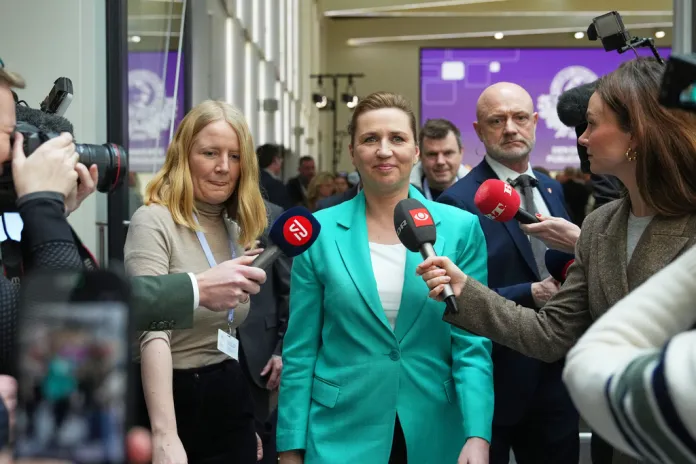
She continued: “But a government must be formed. The world out there doesn’t wait for us, and it has only become even more unsettled than when the election was called.”
The Social Democrats remain the single largest party in the legislature with 38 seats and 21.9% of the vote, but it’s a hollow victory for the long-dominating juggernaut of Danish politics. The last time the Social Democrats did worse was in 1903 with 20.4%.
The Royal Palace confirmed on Wednesday that Frederiksen resigned and advised the sovereign to hold meetings with the leaders of the nation’s 12 major political parties — standard procedure after an election shifts the balance of power in the parliament.
Despite her party’s decline, Frederiksen is still a top contender to lead the next government.
But the real winners of the election are the Moderates, led by Minister of Foreign Affairs Løkke Rasmussen. With neither the progressives nor conservatives able to form a majority on their own, the centrist party is now capable of throwing its weight behind whichever coalition can meet it in the middle.
“What is clear — with all conceivable reservations — I think is that there is no red majority to the left of us, and there is no black-blue majority to the right of us,” Rasmussen told supporters on election night, referring to the left- and right-wing coalitions.
The foreign minister explained on Wednesday that he sees his party as the prime candidate to bring both sides of the aisle together under a mutually palatable platform.
“I offered the other day — and it remains our position — to take responsibility for sitting down with parties on both sides of the political center line to see whether a political platform can be created, on which a government agreement could then subsequently be established,” Rasmussen said.
Both Frederiksen and Rasmussen are believed to have benefited from their roles in negotiating with the United States about Greenland’s future after President Donald Trump floated the idea of buying the island territory.
GREENLAND INDEPENDENCE COULD MAKE THE ISLAND A MAJOR US ALLY, ACTIVIST ARGUES
King Frederik has already wrapped up his meetings with the party leaders for discussions about who should be designated as the “royal investigator” — the official tasked with overseeing coalition-building negotiations to form a new government.
The Danish People’s Party, the nation’s most strident opponents of immigration, more than tripled its support to 9% of votes. It remains an outsider party, but the uptick in support, coupled with the Social Democrats’ decline, signals a broader shift in Danish politics.


