







Americans are owed $39.2 billion by the federal government, according to a Treasury Department tabulation. These funds are in the form of mature, unredeemed savings bonds that individuals bought but have not claimed.
Most of these bonds date to the 1980s, when investors eagerly snatched up bonds carrying annual interest rates topping out at 9%. But some were issued as far back as World War II.
Individuals do not claim bonds for a host of reasons. In some instances, they simply forget because the bond may not be redeemed for 10, 20, or even 30 years. In other cases, the bond owner may have misplaced their paper certificate and not realized they can still get their payout. Other bondholders have died before cashing in, and their heirs are unaware that they are entitled to stake a claim.
The situation is lamentable because the only party to benefit is the government. United States savings bonds, notes Sen. John Kennedy (R-LA), are “not like a regular bond where you get quarterly interest payments. You give your money to the Federal Government. The Federal Government takes your name and address. You get a piece of paper. And at the end of however long of a bond you buy — say, 20 years — you get back your principal, plus interest.”
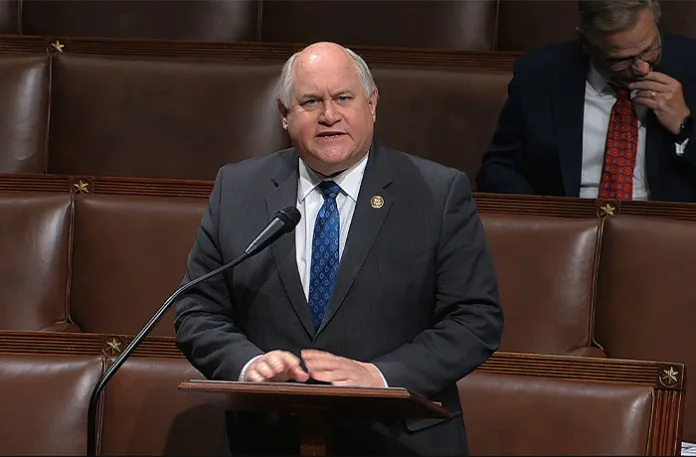
More than six years ago, Rep. Ron Estes (R-KS), a former Kansas state treasurer, introduced legislation to help reconnect savings bond holders and other rightful claimants. His proposal directed the Treasury to transfer data on who owned what unclaimed bonds to states, which would then use their unclaimed property processes to locate bondholders. When the bondholder or rightful claimant cannot be found, a state can pocket the funds.
The bill stalled, but Congress did appropriate $50 million over two years to fund the Treasury’s effort to digitize its old bond records, which would help connect bonds and bondholders and their heirs.
Undeterred, Estes reintroduced his bill in 2021, which garnered 36 cosponsors. Kennedy introduced companion legislation in the Senate, which 29 other senators supported. Republicans and Democrats alike supported the Unclaimed Savings Bond Act of 2021, but it was not voted on in either chamber.
Congress seemed to have solved the matter the next year, when Kennedy added a provision to a larger piece of legislation that directed the Secretary of the Treasury to “provide each State, in digital or other electronic form” information on bondholders within their states. The law also stated that any state receiving this information was permitted to use it pursuant to its abandoned property, or “escheatment,” policies.
The hopes of Estes, Kennedy, and other policymakers were dashed in October 2023. Citing concerns about the privacy of U.S. bondholders, the administration of then-President Joe Biden proposed a regulation that would make it very difficult for states to use the Treasury’s bondholder data.
Sen. Charles Grassley (R-IA), who had taken an interest in the matter, was irate. The rule, he wrote in a letter to the Administration, “would frustrate congressional intent.” He fumed that “During World War II, the Korean and Vietnam Wars, the federal government aggressively marketed U.S. savings bond purchases as both an act of patriotism and a smart long-term savings opportunity.”
State officials also blasted the proposed rule. An official from Nebraska’s unclaimed property office complained, “The proposed rule, as it stands, may result in a cumbersome and convoluted procedure that could deter states and bond owners from active participation.” Maryland’s comptroller agreed, “Under the proposed rule, it will be very challenging to promptly and accurately identify bond owners and facilitate the rightful return of funds.”
The Treasury Department mostly waved away these concerns when it adopted the final rule. The present policy does not appear to be eroding the financial value of old bonds. Bureau of the Fiscal Service reports pegged the value of unclaimed bonds at $29.9 billion in 2021, $35.4 billion in late 2022, and $39.2 billion today.
Kennedy has expressed hope that the new crop of Treasury officials brought in by President Donald Trump will straighten things out.
“[W]e are almost home. What now we have to do is get the state treasurers to sign an agreement with the U.S. Department of the Treasury,” Kennedy said.
Rep. Estes agrees and has asked the president to issue an executive order waiving the existing regulation and directing the Treasury to get these bonds off their books.
OPINION: NATO 3.0 IS HERE, AND THAT’S A GOOD THING
“The next step right now is to have the Treasury come up with a process for working with state treasurers to turn over the data… and let the normal state escheatment process work,” Estes said in an interview.
The lawmaking and regulatory wrangling have been long and difficult, Estes observed, but it has been worth it because the objective is good: “I want to see people get their money back.”
Kevin R. Kosar (@kevinrkosar) is a senior fellow at the American Enterprise Institute and edits UnderstandingCongress.org.


