






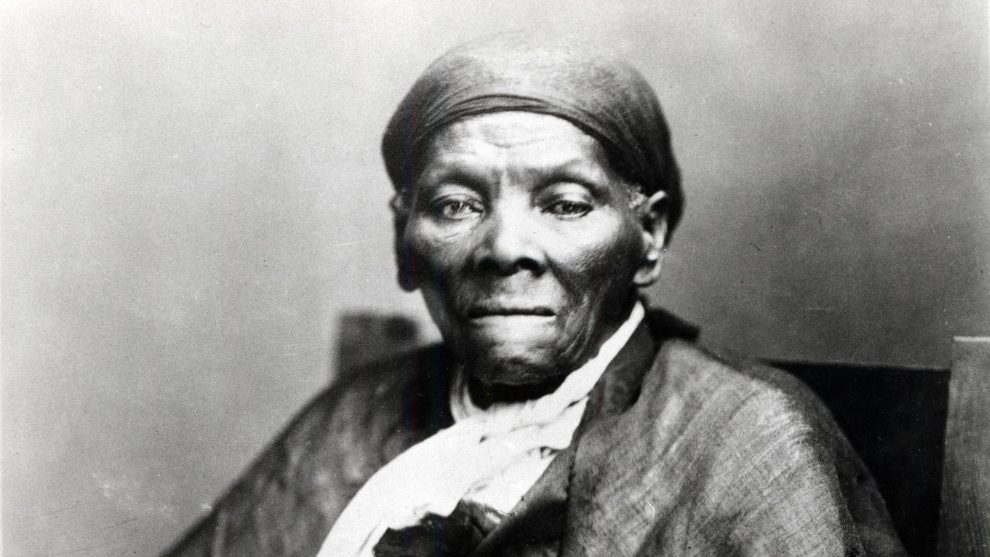
The U.S. Treasury is denying a piece from the New York Times which accused the Trump administration of delaying the release of the $20 Harriet Tubman bill and doing so for political reasons.
The New York Times ran a piece Friday, wrought with speculation on Treasury Secretary Steven Mnuchin’s rationale for “delaying” the release of Harriet Tubman’s $20 bill.
Former Treasury Secretary Jacob Lew set the process in motion in 2016. Proponents of the bill change hoped that it would be completed by 2020, in conjunction with the 100th anniversary of the passage of the 19th Amendment. However, during an appearance before the House Financial Services Committee in May, Mnuchin noted that a 2020 rollout was improbable– if not impossible– due to daunting technical issues. Mnuchin indicated that the redesigned bill would make an emergence in 2028 with designs coming out two years prior.
Halima Salman convicted of receiving ISIS military training in Syria, faces 10 years in prison
Harley-Davidson’s Decade-Long Electric Motorcycle Initiative Has Turned Disastrous
Rock Legend Donnie Iris Dies Less Than Three Weeks After Retiring from Performing
Federal officials identify 400 noncitizens registered to vote in Washington state: ‘Tip of the iceberg’
Cassidy Hutchinson avoids indictment after DOJ effort to charge her over Jan 6 testimony fails: sources
NYC Mocked as Mamdani Builds New ‘Sidewalk Sheds’ That Drain Water Toward Buildings, So Expensive City Refuses to Give Price Tag
Man accused of threatening to hijack United flight says it was a drunken joke
Report Claims Hegseth Has Asked GOP Candidate for Governor to Appoint Him to Senate Seat
Rep Tom Tiffany claims Kamala Harris’ visit signals weakness in David Crowley’s Wisconsin campaign
Russian diesel tankers close in on US ports as Trump, Putin deal triggers legal showdown
Watch: Outrageous Pro-El-Sayed Ad Blames Jewish State for Raising Price of Bananas, Eggs in Michigan
Haitian illegal immigrant charged in Walmart killing entered US via Biden parole program: DHS
Flavio Bolsonaro to be issued visa by State Department after fleeing Brazil
Right-Wing Presidential Candidate Flavio Bolsonaro Secretly Flees Brazil for US After Disputed Election: Report
Luxury real estate brothers sentenced to 30 years in prison for yearslong sex-trafficking scheme
However, the New York Times spoke to an anonymous employee of the bureau, who supposedly viewed a digital image of the redesigned bill.
The development of the note did not stop there. A current employee of the bureau, who asked not to be named because of the sensitivity of the matter, personally viewed a metal engraving plate and a digital image of a Tubman $20 bill while it was being reviewed by engravers and Secret Service officials as recently as May 2018. This person said that the design appeared to be far along in the process.
Here’s an early design of the Harriet Tubman $20 bill created by the Bureau of Engraving and Printing. Steven Mnuchin said designs would be delayed until 2026 and a future Treasury secretary will decide who’s on the face of the note. https://t.co/brRwxuu8F1 pic.twitter.com/o0ffu53tF2
— Alan Rappeport (@arappeport) June 14, 2019
Halima Salman convicted of receiving ISIS military training in Syria, faces 10 years in prison
Harley-Davidson’s Decade-Long Electric Motorcycle Initiative Has Turned Disastrous
Rock Legend Donnie Iris Dies Less Than Three Weeks After Retiring from Performing
Federal officials identify 400 noncitizens registered to vote in Washington state: ‘Tip of the iceberg’
Cassidy Hutchinson avoids indictment after DOJ effort to charge her over Jan 6 testimony fails: sources
NYC Mocked as Mamdani Builds New ‘Sidewalk Sheds’ That Drain Water Toward Buildings, So Expensive City Refuses to Give Price Tag
Man accused of threatening to hijack United flight says it was a drunken joke
Report Claims Hegseth Has Asked GOP Candidate for Governor to Appoint Him to Senate Seat
Rep Tom Tiffany claims Kamala Harris’ visit signals weakness in David Crowley’s Wisconsin campaign
Russian diesel tankers close in on US ports as Trump, Putin deal triggers legal showdown
Watch: Outrageous Pro-El-Sayed Ad Blames Jewish State for Raising Price of Bananas, Eggs in Michigan
Haitian illegal immigrant charged in Walmart killing entered US via Biden parole program: DHS
Flavio Bolsonaro to be issued visa by State Department after fleeing Brazil
Right-Wing Presidential Candidate Flavio Bolsonaro Secretly Flees Brazil for US After Disputed Election: Report
Luxury real estate brothers sentenced to 30 years in prison for yearslong sex-trafficking scheme
That source fueled speculation from the New York Times, which pondered if Mnuchin “delayed” the release in order to avoid conflict from Trump, who is a fan of the Andrew Jackson $20 bill.
But the Treasury Department, which oversees the engraving bureau, decided that a new $20 bill would not be made public next year. Current and former department officials say Mr. Mnuchin chose the delay to avoid the possibility that Mr. Trump would cancel the plan outright and create even more controversy.
Mnuchin has denied that.
Further, by citing the anonymous employee, the Times implied that the design is much further along than the current administration is willing to admit.
The U.S. Treasury Department is denying the Times’ story altogether. Senior Adviser for Public Affairs to the Secretary of the Treasury Monica Crowley said the existing timetable is “consistent” with the previous administration’s, adding that Mnuchin is focused solely on “security features and anti-counterfeiting measures.”
“The scheduled release (printing) of the $20 bill is on a timetable consistent with the previous administration,” Crowley said in a statement.
“The Secretary at this point is focused on security features and anti-counterfeiting measures related to the currency,” the statement continued. “The suggestion that the process is being delayed is completely erroneous.”
Halima Salman convicted of receiving ISIS military training in Syria, faces 10 years in prison
Harley-Davidson’s Decade-Long Electric Motorcycle Initiative Has Turned Disastrous
Rock Legend Donnie Iris Dies Less Than Three Weeks After Retiring from Performing
Federal officials identify 400 noncitizens registered to vote in Washington state: ‘Tip of the iceberg’
Cassidy Hutchinson avoids indictment after DOJ effort to charge her over Jan 6 testimony fails: sources
NYC Mocked as Mamdani Builds New ‘Sidewalk Sheds’ That Drain Water Toward Buildings, So Expensive City Refuses to Give Price Tag
Man accused of threatening to hijack United flight says it was a drunken joke
Report Claims Hegseth Has Asked GOP Candidate for Governor to Appoint Him to Senate Seat
Rep Tom Tiffany claims Kamala Harris’ visit signals weakness in David Crowley’s Wisconsin campaign
Russian diesel tankers close in on US ports as Trump, Putin deal triggers legal showdown
Watch: Outrageous Pro-El-Sayed Ad Blames Jewish State for Raising Price of Bananas, Eggs in Michigan
Haitian illegal immigrant charged in Walmart killing entered US via Biden parole program: DHS
Flavio Bolsonaro to be issued visa by State Department after fleeing Brazil
Right-Wing Presidential Candidate Flavio Bolsonaro Secretly Flees Brazil for US After Disputed Election: Report
Luxury real estate brothers sentenced to 30 years in prison for yearslong sex-trafficking scheme
Treasury spokesperson response to today’s misleading New York Times story: pic.twitter.com/PeMcoVL8tC
— Treasury Public Affairs (@TreasurySpox) June 14, 2019
Bureau of Engraving and Printing Director Len Olijar also released a strong statement denying the existence of a potential 2020 release. That was never going to happen, he claimed, while adding that the focus lies squarely with implementing advanced security features. Because those take years to finalize, it would be impossible to make legitimate mock-ups of the bill public.
The statement reads in part:
“As technology has evolved, banknote production has vastly changed over the last three decades. The next family of notes require new, overt and covert security features for the public, the banknote equipment manufacturers, and the central bank, to keep our currency safe and secure. Security features also need to work in mass production. A design can change during testing. The overwhelming success of the redesigned $100 in thwarting counterfeiting, is greatly due to the effectiveness of the blue security thread which is a public feature (and which a design was integrated around afterwards). That development alone of that security feature took approximately 10 years to finalize.
Halima Salman convicted of receiving ISIS military training in Syria, faces 10 years in prison
Harley-Davidson’s Decade-Long Electric Motorcycle Initiative Has Turned Disastrous
Rock Legend Donnie Iris Dies Less Than Three Weeks After Retiring from Performing
Federal officials identify 400 noncitizens registered to vote in Washington state: ‘Tip of the iceberg’
Cassidy Hutchinson avoids indictment after DOJ effort to charge her over Jan 6 testimony fails: sources
NYC Mocked as Mamdani Builds New ‘Sidewalk Sheds’ That Drain Water Toward Buildings, So Expensive City Refuses to Give Price Tag
Man accused of threatening to hijack United flight says it was a drunken joke
Report Claims Hegseth Has Asked GOP Candidate for Governor to Appoint Him to Senate Seat
Rep Tom Tiffany claims Kamala Harris’ visit signals weakness in David Crowley’s Wisconsin campaign
Russian diesel tankers close in on US ports as Trump, Putin deal triggers legal showdown
Watch: Outrageous Pro-El-Sayed Ad Blames Jewish State for Raising Price of Bananas, Eggs in Michigan
Haitian illegal immigrant charged in Walmart killing entered US via Biden parole program: DHS
Flavio Bolsonaro to be issued visa by State Department after fleeing Brazil
Right-Wing Presidential Candidate Flavio Bolsonaro Secretly Flees Brazil for US After Disputed Election: Report
Luxury real estate brothers sentenced to 30 years in prison for yearslong sex-trafficking scheme
“Moreover, BEP was never going to unveil a note design in 2020. To keep our currency safe and secure, it is unwise to give counterfeiters a look at a potential future note far in advance of a note going into circulation. Additionally, if the concept of a note that was made public by the government were to change during that lengthy amount of time, it would create confusion in the global marketplace, further aiding counterfeiters.”
“No Bureau or Department official has ‘scrapped’ anything; it is too early to develop an integrated concept or design until security features are finalized. The aesthetics or look of the note has always come after and been driven by the security features. Everything remains on the table.
Olijar added that the Times’ “sneak peek” of the Tubman $20 bill is not anything new. Rather, it is merely a “copy of an old Series note with the signatures of former officials, with a different image super-imposed on it.”
“It is not a new $20 note, as incorrectly stated by the New York Times, in any way, shape or form,” Olijar said. “The facsimile contained no security features or offset printing included on currency notes.”
“There is nothing about that illustration that even begins to meet technical requirements for the next family of notes,” he added.
Story cited here.


