


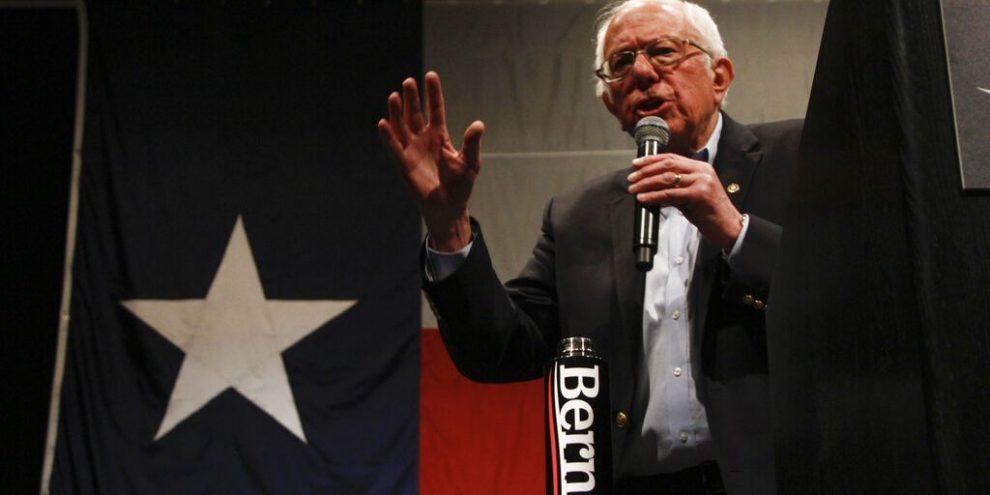
Sen. Bernie Sanders (I-VT) heaped praise on aspects of the education system in Cuba under the regime of communist dictator Fidel Castro, contending that it is “unfair” to say everything was bad under the brutal tyrannical leader.
The socialist senator sat down for a 60 Minutes interview with Anderson Cooper and praised aspects of Castro’s communist regime, suggesting that the Cuban people did not revolt against the authoritarian because he “educated their kids, gave them health care, [and] totally transformed the society.” He did not mention the multiple revolts against Castro that did occur, including the 1961 Bay of Pigs invasion sabotaged by Democrat President John F. Kennedy and the waves of protests that resulted in the brutal “Black Spring” crackdown of 2003.
“When Donald Trump was a private businessman in New York, he got $800 million in tax breaks and subsidies to build luxury housing,” Sanders said, blasting what he described as President Trump’s embrace of “corporate socialism.”
“What democratic socialism is about is saying, ‘Let’s use the federal government to protect the interests of working families,” he continued, eventually pivoting to Castro’s regime and contending that it is “unfair” to suggest that everything that occurred under his murderous reign was bad.
Watch: Outrageous Pro-El-Sayed Ad Blames Jewish State for Raising Price of Bananas, Eggs in Michigan
Haitian illegal immigrant charged in Walmart killing entered US via Biden parole program: DHS
Flavio Bolsonaro to be issued visa by State Department after fleeing Brazil
Right-Wing Presidential Candidate Flavio Bolsonaro Secretly Flees Brazil for US After Disputed Election: Report
Luxury real estate brothers sentenced to 30 years in prison for yearslong sex-trafficking scheme
Judge who apologized to accused would-be Trump assassin lights up DOJ in Hunter Biden FBI case
Jordanian Military Goes After Targets in Syria in Response to Terrorists Killing Christians
‘Beloved’ daredevils who scaled Empire State Building inching toward deal after proposal stunt: attorney
Judge slams federal prosecutors over new charges against ex-FBI officials
DHS Shuts Down Major Chinese Birth Tourism Loophole in US Pacific Territory
175 Democrats demand Trump admin stop Ilhan Omar investigation, warn it could hurt her re-election bid
Shouting match erupts at UN as Cuban foreign minister moves toward US ambassador’s podium: ‘Back up!’
Trump administration ‘monitoring’ leftist organizers ignoring new terrorism sanctions: State Department official
90 Percent of Largest United Methodist Church Congregation Votes to Leave Denomination – But It Won’t Be Easy
Hundreds of staged armed robberies helped thousands pose as crime victims in US immigration scam: DOJ
“We’re very opposed to the authoritarian nature of Cuba but you know, it’s unfair to simply say everything is bad. You know? When Fidel Castro came into office, you know what he did? He had a massive literacy program. Is that a bad thing? Even though Fidel Castro did it?” he asked.
Prior to Castro, Cuba was Latin America’s wealthiest nation, significantly wealthier than some U.S. states. It already boasted high rates of literacy under Batista. Batista’s Cuba spent more on education than any Western European nation and the United States at the time.
Cooper did not make those points, instead noting that Cuba imprisons political prisoners. While Sanders claimed to acknowledge Cooper’s point without actually addressing it, he said the U.S. “condemned that” and proceeded to wail against Trump’s relationship with dictators.
“That’s right. And we condemn that. Unlike Donald Trump, let’s be clear, you want to – I do not think that Kim Jong Un is a good friend. I don’t trade love letters with a murdering dictator,” he said.
“Vladimir Putin, not a great friend of mine,” Sanders said in a remark following reports of Russian attempts to bolster his campaign.
Bernie Sanders defends his 1980s comments about Fidel Castro in an interview on 60 Minutes. https://t.co/ySqvQKoiBU pic.twitter.com/lTwuXWp9sA
— 60 Minutes (@60Minutes) February 24, 2020
Sanders’ praise of the Cuban education system under Castro ignores the dire state of that education system today: deteriorated schools, a complete lack of parental choice, and harsh punishment for dissidents.
Watch: Outrageous Pro-El-Sayed Ad Blames Jewish State for Raising Price of Bananas, Eggs in Michigan
Haitian illegal immigrant charged in Walmart killing entered US via Biden parole program: DHS
Flavio Bolsonaro to be issued visa by State Department after fleeing Brazil
Right-Wing Presidential Candidate Flavio Bolsonaro Secretly Flees Brazil for US After Disputed Election: Report
Luxury real estate brothers sentenced to 30 years in prison for yearslong sex-trafficking scheme
Judge who apologized to accused would-be Trump assassin lights up DOJ in Hunter Biden FBI case
Jordanian Military Goes After Targets in Syria in Response to Terrorists Killing Christians
‘Beloved’ daredevils who scaled Empire State Building inching toward deal after proposal stunt: attorney
Judge slams federal prosecutors over new charges against ex-FBI officials
DHS Shuts Down Major Chinese Birth Tourism Loophole in US Pacific Territory
175 Democrats demand Trump admin stop Ilhan Omar investigation, warn it could hurt her re-election bid
Shouting match erupts at UN as Cuban foreign minister moves toward US ambassador’s podium: ‘Back up!’
Trump administration ‘monitoring’ leftist organizers ignoring new terrorism sanctions: State Department official
90 Percent of Largest United Methodist Church Congregation Votes to Leave Denomination – But It Won’t Be Easy
Hundreds of staged armed robberies helped thousands pose as crime victims in US immigration scam: DOJ
The Spain-based Diario de Cuba newspaper has documented a number of instances of dwindling conditions in Cuban schools, including a lack of electricity and a shortage of teachers. The latter has resulted in alternatives such as “increased teaching load and hourly contracts”:
“Schools in Cuba lack electric lights and many other things,” said an official in Holguín [eastern Cuba] who, as usual, asked for anonymity. “It is an undeniable fact. School furniture is also very deteriorated in most classrooms, especially in elementary schools. Parents help repair them but there is no longer any fix and they break again soon. There are no resources.”
“The same goes for doors and windows, for ceilings, and even the floor. Many classrooms get wet when it rains. The problem of lighting is critical, but it is not even mentioned in meetings or reports, it has become normal. Where four lamps go there are one or two and, in the majority, really none. There are municipalities in which more than 80% of the classrooms do not have a single light bulb,” he concluded.
One parent told the outlet that some classrooms – if they are lucky – have an “occasional lamp.” The lack of fundamental resources in classrooms is nothing new:
According to Yakelín, a master cycle teacher, “it is not a new problem, I have been working as a primary school teacher for 12 years and we have never had lighting in the classrooms. There is no light in the principal’s office.”
“As I understand it, they only put in new lamps when they repair or build a school, because it goes into the budget,” he adds. “From there onwards there is nothing more. The same happens with the door lock. The parents are fined or the teacher buys it, otherwise you do not close the premises.”
The dire state of the education system does not end there, with children eating poorly cooked food in filthy conditions:
School-age children have also been recruited to participate in mob attacks against dissidents.
As Diario de Cuba reported last month:
The children of a central primary school in the city of Sancti Spíritus were used on Friday to carry out an “act of repudiation” against the Clandestinos group [an anonymous dissident network], in a new public activity the government planned all week throughout Cuba.
Watch: Outrageous Pro-El-Sayed Ad Blames Jewish State for Raising Price of Bananas, Eggs in Michigan
Haitian illegal immigrant charged in Walmart killing entered US via Biden parole program: DHS
Flavio Bolsonaro to be issued visa by State Department after fleeing Brazil
Right-Wing Presidential Candidate Flavio Bolsonaro Secretly Flees Brazil for US After Disputed Election: Report
Luxury real estate brothers sentenced to 30 years in prison for yearslong sex-trafficking scheme
Judge who apologized to accused would-be Trump assassin lights up DOJ in Hunter Biden FBI case
Jordanian Military Goes After Targets in Syria in Response to Terrorists Killing Christians
‘Beloved’ daredevils who scaled Empire State Building inching toward deal after proposal stunt: attorney
Judge slams federal prosecutors over new charges against ex-FBI officials
DHS Shuts Down Major Chinese Birth Tourism Loophole in US Pacific Territory
175 Democrats demand Trump admin stop Ilhan Omar investigation, warn it could hurt her re-election bid
Shouting match erupts at UN as Cuban foreign minister moves toward US ambassador’s podium: ‘Back up!’
Trump administration ‘monitoring’ leftist organizers ignoring new terrorism sanctions: State Department official
90 Percent of Largest United Methodist Church Congregation Votes to Leave Denomination – But It Won’t Be Easy
Hundreds of staged armed robberies helped thousands pose as crime victims in US immigration scam: DOJ[…]
The act responds to the call made by Rosa María Ramírez Montero, national president of the official Organization of Pioneers José Martí (OPJM), who announced that until January 28 [Cuban founding father José Martí’s birthday] … “acts of revolutionary reaffirmation will take place in the pioneer groups, in rejection of vandalism that occurred recently against busts of José Martí.”
“Act of repudiation” is the official term for state-coordinated mob attacks on dissidents and other “undesirables,” often ending in violence.
Additionally, ideological purges among faculty members at universities are commonplace.
Other options for parents, such as homeschooling, are illegal in communist Cuba. As Breitbart News reported last year, a Cuban Evangelical pastor was sentenced to two years in prison for “refusing to allow the Castro regime to indoctrinate his children into communist ideology” by homeschooling them. He said his family has “suffered psychological pressure and a war on behalf of authorities, in education – that is to say, teachers – and personnel that lead in education, policy, prosecutors, social workers, and others tied to our case.”
Story cited here.


