






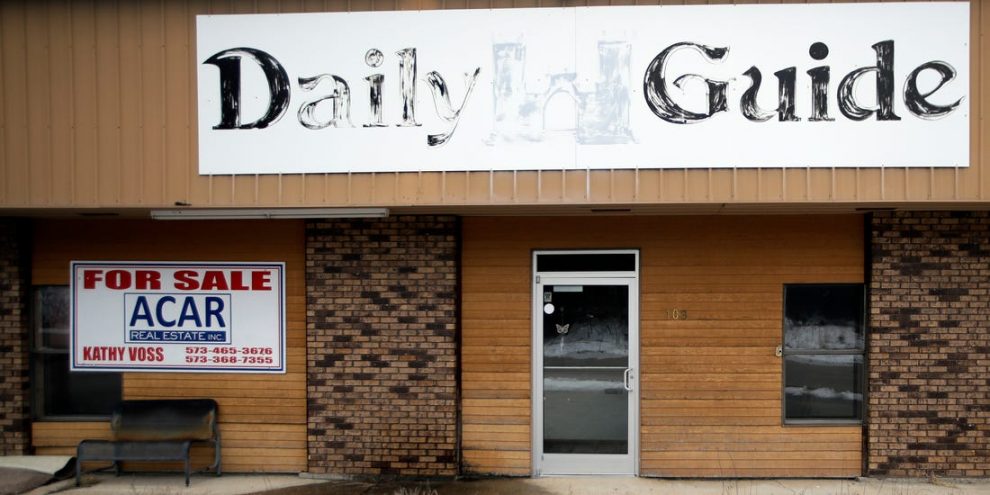
The ailing news industry, struggling during a pandemic-induced economic slump, is pressing for new government relief as media outlets scramble to keep covering the health crisis.
News outlets have begun layoffs, furloughs and pay cuts even as readers increasingly turn to the media for reliable information about the coronavirus outbreak.
Many local news organizations are facing “an existential crisis” with the near collapse of advertising revenues, according to a letter from two industry groups to President Donald Trump and congressional leaders.
“We will be engaging with elected representatives in a discussion of options for actions the federal government could take to help sustain our local news ecosystem,” said the letter from the News Media Alliance and America’s Newspapers, which represent hundreds of media groups.
Earlier this week, the largest US newspaper chain, Gannett, announced a combination of pay cuts and temporary furloughs in an effort to ride out the crisis. Another media firm, Lee Enterprises, is asking employees to accept two weeks of unpaid leave during the next three months at its more than 70 newspapers.
Halima Salman convicted of receiving ISIS military training in Syria, faces 10 years in prison
Harley-Davidson’s Decade-Long Electric Motorcycle Initiative Has Turned Disastrous
Rock Legend Donnie Iris Dies Less Than Three Weeks After Retiring from Performing
Federal officials identify 400 noncitizens registered to vote in Washington state: ‘Tip of the iceberg’
Cassidy Hutchinson avoids indictment after DOJ effort to charge her over Jan 6 testimony fails: sources
NYC Mocked as Mamdani Builds New ‘Sidewalk Sheds’ That Drain Water Toward Buildings, So Expensive City Refuses to Give Price Tag
Man accused of threatening to hijack United flight says it was a drunken joke
Report Claims Hegseth Has Asked GOP Candidate for Governor to Appoint Him to Senate Seat
Rep Tom Tiffany claims Kamala Harris’ visit signals weakness in David Crowley’s Wisconsin campaign
Russian diesel tankers close in on US ports as Trump, Putin deal triggers legal showdown
Watch: Outrageous Pro-El-Sayed Ad Blames Jewish State for Raising Price of Bananas, Eggs in Michigan
Haitian illegal immigrant charged in Walmart killing entered US via Biden parole program: DHS
Flavio Bolsonaro to be issued visa by State Department after fleeing Brazil
Right-Wing Presidential Candidate Flavio Bolsonaro Secretly Flees Brazil for US After Disputed Election: Report
Luxury real estate brothers sentenced to 30 years in prison for yearslong sex-trafficking scheme
The Tampa Bay Times said it would cut its print editions to only Sundays and Wednesdays due to the sharp ad revenue drop.
The Times-Picayune and The Advocate, the largest news organization in New Orleans, is to furlough about 10 percent of its staff due to the slump, and C & G Newspapers has suspended publication of its 19 print newspapers in the Detroit area.
“While many publishers have seen increases in online traffic and digital subscriptions, the additional revenue has in no way made up for the sharp losses in ad revenue,” said a blog post by David Chavern of the News Media Alliance.
– A grim outlook –
Some analysts offer the grimmest of pictures for an industry that has been shrinking for two decades and struggling for a business model in the digital age.
Ken Doctor, a media analyst and consultant, highlighted the irony of the situation, with the public needing independent information more than ever.
“This has accelerated the timeline for news organizations,” Doctor said. “They have been trying to come to grips with being truly digital and most of these outlets have been too slow.”
Halima Salman convicted of receiving ISIS military training in Syria, faces 10 years in prison
Harley-Davidson’s Decade-Long Electric Motorcycle Initiative Has Turned Disastrous
Rock Legend Donnie Iris Dies Less Than Three Weeks After Retiring from Performing
Federal officials identify 400 noncitizens registered to vote in Washington state: ‘Tip of the iceberg’
Cassidy Hutchinson avoids indictment after DOJ effort to charge her over Jan 6 testimony fails: sources
NYC Mocked as Mamdani Builds New ‘Sidewalk Sheds’ That Drain Water Toward Buildings, So Expensive City Refuses to Give Price Tag
Man accused of threatening to hijack United flight says it was a drunken joke
Report Claims Hegseth Has Asked GOP Candidate for Governor to Appoint Him to Senate Seat
Rep Tom Tiffany claims Kamala Harris’ visit signals weakness in David Crowley’s Wisconsin campaign
Russian diesel tankers close in on US ports as Trump, Putin deal triggers legal showdown
Watch: Outrageous Pro-El-Sayed Ad Blames Jewish State for Raising Price of Bananas, Eggs in Michigan
Haitian illegal immigrant charged in Walmart killing entered US via Biden parole program: DHS
Flavio Bolsonaro to be issued visa by State Department after fleeing Brazil
Right-Wing Presidential Candidate Flavio Bolsonaro Secretly Flees Brazil for US After Disputed Election: Report
Luxury real estate brothers sentenced to 30 years in prison for yearslong sex-trafficking scheme
Even with spikes in digital readers, advertising has taken a hit from slumping business conditions, and from marketers’ reluctance to place ads alongside news of the crisis, the analyst said.
Doctor said the news organizations which have been relying more on subscriber revenue, such as The New York Times and Wall Street Journal, may weather the crisis better.
But he sees an increase in “ghost newspapers” which have been bought by investors and still make money “but have little or no local content” due to newsroom cuts, Doctor added.
– Relief on the way? –
Some modest relief efforts are underway. Facebook said it was committing $100 million to help news organizations confront the crisis including with some “emergency” grants.
The National Geographic Society launched an emergency fund for journalists all over the world covering COVID-19 within their own communities, with grants of between $1,000 and $8,000.
Some hard-hit outlets like free weeklies have shut down in print or been asking readers for contributions, while the Chicago Reader issued a coloring book to raise funds.
The NewsGuild, which represents about 25,000 journalists at 200 outlets, called Wednesday for a public fund to support newsrooms and media workers to prevent layoffs, along with tax credits and deductions for news subscriptions.
Halima Salman convicted of receiving ISIS military training in Syria, faces 10 years in prison
Harley-Davidson’s Decade-Long Electric Motorcycle Initiative Has Turned Disastrous
Rock Legend Donnie Iris Dies Less Than Three Weeks After Retiring from Performing
Federal officials identify 400 noncitizens registered to vote in Washington state: ‘Tip of the iceberg’
Cassidy Hutchinson avoids indictment after DOJ effort to charge her over Jan 6 testimony fails: sources
NYC Mocked as Mamdani Builds New ‘Sidewalk Sheds’ That Drain Water Toward Buildings, So Expensive City Refuses to Give Price Tag
Man accused of threatening to hijack United flight says it was a drunken joke
Report Claims Hegseth Has Asked GOP Candidate for Governor to Appoint Him to Senate Seat
Rep Tom Tiffany claims Kamala Harris’ visit signals weakness in David Crowley’s Wisconsin campaign
Russian diesel tankers close in on US ports as Trump, Putin deal triggers legal showdown
Watch: Outrageous Pro-El-Sayed Ad Blames Jewish State for Raising Price of Bananas, Eggs in Michigan
Haitian illegal immigrant charged in Walmart killing entered US via Biden parole program: DHS
Flavio Bolsonaro to be issued visa by State Department after fleeing Brazil
Right-Wing Presidential Candidate Flavio Bolsonaro Secretly Flees Brazil for US After Disputed Election: Report
Luxury real estate brothers sentenced to 30 years in prison for yearslong sex-trafficking scheme
“The industry was already suffering and entered this crisis without enough workers to cover this story,” the union’s president Jon Schleuss said in a message to members. “Now, we’re facing a possible extinction.”
The question of federal government aid is politically awkward for the media, and comes amid longstanding distrust of journalism outlets and attacks on media by President Donald Trump.
Some outlets may be able to obtain tax credits or other relief from the $2 trillion economic relief package approved by Congress, yet many in the industry say this may not avert a further erosion of the media.
The media advocacy group Free Press said a journalism stimulus plan should include “direct, emergency subsidies” for newsrooms and tax credits.
Others have called for the government to spend $500 million on public service ads about the health crisis to aid media.
Duke University public policy professor Philip Napoli said the crisis may help awaken the public to the importance of news media.
“News is what economists call a public good, a type of product for which it is particularly challenging for the market to capture its full value,” Napoli said in a Wired editorial.
“The price we pay for news and the price advertisers pay to reach news consumers doesn’t reflect the news’ full economic value.”
Story cited here.


