







The new Lucas Museum of Narrative Art opened at the end of September in South Los Angeles, after a more than eight-year construction process and failed attempts by the Star Wars creator who funded it to site it in Chicago or San Francisco. George Lucas, who co-founded the museum with his wife, Mellody Hobson, spent a reported $1 billion on its creation and personally took responsibility for most of the curation. It is the smartest museum in America.
Art is the area of modern life that is least democratic. The institutional art world likes to think its defining feature is discernment — the ability to distinguish between human creations of high artistic quality and those that are not — but its real purpose is giving the appearance of discernment to assert its high social status. The tools it uses to do this involve an elaborate psychology experiment built around the human desire not to be left out or made to look stupid — basically, various dynamics for social exclusion. When the art snob says something that is obviously ugly, evil, or badly made is a work of genius, he effectively puts the ordinary listener in a Catch-22, where either disagreeing or agreeing suggests that the snob’s taste gives him the ability to understand beauty more deeply than average.
Once enough people go along with some absurd aesthetic take, bad taste, and an obsession with the counterintuitive or novel over the actually agreeable, it becomes the consensus. That’s why architecture today compares so badly with the architecture of the past. In film, this pretension takes the form of self-appointed cinephiles preferring movies that are boring, inaccessible, or in foreign languages. Which is not to say that there are not movies I personally deem wonderful, despite being boring and in a foreign language, but that some portion of the cinephile’s preference for such movies is that liking them sets him off from the filmic plebs.
</p>
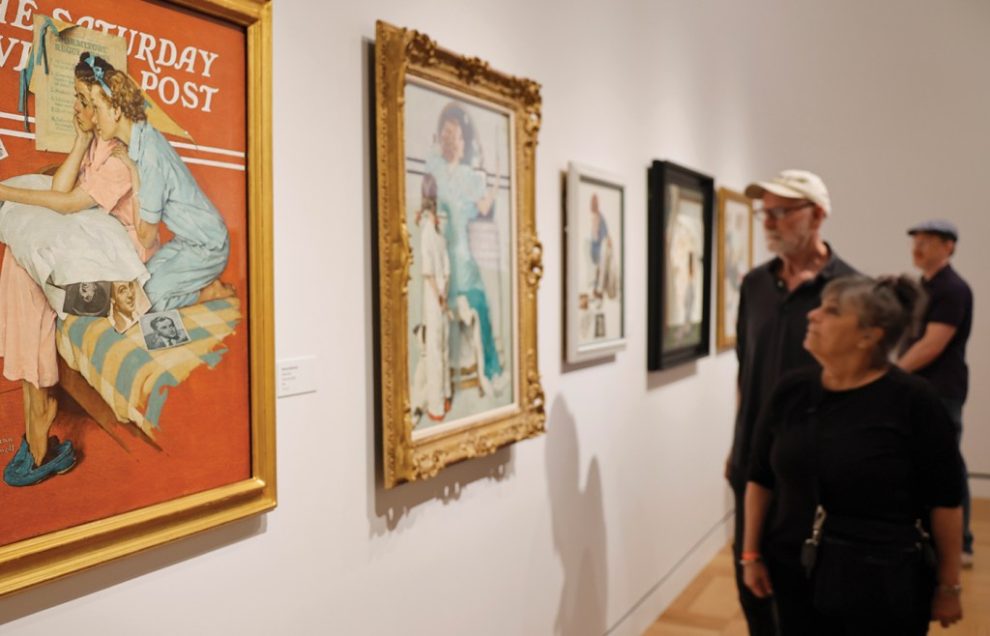
<p> ” data-large-file=”https://conservativemodern.com/wp-content/uploads/2026/10/an-art-museum-to-visit-in-sneakers.jpg” height=”658″ width=”1024″ src=”https://conservativemodern.com/wp-content/uploads/2026/10/an-art-museum-to-visit-in-sneakers.jpg” alt=”Visitors look at an exhibit in the Normal Rockwell section of the new Lucas Museum of Narrative Art on Sept. 22 in Los Angeles. (Ario Tama/Getty Images)” class=”wp-image-4786455″ srcset=”https://conservativemodern.com/wp-content/uploads/2026/10/an-art-museum-to-visit-in-sneakers-1.jpg 1400w, https://conservativemodern.com/wp-content/uploads/2026/10/an-art-museum-to-visit-in-sneakers-1.jpg?resize=300,193 300w, https://conservativemodern.com/wp-content/uploads/2026/10/an-art-museum-to-visit-in-sneakers-1.jpg?resize=768,494 768w, https://conservativemodern.com/wp-content/uploads/2026/10/an-art-museum-to-visit-in-sneakers-1.jpg?resize=1024,658 1024w” sizes=”(max-width: 1024px) 100vw, 1024px”><figcaption class=) Visitors look at an exhibit in the Normal Rockwell section of the new Lucas Museum of Narrative Art on Sept. 22 in Los Angeles. (Ario Tama/Getty Images)
The result of this is that our grand temples to art, our museums, are full of things that the snobbish elite likes, but very few members of the general population think much of. I don’t know what is in George Lucas’s mind, but if I had told a story that has generated over $45 billion because so many people actually understand it and find it accessible, I would find all this exclusionary posturing hard to stomach. I would feel confident asserting that I know what people really find compelling. And that’s why I think Lucas created this institution, which is based on a premise so radical it had never occurred to the art world before: a museum of stuff people actually and uncomplicatedly enjoy.
In over 100,000 square feet of gallery spaces, theaters, libraries, and restaurants inside the sci-fi spaceship-esque building designed by the Chinese star architect Ma Yansong, the museum displays both priceless masterpieces and illustrations that an antique shop could conceivably fail to sell. There are also murals, statuary, and movie props. Lifesize props from Star Wars draw crowds, but they are a small part of the overall experience. Here you can see mockups for ads for classic Westerns, statues of Pikachu, and a remarkable gallery of some of the most formative sketches in the history of anime. Many depict scenes involving swords, dragons, mythical giant spiders, and the like. A large proportion of the works are funny. One exhibit highlights incredibly moving illustrations from children’s books.
It’s striking to see the works from nerddom, some of whose style is more redolent of a Magic: The Gathering trading card than the Dutch masters, presented with all the pomp that the Louvre gives to the Mona Lisa. They are shown mainly in fine frames across expertly lit, sterile, broad white walls. As when walking through the Whitney, your shoes clomp importantly on the hardwood floor, and echo off the walls if you have leather soles, though most of the ample crowd on the day I visited was wearing sneakers.


