






The “poor huddled masses” coming across the southern border may not be so poor after all…
Swiss journalist Urs Gehriger recently visited African migrants who breached the border and hung out on the streets of San Antonio, Texas, waiting to go elsewhere in the country, and he met hostility from people who didn’t want to share details about their experiences, conflicted each other, and had rolls of $100 bills.
In a recording played on Fox News, Gehriger asks a migrant from Congo how she got to America.
She refused to say.
Halima Salman convicted of receiving ISIS military training in Syria, faces 10 years in prison
Harley-Davidson’s Decade-Long Electric Motorcycle Initiative Has Turned Disastrous
Rock Legend Donnie Iris Dies Less Than Three Weeks After Retiring from Performing
Federal officials identify 400 noncitizens registered to vote in Washington state: ‘Tip of the iceberg’
Cassidy Hutchinson avoids indictment after DOJ effort to charge her over Jan 6 testimony fails: sources
Man accused of threatening to hijack United flight says it was a drunken joke
Watch: Outrageous Pro-El-Sayed Ad Blames Jewish State for Raising Price of Bananas, Eggs in Michigan
Haitian illegal immigrant charged in Walmart killing entered US via Biden parole program: DHS
Flavio Bolsonaro to be issued visa by State Department after fleeing Brazil
Right-Wing Presidential Candidate Flavio Bolsonaro Secretly Flees Brazil for US After Disputed Election: Report
Luxury real estate brothers sentenced to 30 years in prison for yearslong sex-trafficking scheme
Judge who apologized to accused would-be Trump assassin lights up DOJ in Hunter Biden FBI case
Jordanian Military Goes After Targets in Syria in Response to Terrorists Killing Christians
‘Beloved’ daredevils who scaled Empire State Building inching toward deal after proposal stunt: attorney
Judge slams federal prosecutors over new charges against ex-FBI officials
“We are here now in the United States. Why do you ask about Ecuador?” a woman said, referring to the reported country they passed through.
As Gehriger continued to ask simple questions, he said they backtracked and “were not answering at all.”
“They wouldn’t tell me anything about how they got here, and then they started to get aggressive and they were contradicting each other,” he told Laura Ingraham.
“One said they ran through the forest, and another said no, there was no forest, and they were actually arguing among themselves,” Gehriger said.
He said they started to get “aggressive” after questions about money and help.
Gehriger believes the illegals were coached on giving answers to authorities.
“I had the impression that somebody told them not to speak about it,” and acting like “now we’re here, you have to help us, give us money.”
“What I found from an aid worker there, they actually do have money. Quite a few of them, because he spotted them under a tree, right in front of the shelter, counting a roll of money with hundred dollar bills,” Gehriger told Ingraham.
Hundreds of migrants Congo and Angola were transported to San Antonio the week before, and city officials say they received no warning from the feds that they were coming.
Halima Salman convicted of receiving ISIS military training in Syria, faces 10 years in prison
Harley-Davidson’s Decade-Long Electric Motorcycle Initiative Has Turned Disastrous
Rock Legend Donnie Iris Dies Less Than Three Weeks After Retiring from Performing
Federal officials identify 400 noncitizens registered to vote in Washington state: ‘Tip of the iceberg’
Cassidy Hutchinson avoids indictment after DOJ effort to charge her over Jan 6 testimony fails: sources
Man accused of threatening to hijack United flight says it was a drunken joke
Watch: Outrageous Pro-El-Sayed Ad Blames Jewish State for Raising Price of Bananas, Eggs in Michigan
Haitian illegal immigrant charged in Walmart killing entered US via Biden parole program: DHS
Flavio Bolsonaro to be issued visa by State Department after fleeing Brazil
Right-Wing Presidential Candidate Flavio Bolsonaro Secretly Flees Brazil for US After Disputed Election: Report
Luxury real estate brothers sentenced to 30 years in prison for yearslong sex-trafficking scheme
Judge who apologized to accused would-be Trump assassin lights up DOJ in Hunter Biden FBI case
Jordanian Military Goes After Targets in Syria in Response to Terrorists Killing Christians
‘Beloved’ daredevils who scaled Empire State Building inching toward deal after proposal stunt: attorney
Judge slams federal prosecutors over new charges against ex-FBI officials
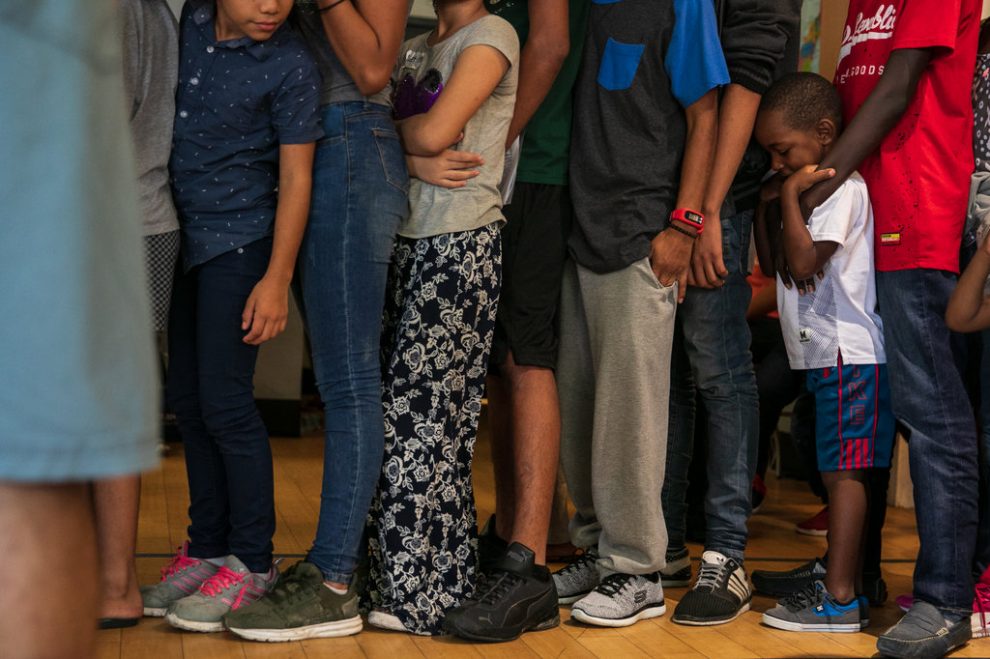
KENS published a story showing dozens of people milling around downtown, saying they arrived at the southern U.S. border by way of Ecuador.
All told, 350 Africans arrived that week.
City officials say CBP told them another 200-300 would be arriving later.
One migrant told reporter Jaleesa Irizarry via Google translate that he came to America “for security reasons” and once he made it, “with the help of the USA, I can get it back,” referring to his family that stayed behind.
Story cited here.


