







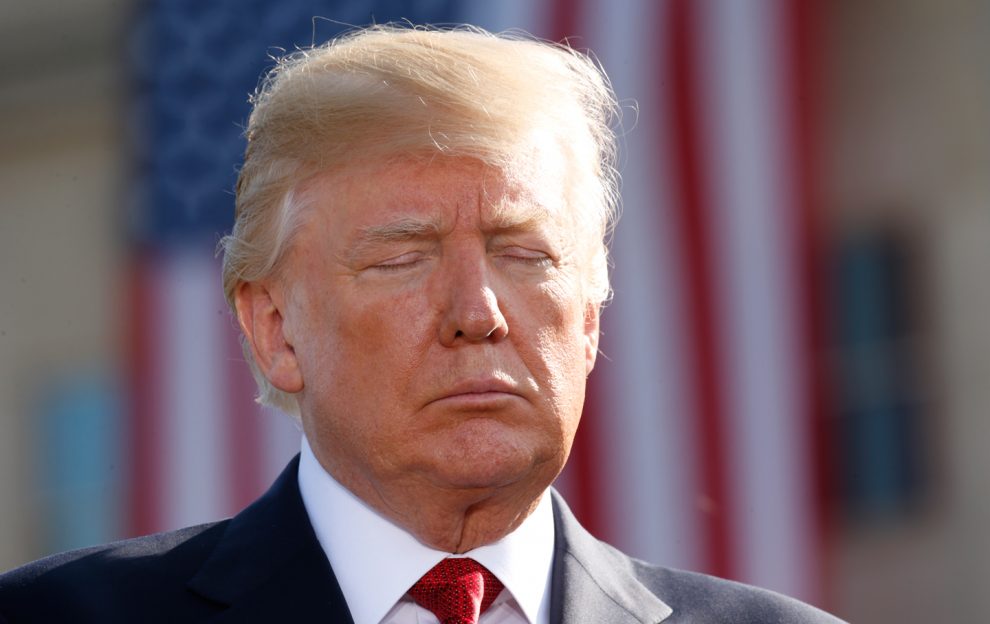
President Trump’s tight labor market has given American workers huge wage, workplace, and employment leverage over employers, a new report details.
Larger and smaller employers described to the Wall Street Journal a job market and economy that has forced them to attract American workers with higher wages and better benefits. The shift, they said, is an economy that has turned over leverage from employers to U.S. workers.
The Wall Street Journal reports:
Larger companies tend to pay more than small firms, and they are handing out bigger raises. Businesses with 500 to 999 employees boosted wages in the first quarter by an average of 5.3% from a year earlier, according to the Moody’s analysis. That compared with a 4.1% average pay increase at companies with fewer than 50 employees. [Emphasis added]
Natasha Miller, chief executive of Entire Productions Inc., a 10-person event-planning company, is holding off on adding another account executive because of the San Francisco Bay Area’s tight job market. “Most everyone has a job and a base salary of at least $110,000 a year,” said Ms. Miller, who is instead trying to get the most out of existing employees. “That’s a lot of money. There is a lot of competition.” [Emphasis added]
Zach Bryan’s ‘Free Palestine’ Shirt Also Contained a Second Message – It Doesn’t Help His Case
Manning: Let’s Talk About Mamdani Defending Hamas on Oct. 7 and Exactly What They Did to Their Female Victims
DHS proposes massive $70K fee for foreign students seeking work authorization
Anti-Israel groups rally across US on October 7 anniversary, chanting ‘long live the intifada’
Judge weighs bid to dismiss soldier’s case over Polymarket bets tied to Maduro raid
Mom dies shielding baby in horrific 15-story Bronx fall as police hunt suspect: report
Christa Pike’s first words revealed after she unexpectedly woke up while lawyers thought she was ‘brain dead’
Watch: Pastor Fights Back as City Council Begins Meeting with Prayer to Satan
Tim Walz’s Daughter Posts Humiliating Photo of Her Father – Internet Can Only Come Up with One Explanation
Democratic governor nominee Rob Sand bashes Trump over Iowa’s food stamps problems
Unearthed clip exposes how far Talarico was willing to go on raising taxes during COVID era
Amy Klobuchar calls for major anti-terrorism investments after alleged Mall of America plot
Mamdani Releases Statement Remembering Oct. 7, but Spends 75 Percent of His Words Defending Hamas’ Actions
Film Legend, ‘North by Northwest’ Star Eva Marie Saint Has Died
DHS unloads on teachers union boss over ‘dangerous rhetoric’ and anti-ICE activism…
As the job market tightens, some small firms are experimenting with new ways of recruiting. Judy Briggs, owner of a cleaning business in Boston with seven employees, has hired three people since she began providing bonuses for referrals in November. Workers can earn $100 if a new recruit stays 30 days, plus $250 after 90 days and $500 after one year. [Emphasis added]
Smaller employers, the Wall Street Journal notes, are having a tougher time in terms of competing for American workers in the tight labor market. These small businesses of often less than 20 employees have grown by less than one percent in March and April compared to the same months last year.
At a cybersecurity firm in Minneapolis, the chief executive told the Wall Street Journalthat he has had to boost wages for existing employees because they realized they were not making as much as new hires — emblematic of an economy where U.S. workers have more pull with their employers.
Other smaller companies are mechanizing with automation. A small business owner, whom the Wall Street Journal spoke to in Fort Smith, Arkansas, said the tight labor market has spurred them to invest more than $350,000 over three years in automation at the company.
Zach Bryan’s ‘Free Palestine’ Shirt Also Contained a Second Message – It Doesn’t Help His Case
Manning: Let’s Talk About Mamdani Defending Hamas on Oct. 7 and Exactly What They Did to Their Female Victims
DHS proposes massive $70K fee for foreign students seeking work authorization
Anti-Israel groups rally across US on October 7 anniversary, chanting ‘long live the intifada’
Judge weighs bid to dismiss soldier’s case over Polymarket bets tied to Maduro raid
Mom dies shielding baby in horrific 15-story Bronx fall as police hunt suspect: report
Christa Pike’s first words revealed after she unexpectedly woke up while lawyers thought she was ‘brain dead’
Watch: Pastor Fights Back as City Council Begins Meeting with Prayer to Satan
Tim Walz’s Daughter Posts Humiliating Photo of Her Father – Internet Can Only Come Up with One Explanation
Democratic governor nominee Rob Sand bashes Trump over Iowa’s food stamps problems
Unearthed clip exposes how far Talarico was willing to go on raising taxes during COVID era
Amy Klobuchar calls for major anti-terrorism investments after alleged Mall of America plot
Mamdani Releases Statement Remembering Oct. 7, but Spends 75 Percent of His Words Defending Hamas’ Actions
Film Legend, ‘North by Northwest’ Star Eva Marie Saint Has Died
DHS unloads on teachers union boss over ‘dangerous rhetoric’ and anti-ICE activism
“We are seeing more people switching jobs,” the business owner said. “Five years ago, we were getting overqualified people for our positions. The market has turned on us.”
Trump’s economic nationalist model of higher wages and less foreign competition — mostly through increased interior immigration enforcement — has delivered major gains for even the country’s blue-collar workforce, as Breitbart News has chronicled.
“The tight labor market is affording opportunities to those who have historically been overlooked by employers,” White House senior adviser Ivanka Trump said a few months ago.
Most recently, the New York Times acknowledged that the shortage of available foreign workers to business has hiked wages for blue-collar Americans. Likewise, on dairy farms, legal immigrant workers have enjoyed wage hikes and better workplace conditions.
Blue-collar and middle-class wages, overall, have jumped four percent over the last 12 months thanks to Trump’s tightened labor market, Goldman Sachs analysis revealed in March.
Experts like former Kansas Secretary of State Kris Kobach have warned that the administration should make significant changes, executively, in terms of its strategy in stemming illegal immigration to ensure that wage hikes for blue-collar and working-class Americans continue.
Story cited here.


