







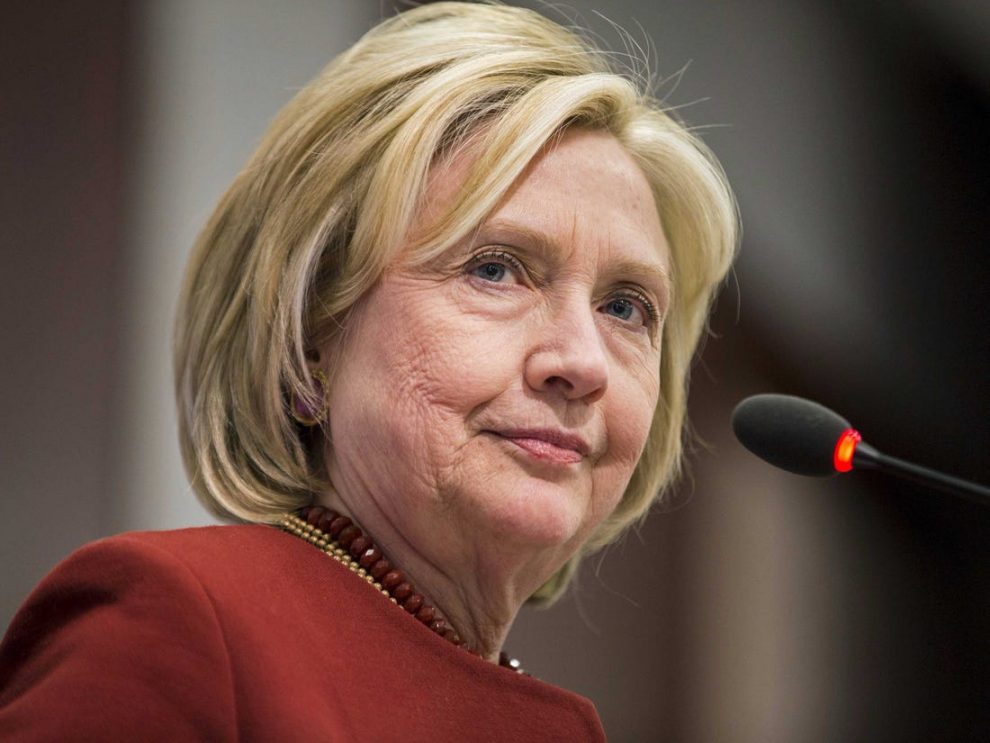
Former Secretary of State Hillary Clinton said Tuesday that the coronavirus pandemic “would be a terrible crisis to waste” by not creating “universal health care.”
Clinton, the Democratic Party nominee in the 2016 presidential election, was speaking to former Vice President Joe Biden in a virtual women’s “town hall” meeting, during which she endorsed him for president.
Biden nodded in agreement as Clinton spoke about exploiting the coronavirus pandemic to bring about the left’s dream of “universal health care”:
This is a high-stakes time, because of the pandemic. But this is also a really high-stakes election. And every form of health care should continue to be available, including reproductive health care for every woman in this country. And then it needs to be part of a much larger system that eventually — and quickly, I hope — gets us to universal health care. [Biden nods] So I can only say, “Amen,” to everything you’re saying, but also to, again, enlist people that this would be a terrible crisis to waste, as the old saying goes. [Biden nods] We’ve learned a lot about what our absolute frailties are in our country when it comes to health justice and economic justice.
Kamala Harris to Team Up with Radical Senate Candidate Abdul El-Sayed in Apparent Sign of Intent
Hyperbolic ‘Hottest Summer Ever’ Headlines Aren’t Meteorological Science
Trump seen reading plans for Kennedy Center ‘DEMOLITION’ during ride on Air Force One
Brandon Johnson’s latest viral moment sends Chicago critics into a frenzy: ‘What the actual F?’
Homeowners in the heart of America’s AI boom are getting an unexpected payoff
Rogue TX Police Dept. Arrests Woman for Criticizing Town’s Water, So State Disbands Entire Dept.
‘American Idol’ Moves Production from California to Georgia in Cost-Cutting Measure
Kavanaugh throws Trump ‘a lifeline’ on mail ballot rules despite Supreme Court loss before midterms
Explosive report exposes ‘dangerous imbalance’ in law school pipeline shaping how election cases are decided
States hold off on discarding 2024 ballots after DOJ notice
West Virginia woman charged in death of ill husband she left on toilet for 19 hours
20 states sue to block Trump admin rule that would make it harder for immigrants to obtain visas, green cards
WATCH: Handcuffed inmate breaks free, punches deputy in wild courthouse escape attempt
Democrat candidate seen sobbing, praying in patrol car after DUI arrest: Video
Maryland family speaks out after ‘4-foot-long’ rabid beaver attacks 13-year-old boy
The “old saying” to which Clinton referred may have been the statement of President Barack Obama’s incoming chief of staff, Rahm Emanuel in December 2008, who told the Wall Street Journal: “You never want a serious crisis to go to waste.”
Emanuel specifically noted that health care was one policy area that the Obama administration hoped to use the opportunity of the financial crisis — then in full swing — to address. Just over a year later, President Obama signed Obamacare into law.
Republicans criticized the program for, among other things, serving as a “Trojan horse” for universal, government-run health care. In the 2020 Democratic Party presidential primary, Biden theoretically rejected the more ambitious “Medicare for All” policy adopted by many of his rivals, but embraced a policy allowing all individuals under 65 to buy into Medicare. He has since offered to expand to those 60 years old or older, in a bit to appease supporters of Sen. Bernie Sanders (I-VT).
Democrats have repeatedly suggested using the coronavirus crisis to advance specific ideological ends. House Majority Whip Rep. James Clyburn (D-SC), a key Biden supporter, reportedly told fellow House Democrats during a conference call on the first coronavirus relief bill in March: ““This is a tremendous opportunity to restructure things to fit our vision.”
Nearly 60,000 Americans have died from coronavirus thus far, and there have been over one million confirmed cases.
Clinton did not explain how “universal health care” would have helped; countries like Italy, with a fully socialized health care system, were among the hardest hit by the pandemic, which began in late December in communist China.
Story cited here.


